Why Does My Gas Stove Keep Clicking? 6 Quick Fixes That Work
Gas stove clicking nonstop or not lighting? Find the cause in minutes with these 6 easy fixes. Plus safety tips and when to call a pro.
On this page
A gas stove clicks because the igniter is trying to make a spark. It should stop once the flame lights. If it keeps clicking, the cause is usually a burner cap that is out of place, food or water on the burner, or a wet or dirty igniter. Clean and dry the burner, set the cap flat, and try again. If you ever smell gas, leave your home and call your gas company.
Click, click, click, click. You turn the knob, and the stove will not stop. Or worse, it clicks and never lights.
It is loud, it is annoying, and it can make you worry. The good news is that a clicking stove is rarely dangerous by itself. Most of the time, a little cleaning fixes it. No tools needed.
This guide explains why the clicking happens, shows you six simple fixes, and tells you when to call a pro. Keep reading, and your kitchen will be quiet again.
First, a safety check
Gas needs respect. Before you do anything, ask yourself one question.
Do you smell gas?
Gas has a strong smell like rotten eggs. If you smell it:
- Do not use any switch, lighter, or phone near the stove.
- Do not try to fix it.
- Open a door or window if you can do it fast.
- Leave your home with everyone and pets.
- Call your gas company or 911 from outside.
If you do not smell gas, keep going. A clicking igniter on its own is usually not a leak.
If the smell is more like sewer air, that is a different problem. Read about why a house smells like sewage to learn more.
Why does a gas stove click at all?
Most modern gas stoves do not have a pilot light. They have an electric igniter instead. Here is how it works in simple steps:
- You turn the knob to "Light."
- Gas starts to flow out of the burner.
- A spark module makes a tiny spark. That is the clicking sound.
- The spark lights the gas, and the flame appears.
- The clicking should stop.
Normal clicking lasts a second or two. If it goes on and on, something is blocking the spark or the gas, or the spark is going to the wrong place.
Fix 1: Put the burner cap back the right way
This is the number one cause. The burner has a cap, which is the round lid that sits on top. If it is crooked, even a little, the gas cannot reach the igniter. The stove keeps clicking because it never lights.
Here is what to do:
- Turn all burners off and let the stove cool down.
- Lift off the grate.
- Take off the burner cap.
- Look at the base. You will see small notches or tabs.
- Place the cap back so it sits flat and level. Wiggle it gently. It should not rock.
- Put the grate back.
- Try to light the burner again.
Many people knock the cap out of place when they cook or clean. This simple step fixes a lot of stoves.
Fix 2: Clean the burner and the igniter
Spills and grease build up. Food can plug the tiny holes where gas comes out. A dirty igniter cannot make a good spark.
You will need:
- A soft toothbrush
- A straight pin or a small needle
- Warm, soapy water
- A dry cloth
Here is how to clean it:
- Make sure the stove is off and cool. For safety, turn off the gas valve if you can find it.
- Take off the grate and the burner cap.
- Wash the cap in warm, soapy water. Dry it well.
- Look at the small slots around the burner head. Use the toothbrush to scrub them.
- If a hole is plugged, gently poke it with the pin. Do not widen the hole.
- Find the igniter. It is a small, white or ceramic piece that sticks up near the burner.
- Wipe the igniter with a damp cloth. Use a cotton swab for tight spots. Be gentle.
- Dry everything. Then put it all back.
Avoid soaking the burner base or spraying cleaner into the holes. Too much water causes more clicking.
If your kitchen is full of grime in other places, our guide on how to remove sticker residue is handy for stuck-on mess on stove knobs and trim.
Fix 3: Dry out the stove
Water is a common cause of constant clicking. If you boiled over a pot, mopped near the stove, or washed the burner, water may be on the igniter or in the switch. Wet parts send sparks to the wrong place.
The signs of a wet stove:
- The stove starts clicking by itself with nothing on.
- It clicks on more than one burner.
- It started after you cleaned or after a spill.
To dry it out:
- Turn the stove off and unplug it if you can reach the cord. Gas ranges are plugged in for the igniter.
- Take off the grates and caps.
- Soak up any water with a paper towel.
- Let everything air dry for several hours. Overnight is best.
- Put the parts back, plug it in, and test.
A fan blowing at the stove top can speed up drying. A damp kitchen can also slow it down. If your home stays damp, see why a room smells musty, or use our dehumidifier calculator to pick the right size.
Fix 4: Check the knob and the switch
Behind each knob is a small switch. When you turn the knob, the switch tells the spark module to click. If grease, crumbs, or water get in there, the switch can stick. Then the stove keeps clicking even when the knob is off.
Try this:
- Unplug the stove, or turn off the power at the breaker.
- Pull each knob straight off.
- Look for grime around the stems.
- Wipe the area with a damp cloth and dry it well.
- Put the knobs back on.
- Turn the power back on and test.
If one burner keeps clicking and the others do not, that burner's switch is the likely problem. A bad switch needs a new part. This is not hard for a pro, and the part is often not costly.
Does the power to your whole kitchen keep cutting out? See what to check when a breaker trips for what to check.
Fix 5: Look at the igniter
The igniter is a small part, and it wears out. Over time it can crack, get dirty, or lose its power to spark. When it gets weak, you hear clicking but see no flame.
What to look for:
- A crack or chip in the white ceramic part.
- Black burn marks or a thick crust.
- A loose wire.
- The igniter sits too far from the burner.
If the igniter looks damaged, it needs to be replaced. This is a small, simple part. Some people do it themselves with the stove unplugged and the gas off. Others call a pro. If you are unsure, call a pro.
Fix 6: Check the gas supply
Sometimes the stove clicks because gas never arrives. The igniter works, but there is no gas to light.
Here are a few simple checks:
- Make sure the gas valve behind the stove is open. The handle should point the same direction as the pipe.
- Check if other gas items work, like your furnace or water heater.
- If you use propane, make sure the tank is not empty.
- After a gas shutdown, air can be in the line. The burner may need a few tries to light.
If other gas items are also not working, call your gas company. Do not try to fix a gas line yourself. Our guide on why a furnace blows cold air can help if your heat is also acting up.
Gas stove clicking but not lighting: What is going on?
This is the most common problem. You hear the click, but no flame shows up. Here are the usual causes, from most to least likely:
- The burner cap is crooked.
- The burner holes are dirty or wet.
- The igniter is dirty or worn.
- The gas valve is off or the gas supply is weak.
- The spark module has failed.
Work down the list. Start with Fix 1 and Fix 2. They solve most cases.
Gas stove keeps clicking after the flame is on
If you hear clicking even after the burner lights, the stove does not "see" the flame. This often comes from:
- A dirty or wet igniter that keeps making sparks.
- A flame that is weak or yellow, because the burner is dirty.
- A switch stuck in the "light" position.
- A burner cap that is slightly off.
Clean everything, dry it, and set the cap flat. This fixes it in most homes.
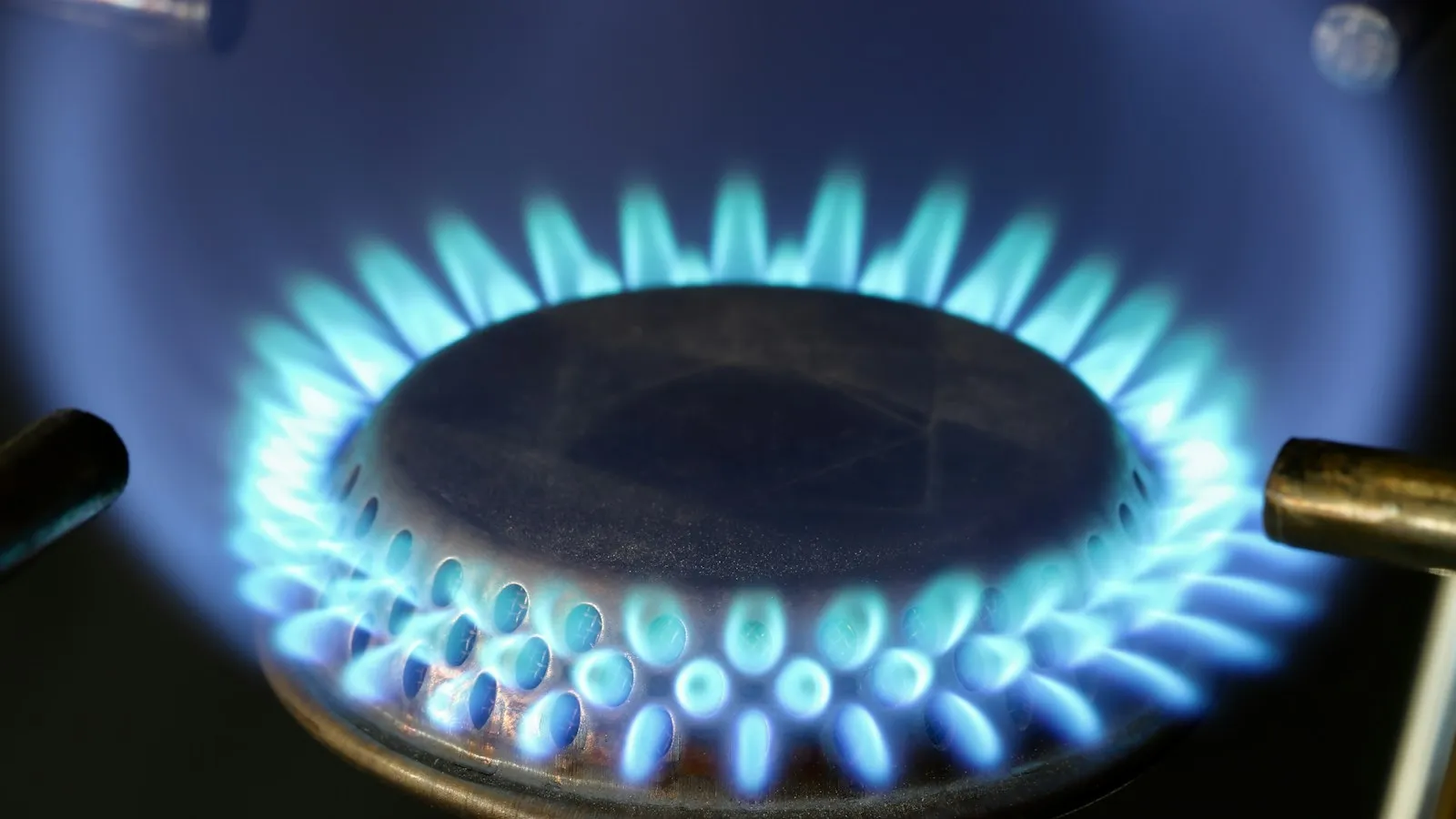
A healthy flame is mostly blue with a small bit of yellow at the tip. A big yellow or orange flame can mean a dirty burner, or a problem with the air mix. If you see lots of black soot, stop using that burner and call a pro.
Gas stove clicking when everything is off
If the stove clicks with every knob off, it usually means water or grime is in the switch or spark module. In this case:
- Unplug the stove.
- Dry the whole stove top as in Fix 3.
- Clean around the knobs as in Fix 4.
- Wait a few hours and try again.
If the clicking continues, the spark module may be bad. A pro can replace it. In the meantime, you can unplug the stove to stop the noise. But remember, an unplugged stove will not light with the igniter. Use a long lighter or a match if you must cook, and keep your face and hands back. Do this carefully and only if you do not smell gas.
What not to do
Some "fixes" make things worse. Avoid these:
- Do not poke at the igniter with a metal tool.
- Do not spray water or cleaner into the burner holes.
- Do not use a flame near the stove if you smell gas.
- Do not ignore a gas smell, ever.
- Do not take apart a gas line.
- Do not keep running the stove if you see big yellow flames and soot.
Quick chart: Symptom and fix
| What you notice | Most likely cause | Try this |
|---|---|---|
| Clicks but does not light | Crooked cap or dirty burner | Fixes 1 and 2 |
| Clicks after it lights | Dirty or wet igniter | Fixes 2 and 3 |
| Clicks with everything off | Water in the switch | Fixes 3 and 4 |
| Only one burner clicks | Bad switch or igniter | Fixes 4 and 5 |
| No gas flame at all | Gas supply is off | Fix 6 |
| Clicks after a spill | Water or food on parts | Fixes 2 and 3 |
When to call a pro
Call a stove repair pro or your gas company if:
- You smell gas at any time.
- The stove clicks and will not light after you try all six fixes.
- You see big yellow flames or black soot.
- The igniter is cracked or burned.
- More than one burner has trouble.
- You are not comfortable doing the work.
A pro can test the igniter, the spark module, and the gas flow. Ask for a price before the visit.
How to keep your stove quiet
A few simple habits stop the clicking before it starts.
- Wipe up spills right away, once the stove is cool.
- Clean the burner caps and holes every few weeks.
- Always set the cap flat after you clean.
- Do not use too much water when cleaning. Dry everything well.
- Keep the area behind the knobs clean.
- Do a quick check when the weather turns damp.
Other kitchen machines can act up too. If your fridge is acting weird, see why a fridge is not cooling but the freezer is. If your ice machine stopped, read why an ice maker is not working.
For more help around the house, check out our household fixes.
The bottom line
A clicking gas stove sounds scary, but it is often a simple fix. Start with the burner cap. Then clean and dry the burner and igniter. If it still clicks, look at the knobs, the igniter, and the gas valve.
Always put safety first. If you ever smell gas, leave and call for help. Otherwise, a little cleaning and patience will get your kitchen quiet again, and you can get back to cooking.
Related: another gas appliance problem is a flame that will not stay lit. See a pilot light that will not stay lit.
Sources
This guide was checked against these official and manufacturer sources.
Frequently asked questions
Is a clicking gas stove dangerous?
Usually not. Clicking means the igniter is trying to make a spark. The danger comes if you smell gas. If you do, leave and call your gas company.
Why does my gas stove click after I turn it off?
Water or grime may be in the switch or spark module. Dry the stove, clean around the knobs, and let it sit for a few hours.
How many clicks are normal?
A normal igniter clicks about two or three times before the flame lights. It then stops.
Can I use my stove if it keeps clicking?
If the burner lights and you do not smell gas, it is usually safe to use. But fix the clicking soon. A stove that clicks and does not light, while gas flows, is not safe. Turn it off.
Can I stop the clicking by unplugging the stove?
Yes, it will stop the noise. But the igniters will not work, and some stoves will not work at all. Use this only as a short-term step.
How much does it cost to fix a clicking gas stove?
Cleaning is free. A new igniter or switch often costs far less than a new stove. A pro can give you an exact price after looking at it.

Written by
Agha Ali Abbas
Agha Ali Abbas is the founder and editor of TimeToNote. He has worked in SEO and content writing for 18 years, and he checks every guide against manufacturer documentation and official sources before it goes live.
Related guides
Home Problems
Why Does My Circuit Breaker Keep Tripping? 7 Causes and Safe Fixes
Why does your breaker keep tripping? Learn the 7 common causes, simple safe checks, and when to call an electrician. Easy steps for any home.
11 min read
Home Problems
Why Is My Microwave Not Heating? Causes, Safe Fixes, and When to Replace It
Microwave running but food stays cold? Learn the common causes, the safe fixes you can try yourself, and when it is time to repair or replace it.
8 min read
Home Problems
Fridge Not Cooling but Freezer Is Cold? 8 Causes and How to Fix It
Freezer is cold but the fridge is warm? Learn the 8 most common causes, from blocked vents to frost on the coils, and simple fixes you can try today.
8 min read
More guides you may need

Home Problems
How to Get Rid of Ladybugs in Your House: 9 Easy Ways
Ladybugs swarming your home this fall? Learn how to tell them from Asian lady beetles and remove them fast with safe, simple steps.
10 min read
Home Problems
How to Paint a Room Like a Pro (Step by Step for Beginners)
Paint a room like a pro, even as a beginner. Learn what supplies you need, how much paint to buy, how to prep walls, cut in, roll without streaks, and clean up.
7 min read