Why Is My Ice Maker Not Working? 10 Causes and Easy Fixes
Fridge ice maker not making ice? Check these 10 common causes, from a switched-off ice maker to a frozen fill tube, and fix most of them in minutes.
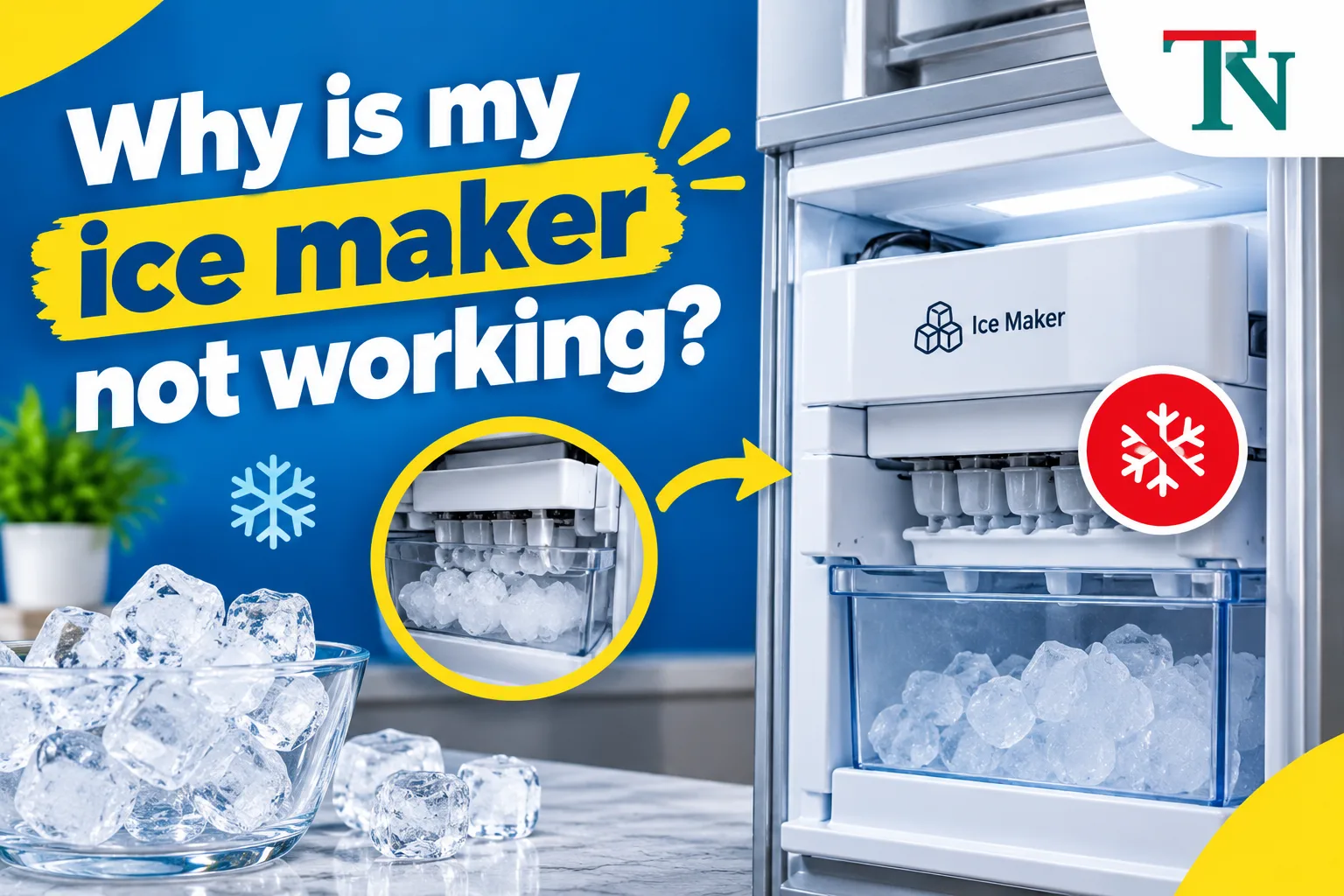
On this page
An ice maker usually stops working because it is switched off, it is not getting water, or the freezer is not cold enough. Other common causes are a clogged water filter, a frozen fill tube, and ice cubes jammed together in the bin. Most of these can be fixed in a few minutes without a repair visit.
Work through the causes below in order. The first few are the quickest and most common.
Quick checks first
Before you dig in, check these three things:
- Is the ice maker turned on? Look for an on/off switch, a setting on the fridge's control panel, or a wire arm that should be down.
- Is the freezer cold enough? It should be about 0°F.
- Is the fridge new? A newly installed fridge needs about 24 hours to start making ice, and a few days to fill the bin.
10 reasons your ice maker is not working
1. The ice maker is turned off
Ice makers are easy to turn off by accident.
- Wire arm (bail arm): Many ice makers have a metal arm on the side. When it is up, the ice maker stops. Push it down to turn it on.
- Switch or button: Some have an on/off switch on the ice maker itself.
- Control panel: Many newer fridges have an ice maker setting on the front display. Make sure it says On.
Also check that nothing in the freezer is pushing the wire arm up, like a bag of frozen food.
2. The freezer is not cold enough
Ice makers need a cold freezer. If the freezer is warmer than about 10°F, ice production slows or stops.
Fix: Set the freezer to 0°F and check it with an appliance thermometer after 24 hours. Keep vents clear, and do not overpack the freezer. If your fridge section is warm while the freezer is cold, see our guide on fixing a warm fridge with a cold freezer.
3. The water supply is off or kinked
Your ice maker gets water through a small line behind the fridge.
Fix:
- Pull the fridge out carefully.
- Find the water shut-off valve, often under the kitchen sink or behind the fridge. Make sure it is fully open.
- Check the water line for kinks, especially if the fridge was recently moved.
- Look for leaks at the connections.
4. The water filter is clogged
A clogged water filter slows water to the ice maker. You may also notice the water dispenser is slow. Many makers suggest changing the filter about every 6 months.
Fix: Replace the filter with the right one for your model. After installing it, run a few glasses of water through the dispenser to clear air from the line.
5. The fill tube is frozen
The small tube that sends water into the ice tray can freeze shut. No water gets through, so no ice is made. You may see ice around the tube opening at the back of the ice maker.
Fix:
- Turn the ice maker off.
- Warm the tube with a hair dryer on low, held a safe distance away, until the ice melts. Keep water away from the hair dryer.
- Wipe away the water and turn the ice maker back on.
If the tube freezes often, the freezer may be too cold near the ice maker, or the water inlet valve may be dripping. A technician can check the valve.
6. Ice cubes are stuck or jammed
Cubes can freeze together into a big clump in the bin, or a cube can get stuck in the ice maker and stop it from cycling.
Fix: Remove the ice bin, break up or throw out the clumps, and check the ice maker for stuck cubes. Using ice regularly helps stop clumping.
7. The water pressure is too low
Ice makers need a certain amount of water pressure to fill the tray. Low pressure can cause small cubes or no ice at all. Reverse osmosis systems under the sink can also lower pressure to the fridge.
Fix: Check that other faucets in your home have normal pressure. Our guide on boosting low water pressure at home explains how to test and fix it.
8. The ice maker needs a reset
Sometimes the ice maker's controls get stuck.
Fix: Look for a reset or test button on the ice maker. Press and hold it as your manual says. On other models, turn the ice maker off for a minute and back on, or unplug the fridge for about 5 minutes.
9. The water inlet valve has failed
The water inlet valve at the back of the fridge opens to let water in. If it fails or gets blocked by minerals, water stops flowing to the ice maker and often to the dispenser too.
Fix: This part usually needs a technician to test and replace it.
10. The ice maker itself has failed
Ice makers have motors, sensors, and heaters that can wear out.
Fix: If you have checked everything else, the ice maker unit may need to be replaced. Many are sold as one complete part for your model.
Ice maker problem finder
| What you notice | Most likely cause | Try this first |
|---|---|---|
| No ice, wire arm is up | Ice maker is off | Push the arm down or turn it on |
| No ice, dispenser also slow | Clogged filter or water supply | Replace the filter; check the valve |
| Small or hollow cubes | Low water flow | Replace filter; check water pressure |
| Ice around the fill tube | Frozen fill tube | Thaw with a hair dryer on low |
| Big clump of ice in the bin | Cubes frozen together | Empty and clean the bin |
| New fridge, no ice yet | Still cooling | Wait 24 hours |
| Everything checked, still no ice | Inlet valve or ice maker failed | Call a technician |
Ice maker leaking or making noise?
- Water under the fridge: Check the water line connection at the back for a drip, and make sure the fridge is level. A leaking inlet valve or cracked line needs a technician.
- Water in the ice bin or frozen puddles: The fridge may not be level, or the inlet valve may be dripping.
- Buzzing sound: Many ice makers buzz when the water valve opens. If the ice maker is on but the water supply is off, it can buzz loudly. Turn the ice maker off until the water is connected.
- Clunks and cracks: These are normal sounds of ice dropping into the bin.
Bad-tasting or cloudy ice?
- Replace the water filter. An old filter can make ice taste stale.
- Empty and wash the ice bin in warm, soapy water. Rinse and dry it well.
- Throw away old ice. Ice absorbs smells from the freezer.
- Keep food covered in the freezer.
Cloudy ice is usually just tiny air bubbles and minerals and is normal.
When to call a technician
Call an appliance technician if the water supply, filter, and settings are all fine but there is still no ice, if water leaks from the ice maker or behind the fridge, or if the fill tube keeps freezing. Have your fridge's model number ready. It is usually on a sticker inside the fridge.
How to reset an ice maker by brand
The reset button is usually on the ice maker unit itself, inside the freezer. Steps differ by brand, so check your manual if these do not match.
| Brand | How to reset |
|---|---|
| Samsung | Find the small test or reset button on the side or bottom of the ice maker. Hold it for about 5 seconds until you hear a chime. |
| LG | Turn the ice maker switch off for about 5 seconds, then back on. Some models also have a reset button to hold for a few seconds. |
| Whirlpool | Press and hold the reset button for about 5 to 10 seconds. You may hear a click as it resets. |
| Older models with a wire arm | Lift the arm up, wait a minute, then lower it to restart ice making. |
A reset starts a test cycle. You may hear water fill the tray within a few minutes. Wait a few hours before you decide it did not work.
How much ice should it make?
Once the freezer is fully cold, most fridge ice makers drop one batch about every few hours. It can take up to three days to fill an empty bin. If yours makes some ice but much less than before, check the water filter and the freezer temperature first, since a clogged filter and a warm freezer are the two most common reasons for slow ice.
Where to start
Make sure the ice maker is turned on and the wire arm is down, the freezer is at 0°F, and the water valve is open. Replace an old water filter and look for a frozen fill tube. These simple checks fix most ice makers. If they do not, a technician can test the water inlet valve and the ice maker unit.
Sources
This guide was checked against these official and manufacturer sources.
Frequently asked questions
How long does a new ice maker take to make ice?
A new refrigerator usually needs about 24 hours to get cold enough to make ice, and it can take a few days to fill the bin. Throw away the first few batches, since they can taste off or contain bits from new water lines.
What temperature should my freezer be for the ice maker to work?
Keep the freezer at about 0 degrees Fahrenheit. Many ice makers slow down or stop if the freezer is warmer than about 10 degrees Fahrenheit.
Why is my ice maker making small or hollow ice cubes?
Small, hollow, or thin cubes usually mean the ice maker is not getting enough water. The most common causes are a clogged water filter, low water pressure, or a partly closed or kinked water line.
How do I reset my ice maker?
Many ice makers have a reset or test button, often on the side or bottom of the ice maker unit. Press and hold it for a few seconds, following your manual. On other models, turning the ice maker off for a minute and back on, or unplugging the fridge for a few minutes, resets it.

Written by
Agha Ali Abbas
Agha Ali Abbas is the founder and editor of TimeToNote. He has worked in SEO and content writing for 18 years, and he checks every guide against manufacturer documentation and official sources before it goes live.
Related guides
Home Problems
Fridge Not Cooling but Freezer Is Cold? 8 Causes and How to Fix It
Freezer is cold but the fridge is warm? Learn the 8 most common causes, from blocked vents to frost on the coils, and simple fixes you can try today.
8 min read
Home Problems
Low Water Pressure in Your House? How to Increase It (Easy Fixes)
Weak shower or slow faucets? Learn why your water pressure is low and how to increase it, from cleaning aerators to adjusting the pressure regulator.
8 min read
Home Problems
Refrigerator Water Dispenser Not Working but Ice Maker Works? Fixes
Fridge water dispenser not working while the ice maker still works? Check the filter, control lock and a frozen door line first. Here is the full fix list.
5 min read
More guides you may need
Home Problems
Why Is My Dehumidifier Running but Not Collecting Water? 9 Fixes
Dehumidifier running but the bucket stays empty? Check the room humidity, temperature, frozen coils, filter and sensor, then test the compressor. Step by step.
9 min read
Home Problems
Why Is My Dishwasher Leaving White Residue on Dishes? 8 Fixes
Dishwasher leaving a white film or residue on dishes? Learn if it is hard water or etching, how to test it with vinegar, and 8 fixes that work.
8 min read