Why Does My Circuit Breaker Keep Tripping? 7 Causes and Safe Fixes
Why does your breaker keep tripping? Learn the 7 common causes, simple safe checks, and when to call an electrician. Easy steps for any home.
On this page
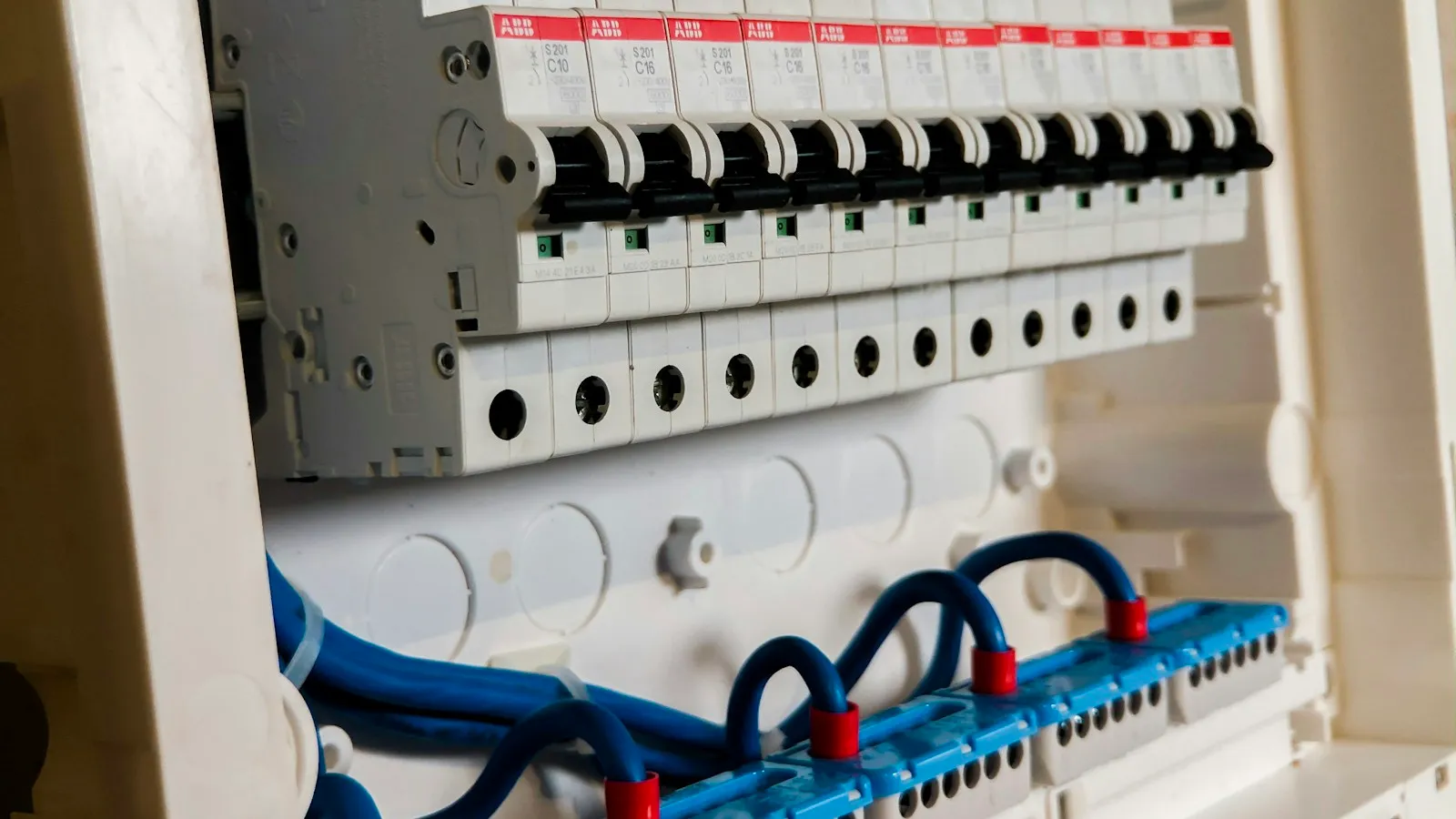
A breaker trips to protect your home. The most common cause is an overloaded circuit, which means too many things are using power at once. Other causes are a short circuit, a ground fault, a bad appliance, damp wiring, or a worn-out breaker. If a breaker trips again right after you reset it, stop and find out why before you try it again.
The lights go out. You walk to the panel, flip the switch, and the power comes back. Then ten minutes later, it happens again.
It is annoying, but your breaker is not broken most of the time. It is doing its job. A breaker is like a smoke alarm for your wires. It shuts the power off when something is not right, so wires do not get too hot and start a fire.
This guide explains why breakers trip, how to find the cause with simple checks, and when to call an electrician. It is written in plain words, so you do not need to know anything about electricity.
What does it mean when a breaker trips?
Every circuit in your home has a limit. Think of a water pipe. A thin pipe can only carry so much water before it bursts. A wire is the same. It can only carry so much power before it heats up.
The breaker watches the flow of power. When too much power flows, or when power goes the wrong way, the breaker flips off on purpose. This is called "tripping."
A tripped breaker usually sits halfway between ON and OFF. Sometimes it looks like it is on, but it feels loose. That is why you often have to push it all the way to OFF first, then back to ON.
Safety first: Read this before you touch the panel
Before you start, keep these rules in mind.
- Make sure your hands and the floor are dry. Never touch the panel while standing in water.
- Flip the breaker with one hand and look away from the panel if you can.
- Do not remove the metal panel cover. Only touch the switches.
- If you smell burning, see smoke, or see sparks, leave the area and call 911.
- Never put in a bigger breaker to stop the tripping. This is very dangerous. The wires can overheat and cause a fire.
Now let us find the cause.
Cause 1: An overloaded circuit
This is the most common reason. It happens when you plug in too many things on the same circuit, or when one big appliance uses almost all of the power.
Here is how much power a typical circuit can handle.
| Breaker size | Max power | Safe amount for long use |
|---|---|---|
| 15 amps | 1,800 watts | About 1,440 watts |
| 20 amps | 2,400 watts | About 1,920 watts |
The "safe amount" is lower because many things stay on for hours. Your breaker is happier when you stay under that line.
Here are some common items and how much power they use.
| Item | Typical watts |
|---|---|
| Space heater | 1,500 |
| Hair dryer | 1,200 to 1,800 |
| Microwave | 1,000 to 1,500 |
| Toaster | 800 to 1,500 |
| Vacuum cleaner | 1,000 to 1,500 |
| Window air conditioner | 500 to 1,500 |
| TV | 100 to 300 |
You can see the problem. A space heater by itself uses almost the whole circuit. Add a lamp and a TV, and the breaker trips.
How to fix it:
- Unplug everything on that circuit.
- Reset the breaker.
- Plug things back in one at a time.
- Move big items to different rooms, so they use different circuits.
- Do not run two high-watt items at once on the same circuit.
Do you want to know what your heater costs to run? Try our space heater electricity cost tool. And if heat is your goal, learn how to seal drafts so you need less heat so you need less heat.
Cause 2: A space heater or other heat appliance
Winter is the busy time for tripped breakers. Many people plug a space heater into the same outlet as a TV, a lamp, and a phone charger. That alone can be too much.
A few tips:
- Plug a heater straight into the wall. Do not use a thin extension cord or a cheap power strip.
- Do not share the circuit with other big items.
- Use the lower setting if you can.
- Watch for a hot plug or a hot cord. That is a warning sign.
Some heaters also pull extra power for a few seconds when they first turn on. That quick jump can trip a breaker that is already near its limit.
If the heater trips the breaker even with nothing else on the circuit, the heater may be bad, or the breaker may be weak. Try the heater in another room. If it trips there too, the heater is likely the problem.
Cause 3: A short circuit
A short circuit is more serious than an overload. It happens when a hot wire touches another wire it should not touch, like a neutral wire. Power rushes through with nothing to slow it down. The breaker trips fast, often with a loud pop.
Signs of a short circuit:
- The breaker trips the moment you reset it.
- You smell burning or smoke.
- You see black or brown marks around an outlet.
- A plug or cord looks melted.
- You hear a pop or a buzz.
What to do: Do not keep resetting the breaker. Unplug everything on that circuit. If the breaker will hold with nothing plugged in, plug items back in one at a time. If one item makes it trip, that item has the problem. If the breaker still trips with nothing plugged in, call an electrician.
Cause 4: A ground fault
A ground fault is like a short circuit, but power takes the wrong path to the ground. This often happens where there is water, like a kitchen, a bathroom, a garage, or outside.
Some outlets, called GFCI outlets, have little "Test" and "Reset" buttons. They are built to cut the power fast when water or a fault is nearby. You will find them near sinks and outdoors. Sometimes the GFCI outlet trips, and sometimes the main breaker does.
How to fix it:
- Look for a GFCI outlet in the kitchen, bathroom, garage, or outdoors.
- Press the "Reset" button.
- If it trips again, unplug what is on it.
- Check for water. A wet outdoor cord, a leaky pipe, or a damp wall can cause it.
Hidden leaks can make wiring damp. Our guide on leaks hiding behind walls shows you how to find them. Wet weather can also be the cause, since rain can get into outdoor outlets.
Bonus cause: An AFCI breaker that trips too easily
Newer homes often have a type of breaker called an AFCI. It looks for small, dangerous sparks in the wires, called arcs. It can trip even when you are not using much power.
An AFCI breaker may trip because of:
- A damaged cord on a lamp or appliance.
- A loose plug.
- Old or worn wiring.
- Certain older tools or vacuums.
If an AFCI breaker trips again and again, unplug items on that circuit one by one. A bad cord is often the reason.
Cause 5: A bad appliance
Sometimes the wall is fine and the thing you plugged in is the problem. A worn-out appliance can draw too much power or leak power to the ground.
Think about whether the breaker trips only when you use one thing. For example:
- The dishwasher. If the breaker trips when it runs, the heating part or the pump may be failing. See our guide on why a dishwasher is not draining for other warning signs.
- The microwave. A failing part inside can trip the breaker when you press start. Read why a microwave stops heating.
- The dryer. A blocked vent makes the dryer work harder and use more power. Learn why your dryer takes so long to dry.
- The water heater. If it is electric, a bad heating part can trip the breaker. You can also read why a water heater makes noise.
- The garbage disposal. A jam can cause too much power draw. See why a garbage disposal hums but will not work.
The test: Unplug the appliance and reset the breaker. If the breaker holds, plug the appliance in again. If it trips right away, the appliance is the problem. Do not use it until it is fixed or replaced.
Cause 6: Loose or damaged wiring
Wires can wear out. They can get loose behind an outlet. Mice and bugs can chew them. Old wires can crack with age. Even a loose connection can make a breaker trip, and it can also cause heat.
Signs of a wiring problem:
- Lights flicker or dim when something turns on.
- An outlet feels warm.
- An outlet or switch crackles or buzzes.
- Outlets that do not work.
- A burning or fishy smell near a wall.
This is not a DIY job for most people. If you see these signs, call an electrician. Wiring problems are one of the top causes of house fires, so do not wait.
Cause 7: A worn-out breaker
Breakers do not last forever. Over time, they can get weak and trip too easily, even when nothing is wrong with the circuit. A very old breaker, or one that has tripped many, many times, may need to be replaced.
Signs that the breaker itself is the problem:
- It trips with nothing plugged in.
- It feels hot to the touch.
- It will not stay on, or it feels loose.
- You see burn marks or smell something hot near the panel.
A new breaker is not costly for an electrician to install. Do not try to swap it yourself. The panel always has live parts inside, even when the main breaker is off.
Why does my breaker keep tripping with nothing plugged in?
This is a very common question. If the breaker trips with nothing plugged in, the problem is not an overload. Here are the likely reasons:
- Something is still plugged in that you forgot. Check for chargers, night lights, and items in the other rooms on the same circuit.
- There is a wiring problem. A short or a damaged wire inside the wall.
- A breaker has failed. It may be old and weak.
- Water has gotten in. A leak or high humidity can cause a ground fault.
In this case, call an electrician. Do not keep resetting the breaker.
Why does my breaker trip when it rains?
If your breaker trips in wet weather, water is the likely cause. Rain can get into outdoor outlets, light fixtures, garage wiring, and old cords. Moisture can also build up in a basement or a crawl space.
Try these steps:
- Check outdoor outlets. Cover them with weatherproof covers.
- Unplug outdoor items, like string lights and pumps, and see if the breaker holds.
- Look for leaks near the panel or on the walls.
- If your house feels damp, our article on why your house feels humid with the AC on and why a room has a damp, musty smell can help you tackle the cause. You may also want to size a dehumidifier with our dehumidifier sizing tool.
If the panel itself is wet, stay away and call an electrician right away.
How to find which item is causing the trip: Step by step
Use this simple method when you do not know the cause.
- Write down what happens. When does it trip? When you use the microwave? After 15 minutes? In the rain?
- Find the right breaker. Panels often have labels. If not, the tripped switch is the one out of line.
- Unplug everything on that circuit. Check all outlets in that room and the next one.
- Reset the breaker. Flip it fully OFF, then ON.
- Wait a few minutes. If it holds with nothing plugged in, the breaker is probably fine.
- Plug in one item at a time. Wait a few minutes after each one.
- Note which item makes it trip. That is your answer.
- Try the item on another circuit. If it trips there too, the item is bad.
If the breaker trips with nothing plugged in, or you cannot find the cause, call an electrician.
Quick chart: What is probably wrong?
| What you notice | Likely cause |
|---|---|
| Trips when you use a heater, hair dryer, or microwave | Overloaded circuit |
| Trips right away every time you reset it | Short circuit |
| Trips in the kitchen, bathroom, garage, or outdoors | Ground fault or wet wiring |
| Trips only with one item | Bad appliance |
| Trips with nothing plugged in | Wiring problem or bad breaker |
| Trips only when it rains | Water getting into outlets or wiring |
| Lights flicker and outlets feel warm | Loose or damaged wiring |
When to call an electrician
Call a licensed electrician right away if:
- The breaker trips again as soon as you reset it.
- It trips with nothing plugged in.
- You smell burning or see melted plastic.
- An outlet or the panel feels hot.
- You see sparks or black marks.
- Many breakers trip often.
- Your home is old and has the original wiring.
- You are not sure what to do.
An electrician can test the circuit, check the wires, and replace parts safely. Ask for a clear price before they start.
How to keep breakers from tripping
A few simple habits keep your home safer and your power steady.
- Spread out big appliances across different outlets and rooms.
- Do not use extension cords for heaters.
- Replace frayed or hot cords.
- Label your breaker panel so you know what each switch does.
- Keep outdoor outlets covered.
- Test GFCI outlets once a month by pressing "Test" and then "Reset."
- Have an electrician check an older home.
It also helps to know what to do when the whole house goes dark. Read what to do if there is a power outage.
For more help with common home problems, see all our home problem guides.
The bottom line
A tripping breaker is a warning, not just an annoyance. Most of the time, it means you have too much plugged in on one circuit. Move things around, and the trouble goes away.
But if the breaker trips again and again, trips with nothing plugged in, or comes with a burning smell, do not take chances. Call an electrician. A small repair bill is much better than a big problem later. Stay safe and keep your home running smoothly.
Sources
This guide was checked against these official and manufacturer sources.
Frequently asked questions
Is it dangerous if my breaker keeps tripping?
It can be. A breaker that trips once because you used too many things is not a big deal. But a breaker that keeps tripping may point to a short circuit, damaged wires, or a bad appliance. Find the cause and do not ignore it.
Can I just reset the breaker again?
You can reset it once. If it trips again, do not keep trying. Unplug everything on the circuit and look for the cause.
Can a bad breaker trip even if nothing is wrong?
Yes. An old or worn breaker can trip too easily. An electrician can test it and replace it if needed.
How many things can I plug into one circuit?
It depends on how much power each item uses. A good rule is to keep the total under about 1,440 watts on a 15-amp circuit and 1,920 watts on a 20-amp circuit. Check the watt label on each appliance.
Why does my breaker trip when I turn on the air conditioner?
An air conditioner uses extra power for a moment when it starts. If the circuit is already busy, or the air conditioner has a problem, the breaker can trip. A dirty unit or a weak part can also make it use more power.
Should I replace my breaker with a bigger one?
No. Never do this. A bigger breaker lets more power flow through wires that are not made for it. That can cause a fire.

Written by
Agha Ali Abbas
Agha Ali Abbas is the founder and editor of TimeToNote. He has worked in SEO and content writing for 18 years, and he checks every guide against manufacturer documentation and official sources before it goes live.
Related guides
Home Problems
What to Do in a Power Outage: Before, During and After
Power out? Learn what to do right away, how long food stays safe in the fridge and freezer, how to use a generator safely, and how to prepare for the next outage.
7 min read
Home Problems
Why Is My Thermostat Blank? 9 Easy Fixes You Can Try Today
Thermostat screen blank or dead? Try these simple fixes for batteries, breakers, wires, and smart models. Most take under 10 minutes.
11 min read
Home Problems
Why Does My Gas Stove Keep Clicking? 6 Quick Fixes That Work
Gas stove clicking nonstop or not lighting? Find the cause in minutes with these 6 easy fixes. Plus safety tips and when to call a pro.
10 min read
More guides you may need
Home Problems
Hot Water Not Working in Cold Weather? Why It Happens and What to Check
No hot water or only lukewarm water when it is cold? Check frozen pipes, the thermostat, the breaker or pilot light, and sediment. Safe steps and when to call a plumber.
6 min read
Home Problems
Hot Water Runs Out Fast? Causes and Fixes
Hot water running out in minutes? A failed heating element, sediment, a broken dip tube or an undersized tank are the usual causes. Here is how to find yours.
6 min read