Why Is My Dehumidifier Running but Not Collecting Water? 9 Fixes
Dehumidifier running but the bucket stays empty? Check the room humidity, temperature, frozen coils, filter and sensor, then test the compressor. Step by step.

On this page
A dehumidifier that runs but collects no water usually has one of five simple causes: the room is already dry enough, it is too cold, the coils are frozen, the filter or vents are blocked, or the bucket is not seated properly. Measure the humidity, check the temperature, let the coils defrost, clean the filter and reseat the bucket before you suspect a repair.
You can hear the fan, the display says it is on, and you were sure the basement was damp. But after a day the bucket is empty. It is a frustrating problem, because the machine looks as if it is working. The good news is that a dehumidifier with an empty bucket is often fine, or fixable at home, and a few quick checks usually find out which.
First, find out if the machine is really at fault
A dehumidifier only collects water if there is moisture to collect. Before you do anything, get a number for the humidity in the room.
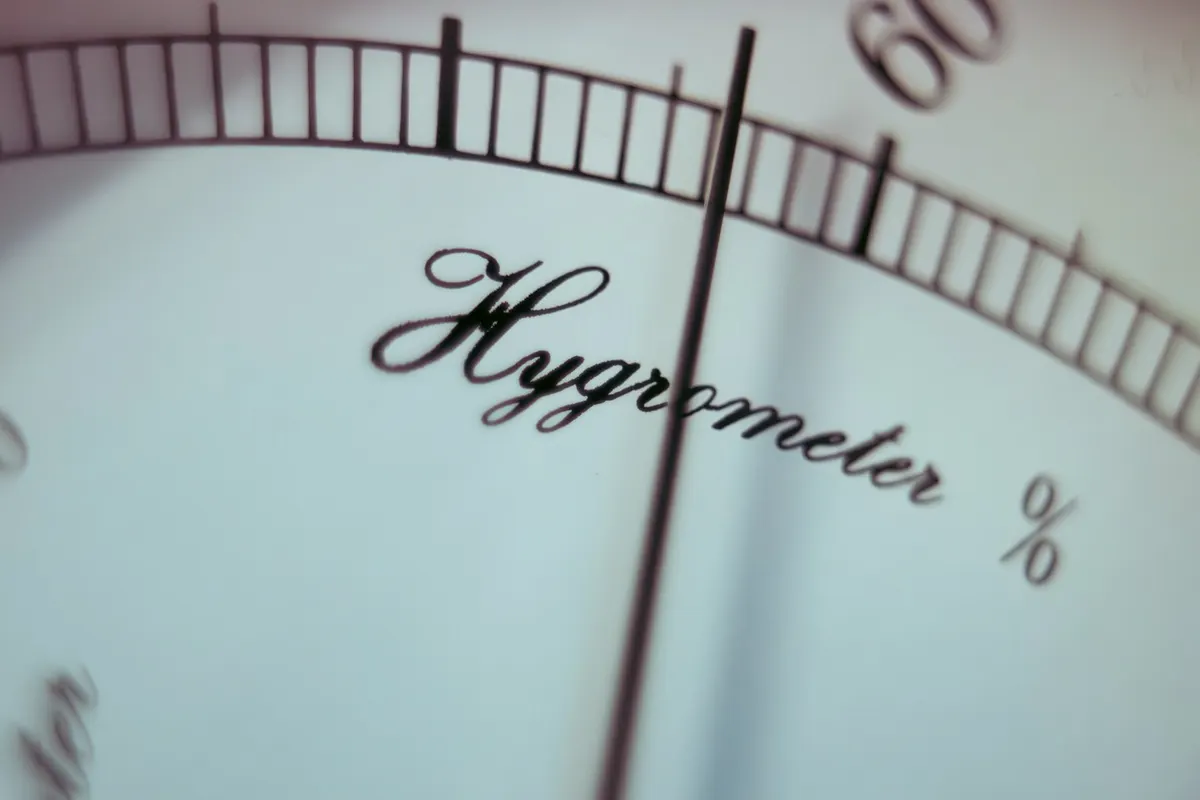
Use a small digital hygrometer, which is cheap and sold in most hardware stores, or the reading on the machine itself. Then compare:
- Humidity below about 50 percent: the air is already dry enough. The machine may cycle off, and the bucket will stay empty. That is normal.
- Humidity above your target setting and above 55 or 60 percent: the machine should be pulling water. If it is not, there is a fault, or it is too cold.
The U.S. Environmental Protection Agency advises keeping indoor humidity below 60 percent, ideally between 30 and 50 percent, to prevent mold. If your meter shows that, the dehumidifier has done its job.
Fix 1: Check the humidity setting
If the humidistat is set higher than the actual humidity of the room, the machine will not run its compressor. Some models still run the fan, which makes it look as if the unit is working.
- Set the target to about 45 or 50 percent, or to a lower setting for a test.
- Some units have a "continuous" mode that ignores the target. Try it for a few hours and see if water appears.
If water starts to collect, the machine was just waiting for higher humidity.
Fix 2: Check the room temperature
This is one of the most common reasons for an empty bucket, especially in a basement or garage in cold months.
A standard dehumidifier works like a small air conditioner. Air is pulled across a cold coil, moisture condenses into water, and the dry air is warmed and pushed out. When the room is cool, there is less moisture in the air to begin with, and the coil gets so cold that water freezes on it instead of dripping off. TCL's support page notes the room should be above about 41 degrees Fahrenheit and ideally above 65 for best performance, and many makers say the same for their models.
What to do:
- Move the unit to a warmer room, or warm the space a little.
- Check your manual for the temperature range.
- If you must dehumidify a cold space, buy a unit made for low temperatures. Some have auto-defrost, and desiccant dehumidifiers work well in cold spaces because they do not rely on a cold coil.
If the cold room is damp, consider why. A space that is both cold and wet may have a leak or poor drainage, and a musty smell in the room is a warning sign.
Fix 3: Look for frozen coils
Frost on the coils is the second most common cause. When the coils ice over, air cannot pass through them, the fan blows the same humid air back out and nothing is collected.
Signs of frozen coils:
- A layer of white frost or ice on the coils at the back or inside the grille.
- Weak airflow from the exhaust.
- An empty bucket even though the room feels damp.
- Water suddenly pours into the bucket after the unit is switched off, because the ice melts.
How to fix it:
- Unplug the unit.
- Leave it for a few hours, or until the ice has melted. You can speed it up by putting it in a warmer room. Put a towel under it, because the water will drip.
- Clean the filter, as in Fix 4.
- Restart it in a warmer area, above about 65 degrees Fahrenheit, and see whether water now collects.
If the coils freeze again in a warm room, the cause is usually restricted airflow or a refrigerant problem.
Fix 4: Clean the air filter and the grilles
A clogged filter stops air from reaching the coils. The coil then gets too cold, ices up, and the machine collects less water. Dust, pet hair and lint are the usual causes.
- Unplug the machine.
- Slide out the filter, which is behind a grille at the back or on the side.
- Wash it in warm soapy water, rinse it and let it dry completely.
- Wipe the grilles and vents with a cloth, and check that nothing blocks the intake or exhaust.
- Keep the unit away from walls and furniture. Most makers ask for at least a foot of clear space on every side.
Do this every few weeks during heavy use. A clean filter also saves electricity, as we explain in our guide to what a dehumidifier costs to run.
Fix 5: Make sure the bucket is seated and not full
Dehumidifiers have a float switch that turns the compressor off when the bucket is full or missing. If the bucket is not pushed all the way in, or the float is stuck, the machine may think the bucket is full and run only the fan.
- Take out the bucket, empty it, and push it back until it clicks.
- Check that the float inside the bucket moves freely. Mineral buildup or a bit of debris can jam it.
- Look at the display for a "bucket full" light and clear it.
If you have a drain hose attached for continuous draining, make sure it is not kinked or blocked, and that it slopes downhill. Water that cannot leave the hose may back up and trigger the switch.
Fix 6: Check that the room is closed and not too big
A dehumidifier cannot dry the whole house, or a room where the door and windows are wide open. If outside air keeps flowing in, the humidity may never drop, and the bucket fills slowly or not at all.
- Close doors and windows in the room being dried.
- Check the unit's size rating. A small unit in a very large, damp space may collect little compared with what the room needs.
- Place the unit in the middle of the room rather than in a corner.
If your whole house feels sticky despite the air conditioning, why a house feels humid with the AC on covers causes that a dehumidifier alone cannot fix, such as an oversized AC.
Fix 7: Test the humidity sensor
If the room is damp and the settings are right, the sensor that reads humidity may be faulty or dirty. The machine then "thinks" the air is dry and does not run the compressor.
- Compare the unit's reading with a separate hygrometer. If they differ by more than about 5 to 10 percent, the sensor may be off.
- Wipe the sensor area, often near the air intake, with a dry cloth, taking care not to damage it.
- Set the unit to continuous mode and see if the compressor starts.
If continuous mode works but the normal mode does not, the sensor or control board is likely the problem.
Fix 8: Listen and feel for the compressor
The compressor is the heart of the machine, and the most expensive part. A quick test tells you whether it is working.
With the unit running in a warm room and the humidity high:
- Listen for a low hum or a click when the compressor starts. The fan alone makes a steady whooshing sound.
- Feel the exhaust air. It should be a little warmer than the room, and drier. If it is the same temperature as the room, or cooler, the compressor may not be running.
- Look at the coils after 15 to 20 minutes. They should be cold and damp, or lightly frosted in a cool room. If they stay at room temperature, they are not cooling.
If the fan runs but the coils stay warm, even in a warm room, the compressor or the sealed refrigerant system may have failed. It is rarely worth repairing. A new dehumidifier costs about the same as a service call for most home models.
Fix 9: Replace an old or damaged unit
Dehumidifiers last around five to ten years, depending on how much they are used. Signs that it is time for a new one:
- It is old, noisy or has repeated icing problems.
- The coils are damaged, corroded or oily from a refrigerant leak.
- It still collects no water after you have checked every item above.
- The repair quote is high, compared with the cost of a new unit.
When you buy a new one, look for an ENERGY STAR model, which uses less energy for the same amount of water. Pick a size that fits the space, check the temperature range and consider models with a pump or hose for continuous draining.
Other explanations for an empty bucket
- The unit drains through a hose, so the bucket stays empty even though the machine is working. Check the drain outlet.
- It is a desiccant or thermoelectric type. Small "mini" dehumidifiers with thermoelectric cooling remove only a little water. A cup a day is normal for them.
- The room has a lot of ventilation. An open window or a leaking duct feeds in dry or damp air depending on the weather, and the machine may be fighting it.
- The humidity is dropping from other causes, such as a change in weather, or the AC, which also removes moisture.
If the room is still damp
If you have confirmed that the machine works but the room stays humid, look at where the moisture comes from. Common sources are:
- A leaking pipe, a damp wall or a crack in the foundation.
- Rain or groundwater coming into a basement.
- A clothes dryer that vents indoors, or a bathroom fan that vents into the attic.
- Wet laundry hung to dry inside, cooking without a vent, and houseplants.
- Condensation on cold windows and surfaces. If you see water on the glass, see why there is condensation on windows.
A dehumidifier can control moisture, but it cannot fix the source.
A quick checklist
- Measure the humidity with a hygrometer.
- Check the target setting, and try continuous mode.
- Make sure the room is above about 65 degrees Fahrenheit.
- Look for frost on the coils, and defrost them if needed.
- Clean the filter and grilles.
- Reseat the bucket and check the float.
- Close doors and windows, and confirm the unit's size.
- Compare the unit's humidity reading with a second meter.
- Test for cold coils and a running compressor.
What we could not verify
Operating temperature ranges, defrost behavior and filter locations differ by brand and model, so follow your manual where it differs from this guide. We cannot say what a repair will cost, because that depends on the part and the area. A faulty compressor is usually confirmed by a technician with proper tools.
The short version
A dehumidifier running without collecting water is usually working normally in dry air, struggling in a cold room, or iced over. Measure the humidity, warm the room above about 65 degrees Fahrenheit, defrost the coils and clean the filter, and check the bucket and float. If the fan runs but the coils never get cold, the compressor or sealed system has probably failed, and replacing an older unit is often the better choice.
Sources
This guide was checked against these official and manufacturer sources.
Frequently asked questions
Why is my dehumidifier running but not collecting water?
The most common reasons are that the air is already dry enough, the room is too cold for a compressor dehumidifier, the coils have frozen, the filter is clogged, or the bucket is not seated so the full-bucket switch stops it. A failed compressor or refrigerant leak is less common but possible.
What temperature does a dehumidifier stop working?
Most standard compressor dehumidifiers work best above about 65 degrees Fahrenheit and become much less effective below about 60. Below that, the coils can frost over and the unit collects little or no water. Some models have auto-defrost and some are designed for cooler spaces, so check your manual.
How do I know if my dehumidifier compressor is bad?
A working dehumidifier blows out warmer, drier air, the coils at the back feel cold when the unit has been running, and water drips into the bucket. If the fan runs but the air is the same temperature as the room, you hear no compressor hum, and the coils never get cold even in a warm room, the sealed system or compressor may have failed.
How long should a dehumidifier take to fill the bucket?
It depends on how damp the space is and the size of the unit. In a very damp basement, a 50-pint unit may fill a 1-gallon bucket in several hours. In a room that is already fairly dry, it may take days or never fill. A low reading on a humidity meter means the machine is doing its job.
Should I turn my dehumidifier off if it collects no water?
If the room humidity is already near your target, the compressor will cycle off by itself and the bucket will stay mostly empty, which is normal. If the humidity is high but no water is collected, switch it off and work through the checks in this guide rather than leaving it running, since it wastes electricity.

Written by
Agha Ali Abbas
Agha Ali Abbas is the founder and editor of TimeToNote. He has worked in SEO and content writing for 18 years, and he checks every guide against manufacturer documentation and official sources before it goes live.
Related guides

Home Problems
Why Is There Condensation on My Windows? Causes and How to Stop It
Water on the inside of your windows every morning? Learn why windows sweat, what condensation between the panes means, and simple ways to stop it and prevent mold.
7 min read
Home Problems
House Still Humid With the AC On? 8 Reasons and How to Fix It
Your AC is running but the house still feels damp and sticky? Learn why it happens, from an oversized AC to a dirty filter, and easy ways to lower indoor humidity.
7 min read

Home Problems
Why Does My Room Smell Musty? Causes and How to Get Rid of the Smell
A musty smell almost always means damp air and mold or mildew nearby. Learn how to find the source, remove the smell, and stop it from coming back.
8 min read
More guides you may need
Home Problems
Garbage Disposal Humming but Not Working? How to Fix It Safely
Garbage disposal hums but will not spin? It is usually jammed. Learn how to free it safely with an Allen wrench, reset it, and keep it from jamming again.
7 min read

Home Problems
How to Bleed a Radiator: Easy Steps to Get Rid of Cold Spots
Radiator cold at the top or not heating well? Learn how to bleed a hot water radiator in 8 steps, what tools you need, and how to check boiler pressure after.
7 min read