Washing Machine Keeps Tripping the Breaker? Causes and Safe Fixes
Washing machine trips the breaker or GFCI mid-cycle? Check a shared circuit, the motor, heating element, connections and moisture. Safe steps.
On this page
A washing machine trips the breaker when the circuit is overloaded, the motor is stalling or failing, a heating element or connection is faulty, or moisture has reached electrical parts. Check what else shares the circuit, note when it trips, inspect the cord and outlet, and run the washer alone. If it still trips, stop resetting it and call an electrician or appliance technician.
The washer fills, starts to spin, and the laundry room goes dark. Or it trips after half an hour. A washer that trips the breaker is telling you something, and resetting it again and again is not the answer.
This guide helps you narrow down the cause by when and how it trips. It draws on an electrician's guide, an appliance blog and a repair forum thread. Washers vary by brand, so check your manual, and keep in mind that US and UK machines differ in features like built-in heaters.
Safety first
- Do not keep resetting the breaker. Repeated trips mean something is wrong.
- Unplug the washer before you inspect the cord, back panel or hoses.
- If you smell burning, see sparks or find the outlet warm to the touch, stop using the washer and call a professional.
- Do not use an extension cord or a power strip for a washing machine.
What the pattern tells you
| When it trips | Likely cause |
|---|---|
| Right when you plug it in or start it | Short circuit, damaged cord or a failed part |
| At the start of the spin cycle | Motor strain or an overloaded circuit |
| After running for several minutes | Overheating, intermittent arcing or leakage |
| Only on warm or hot cycles | Heating element (on machines that have one) |
| Only when other appliances are also on | Shared circuit overload |
| GFCI outlet trips, not the breaker | Ground leakage, often moisture |
Cause 1: A shared or overloaded circuit
Washers draw a lot of current during wash and spin. If the circuit also feeds a dryer's controls, lights, a freezer or other devices, the total can pass the breaker's limit.
- Look at the panel label and see what else is on the washer's circuit.
- Unplug other devices on the same circuit.
- Run the washer alone through a short cycle.
If it works alone, you have a load problem. An electrician can check the circuit and add a dedicated one if needed. A source suggests checking the panel to see what else shares the circuit.
Cause 2: The motor
A stalled motor draws high current, much like a short circuit, and can trip a breaker quickly. A weak start capacitor can cause the same problem. Signs are a hum at startup that does not turn into rotation, a burning smell, or a drum that is hard to turn by hand with the washer unplugged.
Motor and capacitor repairs usually need a technician. Compare the repair quote with the price of a new washer, especially for an older machine.
Cause 3: A heating element
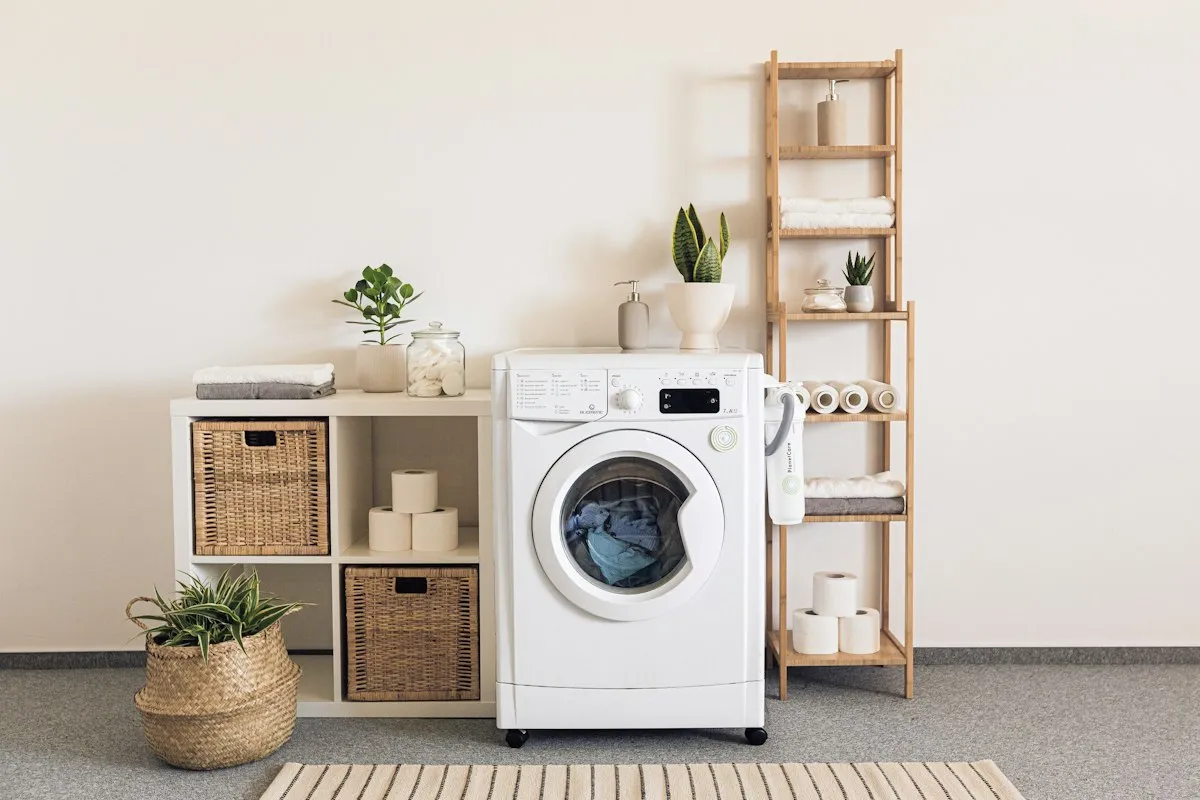
Some washers have an internal heater for hot or sanitize cycles. One forum post described a washer that tripped on the warm-water setting and not on cold. That pattern points to the heating element. The poster replaced it and the problem persisted, so it may not be the whole answer.
If your washer only trips on hot cycles, avoid those cycles until it is checked and tell the technician about the pattern.
Cause 4: Loose, damaged or wet connections
Other causes include a failing outlet or cord connection and moisture in electrical parts.
- Unplug the washer and look at the plug for scorching, bent prongs or discoloration.
- Check the outlet for looseness, heat marks or a melted face.
- Look at the cord for cuts or crushing.
- If water has leaked inside the washer or onto the outlet, dry the area and have it inspected.
A loose or corroded connection can overheat and trip the breaker. A loose outlet should be replaced by an electrician.
Cause 5: A GFCI or arc-fault device
If the washer is on a GFCI outlet or breaker, small leaks from moisture can trip it. Laundry rooms in basements and garages are often protected this way. If the GFCI trips only with the washer, the washer may have a leak. If it trips with other devices as well, the outlet or wiring may be at fault. See telling a breaker fault from a GFCI fault for how to tell these apart.
A quick isolation test
- Unplug the washer and reset the breaker. If it trips with nothing plugged in, the breaker or wiring has a fault. Call an electrician.
- Plug in a lamp or small device. If that trips it too, the circuit is the problem.
- If the circuit is fine, plug the washer in and run only a drain or rinse cycle.
- If it trips only on specific cycles or at a specific point, note that.
When to call a professional
Call an electrician if:
- The breaker trips with the washer unplugged, or other devices trip it too.
- The outlet is hot, loose or scorched.
- You want a dedicated circuit.
Call an appliance technician if:
- The washer trips by itself on a clear circuit.
- You suspect a motor, capacitor, heater or control fault.
- There is a burning smell or visible damage inside.
Tell them the make and model, when it trips and what you tested.
Repair or replace?
| Situation | Often better |
|---|---|
| Overloaded circuit | Fix the circuit, keep the washer |
| Damaged cord or loose outlet | Repair |
| Motor or capacitor on an old washer | Get a quote, compare with a new washer |
| Several parts failing | Replace |
If the washer also does not drain or smells bad, see why a washing machine will not drain and a smelly washer drum.
What not to do
- Do not keep resetting a breaker that trips again.
- Do not use an extension cord.
- Do not swap in a larger breaker.
- Do not open the electrical parts with the washer plugged in.
- Do not ignore a warm outlet or a burning smell.
Which fix fits your situation?
- Trips only with other appliances on: an overloaded shared circuit.
- Trips at startup or spin: motor or capacitor.
- Trips only on warm or hot cycles: heating element.
- Trips after several minutes: overheating or moisture.
- Outlet is hot: stop and call an electrician.
Bottom line
Work out when the washer trips, check what shares the circuit and inspect the cord and outlet. Run the washer alone before you blame the machine. If it still trips, stop resetting it and have an electrician or appliance technician find the cause.
Sources
This guide was checked against these official and manufacturer sources.
Frequently asked questions
Why does my washing machine trip the breaker?
Common causes are a circuit shared with other devices that is overloaded, a stalled motor or weak start capacitor, a failing heating element, loose or damaged connections, and moisture in electrical parts.
What does it mean if it trips only on warm cycles?
One forum post described a washer that tripped only on warm-water settings and not on cold, which pointed to the heating element. The poster replaced it and the problem persisted, so the cause may lie elsewhere. Not all washers have a heating element.
Does when it trips tell me anything?
Yes. Tripping right at startup or during spin suggests a motor or overload problem. Tripping after running for a while suggests overheating or intermittent arcing or leakage.
Is it safe to keep resetting the breaker?
No. Do not keep resetting it. If you smell burning, see sparks, or the outlet is warm, stop using the washer and call an electrician or appliance technician.
Should the washer be on its own circuit?
A circuit that also powers other devices can be overloaded. An electrician can check what shares the washer's circuit and add a dedicated circuit if needed. Check your local rules.

Written by
Agha Ali Abbas
Agha Ali Abbas is the founder and editor of TimeToNote. He has worked in SEO and content writing for 18 years, and he checks every guide against manufacturer documentation and official sources before it goes live.
Related guides
Home Problems
Why Does My Circuit Breaker Keep Tripping? 7 Causes and Safe Fixes
Why does your breaker keep tripping? Learn the 7 common causes, simple safe checks, and when to call an electrician. Easy steps for any home.
11 min read
Home Problems
Why Is My Washing Machine Not Draining? 8 Causes and Fixes
Washing machine full of water and not draining? Check the drain hose, pump filter, standpipe and pump in this order, and learn how to empty it safely.
10 min read
Home Problems
Why Does My Washing Machine Smell? How to Clean It and Stop the Odor
Musty or rotten egg smell from your washer? Learn what causes it and how to clean your washing machine step by step, so your laundry smells fresh again.
8 min read
More guides you may need
Home Problems
Air Fryer Keeps Tripping the Breaker? Causes and Safe Fixes
Air fryer tripping the breaker or GFCI? Check the circuit load, outlet, cord and the fryer itself. Here is how to find the cause without guessing.
6 min read
Home Problems
Ceiling Fan Keeps Turning On by Itself? Remote, Interference and Power Causes
Ceiling fan or its light starts on its own? Check the remote, matching DIP switches, a neighbor's remote, a power cut reset and the wall switch.
5 min read