Water Stain on Ceiling After Rain? How to Tell If It Is a Roof Leak
Water stain on the ceiling after rain? Learn how to tell a roof leak from plumbing or condensation, what to check in the attic and when to call a pro.
On this page
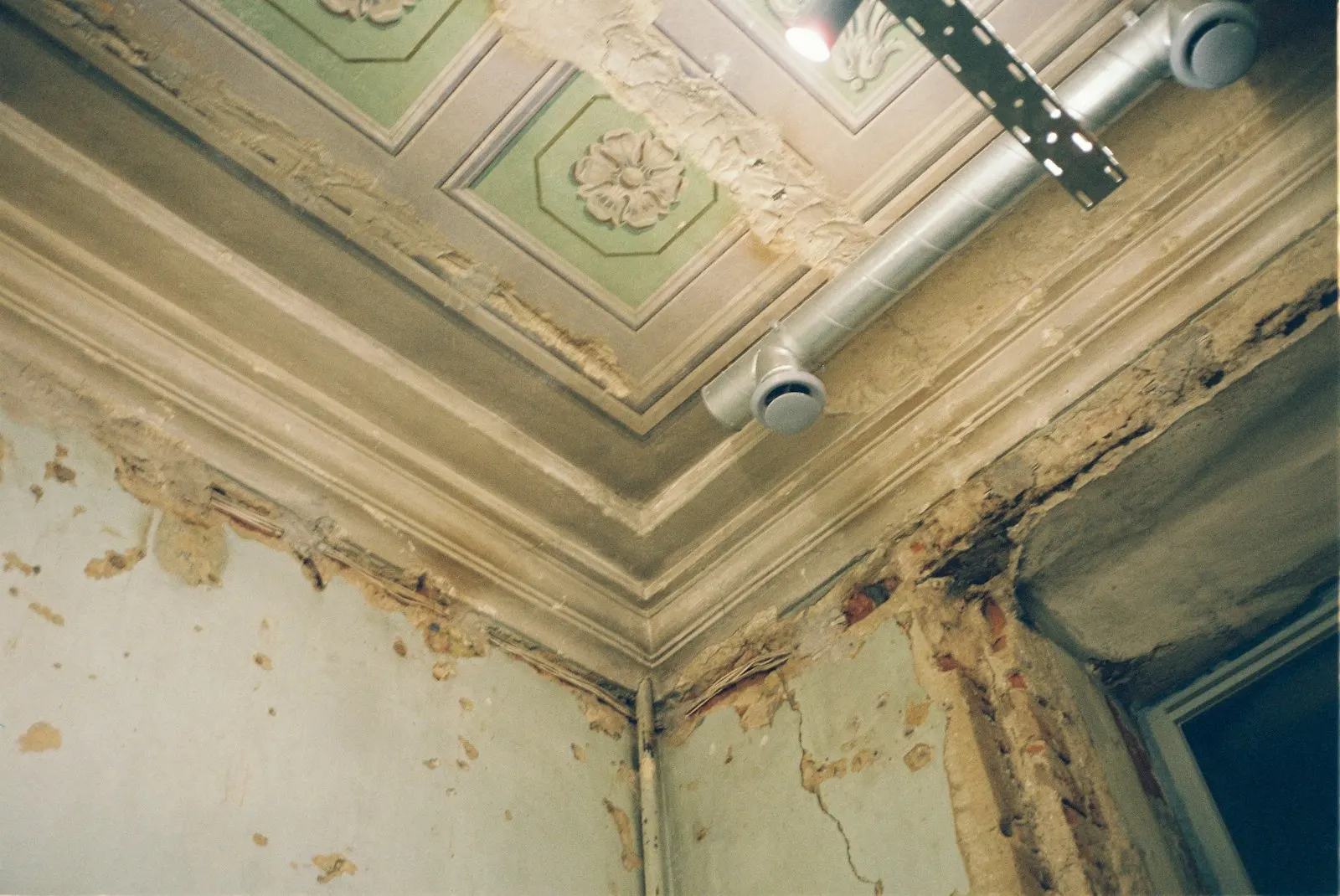
A water stain on the ceiling after rain usually means water got past the roof, flashing or gutters and soaked the ceiling below. But a stain only proves water was there once. Touch it to see whether it is wet, mark it, watch it through the next rain and check the attic before you paint.
A brown ring appears and rain is the first thing you blame. Often that is right, but not always. Plumbing, condensation and old leaks can all leave the same mark, and the rain may be a coincidence. This guide helps you work out which one you have, what is safe to check yourself and when to bring in a professional.
Stay safe first
Do these before anything else:
- Keep clear of a bulging or sagging ceiling. Water can pool in the drywall above and let go all at once. Do not poke it or try to drain it yourself. Keep people and pets out of the room and call a professional right away.
- Treat lights and fans in the wet area as live hazards. Turn off the breaker for that circuit, not just the wall switch. The Electrical Safety Foundation International (ESFI) recommends that water-damaged electrical equipment be evaluated by qualified electricians, and warns that restoring power without an evaluation could cause a fire or shock.
- Do not climb onto a wet roof. Roof work in rain is how people get hurt. Look from the ground and leave roof repairs to a roofer.
What a ceiling stain can and cannot tell you
A stain shows that water reached that spot. It does not tell you when, how much or where the water came from. The brown or yellow color comes from dirt and minerals the water carried along. A stain can sit unchanged for years, or it can be the start of a recurring leak.
That is why the first job is not to find the source. It is to find out whether the stain is changing.
Is the stain wet, and is it old or new?
Check these on a dry day, then again after rain:
| What you notice | What it often means |
|---|---|
| Damp, cool or soft to the touch | Active moisture right now. Act soon. |
| Dry, firm and unchanged for weeks | Possibly an old leak that stopped, but it can return. |
| Darker or larger after each rain | A leak that is still active, even if the ceiling dries between storms. |
| Grows during dry weather | Often plumbing, not rain. |
| Crisp outline, no change | More likely a finished leak (some inspectors use edge sharpness as a hint, not proof). |
| Feathered or fuzzy edge, slightly damp | More likely recent or ongoing moisture. |
Make this simple by keeping a stain log:
- Trace the edge of the stain with a pencil and write the date next to it.
- Take a photo in the same light each time.
- Check again after the next rain and after a dry week.
- If the outline moves, the leak is active.
What caused the water stain on your ceiling after rain?
Match your pattern to the most likely causes. These are starting points, not diagnoses.
| Pattern | Likely cause | What to check next |
|---|---|---|
| Top-floor ceiling, appears or grows during or after rain | Roof leak: damaged or missing shingles, or failed flashing around vents, chimneys or skylights | Attic check (below) and a look at the roof from the ground |
| Near an outside wall or the eaves, after heavy rain | Overflowing or clogged gutters, or water backing up at the roof edge | Gutters, downspouts and the edge of the roof |
| Below a bathroom, kitchen or laundry | Plumbing or a worn seal, with rain a coincidence | Fixtures and caulk above; note whether the stain changes when they are used |
| Appears in cold weather, not tied to rain | Condensation in a poorly ventilated attic, or an ice dam | Attic ventilation and insulation; see the ice dam guide |
| Appears on hot, humid days when the AC runs | A clogged air conditioner drain | The indoor unit and drain line, or an HVAC technician |
| Dry, gray to dark, follows the framing, no moisture | Possible dust or soot deposits (sometimes called ghosting) rather than water | Moisture check first, to rule out mold or a leak |
If more than one pattern fits, the stain log will usually separate them. Rain-only stains point to the roof. Stains that appear without rain point somewhere else.
How to check the attic safely
If you can reach the attic safely, it is the best place to find a roof leak. Do it in daylight, or during and just after rain.
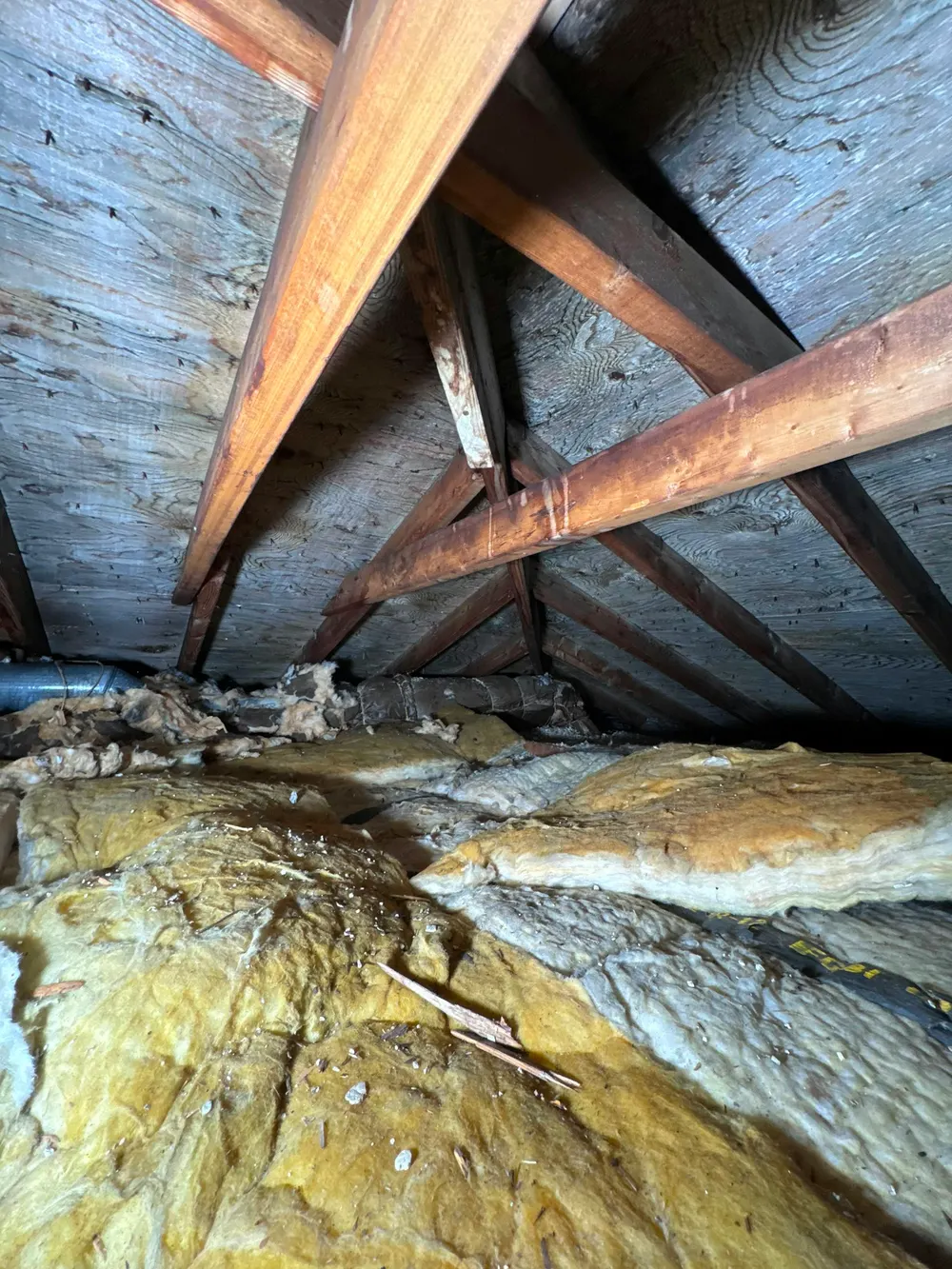
- Bring a bright flashlight and wear sturdy shoes, a dust mask and gloves.
- Step only on the wooden framing. Drywall and insulation will not hold your weight, and one wrong step can put your foot through the ceiling below.
- Start above the stain. Look at the underside of the roof deck for dark, damp or stained wood, and at the insulation for matted, wet or discolored patches.
- Follow any water trail uphill toward the roof peak. Water runs downhill, so the entry point is usually higher than the stain.
- Check around anything that goes through the roof: vent pipes, the chimney and skylights.
- Look for daylight coming through the roof deck.
- Photograph what you find and note the date.
If the attic is dry during a heavy rain, the leak may not be the roof. Look at plumbing, condensation and the other patterns in the table.
What to look at from the ground
Without leaving the ground, you can check a few things that commonly cause rain stains:
- Gutters and downspouts: overflowing, sagging or full of debris, especially above the stained room.
- The roof surface: use binoculars to look for missing, cracked or lifted shingles.
- Flashing: the metal around chimneys, vents and skylights, where water often gets in.
- The walls under the eaves: staining on the siding can show where water is overflowing.
If you find damage, a roofer can confirm it. Our guide to what roof damage can look like explains what the damage can mean.
Why the stain may be far from the leak
Water entering through the roof does not always drip straight down. It can run along rafters, roof decking and insulation before it soaks through the ceiling, so the stain can sit some distance from the actual entry point. That is why a roofer who finds nothing right above the stain may still be looking in the wrong place. Following the trail uphill in the attic is more reliable than looking straight up.
What to do now while you find the cause
- Protect the area. Move furniture and place a bucket and towels if it is dripping.
- Take dated photos of the stain and any damage. Keep them in case you make an insurance claim.
- Dry the area. Run a fan or a dehumidifier, and open a window if the weather allows.
- Read your policy. Many homeowners policies treat sudden damage differently from gradual leaks or wear, so ask your insurer what is covered and how soon to report a problem.
- Do not paint over it yet. Paint hides the warning, and if moisture is still present the stain will come back.
How fast water damage turns into mold
According to the US EPA, water-damaged areas and items should be dried within 24 to 48 hours to prevent mold growth, and in most cases mold will not grow if wet materials are dried in that time. Porous materials such as ceiling tiles may have to be thrown away if they become moldy. If the moldy area is bigger than about 10 square feet, or there has been a lot of water damage, the EPA advises getting guidance before handling it yourself.
Warning signs that moisture is still a problem are a musty smell, soft or crumbling drywall, bubbling paint and a stain that keeps growing. For a smell with no obvious source, see our guide to an unexplained musty smell.
Who to call
| Situation | Who to call |
|---|---|
| Stain appears or grows after rain, top floor, or you see roof damage | A roofer |
| Stain below a bathroom or kitchen, or it grows in dry weather | A plumber |
| Stain appears in hot weather with the AC running | An HVAC technician |
| A light, fan or outlet in the area is wet, buzzing or flickering | A licensed electrician |
| Sagging or bulging ceiling, large wet area or heavy mold | A water damage professional, urgently |
| Not sure where it comes from | A home inspector or a roofer who will inspect the attic |
Check licenses and get more than one opinion for big repairs. To learn more about finding water behind walls and floors, see tracing leaks inside walls and floors.
Mistakes to avoid
- Painting before the ceiling is dry and the source is fixed.
- Assuming a dry stain is harmless without watching it through the next rain.
- Climbing onto the roof in wet weather.
- Cutting into the ceiling to look inside, which can release mold spores if mold is present.
- Resetting a breaker for a wet light and using it again without an electrician's check.
Next step
Tonight, outline the stain, date it and take a photo. After the next rain, check whether it changed and look in the attic. If it is wet, sagging or growing, call a professional now instead of waiting.
Sources
This guide was checked against these official and manufacturer sources.
Frequently asked questions
Why is there a water stain on my ceiling but no leak?
A stain only proves that water reached the ceiling at some point. The leak may have stopped, the water may have come from condensation, or the source may be well away from the stain. Track the stain through the next rain and check the attic.
Is a dry water stain on the ceiling dangerous?
A dry stain is not an active leak, but it can come back. Check for a musty smell, soft drywall or a stain that grows, which can point to ongoing moisture or mold.
Can I paint over a ceiling water stain?
Only after the ceiling is fully dry and the source is fixed. Painting over an active leak hides the warning and the stain usually returns.
How long can a wet ceiling stay wet before mold grows?
The US EPA says to dry water-damaged areas and items within 24 to 48 hours to help prevent mold growth. Material that stays wet longer is more likely to need replacing.

Written by
Agha Ali Abbas
Agha Ali Abbas is the founder and editor of TimeToNote. He has worked in SEO and content writing for 18 years, and he checks every guide against manufacturer documentation and official sources before it goes live.
Related guides
Home Problems
Hidden Water Leaks: 9 Warning Signs and How to Find Them
A hidden water leak can quietly damage your home and raise your bill. Learn 9 warning signs, a simple water meter test, how to check toilets, and when to call a plumber.
7 min read
Home Problems
Signs Your Roof Needs Repair or Replacement (and How to Tell Which)
Missing shingles, leaks, or granules in the gutters? Learn 10 signs your roof needs repair or replacement, how long roofs last, and when a repair is enough.
7 min read

Home Problems
Ice Dam on Roof? How to Remove It Safely and Stop It Coming Back
Ice dam on roof causing leaks? Learn what causes it, how to remove it safely without damaging shingles, and how to stop ice dams from forming again.
6 min read
More guides you may need

Home Problems
Garage Fridge or Freezer Not Working in Winter? Why and How to Fix It
Garage fridge or freezer warm or not cooling in winter? Cold air can switch the compressor off. Learn why it happens, how to protect your food and what fixes work.
6 min read
Home Problems
Garbage Disposal Keeps Tripping the Breaker? Causes and Safe Fixes
Disposal trips the breaker or GFCI when you turn it on? Check for a jam, overheating, a worn motor, wiring and arc-fault conflicts. Safe steps.
5 min read