Smoke Detector Going Off for No Reason? Causes and Fixes
Smoke alarm going off with no smoke or fire? Dust, steam, age and interlinked alarms cause most false alarms. Here is how to find the cause and stop it safely.
On this page
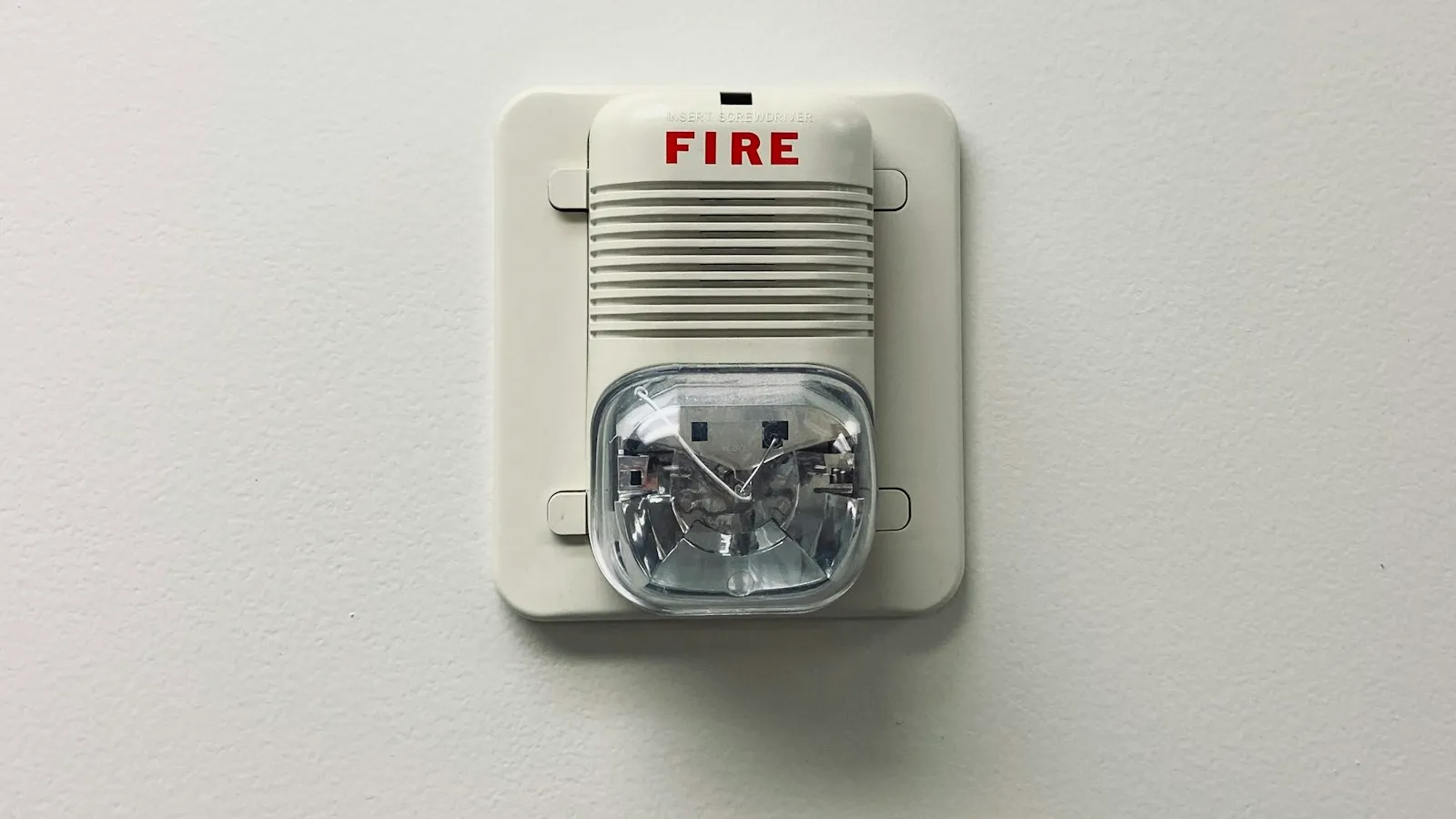
A smoke detector with no fire is usually reacting to dust or insects in the sensor, steam or cooking fumes, a low backup battery, old age, or another linked alarm. First make sure there is no fire or smoke. Then clean the unit, replace the battery, check the date on the back and replace it if it is older than 10 years.
If an alarm sounds and you are not sure why, treat it as real until you have checked. Look and smell for smoke, feel doors for heat and leave the house if there is any doubt. If you are sure it is a false alarm, the steps below help you find the cause.
Why is my smoke detector going off for no reason?
- Dust, dirt or insects. A buildup inside the sensing chamber can trigger the alarm, especially in a room you rarely clean.
- Steam and humidity. A hot shower or a boiling pot sets off alarms placed close to bathrooms and kitchens. Ionization alarms are more sensitive to cooking fumes.
- A low backup battery. Hardwired units still have a battery. A weak one can cause chirps or false alarms.
- An old detector. After about 10 years, sensors become unreliable.
- A linked alarm. In interconnected systems, one unit that senses smoke or has a fault sets off the rest.
- A power glitch. A surge or a flicker in the mains can set off a hardwired unit.
- A real hazard you cannot see. A combination smoke and carbon monoxide alarm may be warning about CO, which has no smell.
What kind of sound is it?
| Sound | What it usually means |
|---|---|
| Continuous loud alarm | Smoke detected, or a sensor fault |
| One chirp every 30 to 60 seconds | Low battery |
| Chirps in groups, or a different pattern | End of life, or a fault code. Check the manual |
| All alarms sounding at once | Linked system. One unit is the source |
| Alarm only after a shower or while cooking | Steam or cooking fumes |
| Random, at night | Temperature changes, low battery or dust |
How to fix it
- Check for smoke or fire first. Look in the kitchen, near the furnace and in bedrooms. If you smell burning, call 911.
- Clear the air. Open windows and run a fan for a minute or two. Fan the alarm with a towel if steam or cooking fumes set it off.
- Find the source in a linked system. On interconnected units, the one that set off the others usually has a flashing LED. That is the one to troubleshoot.
- Press and hold the test or silence button. Hold it for 15 to 20 seconds to reset the unit.
- Replace the battery. Use a fresh battery of the type in the manual. Do this even on hardwired units.
- Clean the sensor. Vacuum the vents with a soft brush attachment. For a deeper clean, turn off power at the breaker, twist off the cover and use compressed air. Do not use water or cleaning spray.
- Check the manufacture date. Look on the back of the unit. If it is more than 10 years old, replace it.
- Move or change the alarm. If it only goes off from steam or cooking, it may be too close to a bathroom or kitchen. An electrician can relocate it, or you can switch to a photoelectric model, which tends to be less prone to nuisance alarms from cooking.
What about carbon monoxide?
A combination smoke and CO alarm uses different patterns for each hazard. Check your manual. If a CO alarm sounds, get everyone outside into fresh air and call 911 or your fire department. Do not go back in until the building has been checked. Carbon monoxide has no smell, so a false alarm is not something to assume.
When should I replace the alarm?
Replace a smoke alarm if:
- It is more than 10 years old.
- It still goes off after you have cleaned it and changed the battery.
- It chirps in an end-of-life pattern.
- It was in a fire, or was damaged by water.
Newer units are inexpensive compared with the risk of an alarm you cannot trust, and some come with sealed 10-year batteries. In a hardwired system, replace every unit in the set with the same brand, or one the manufacturer says is compatible, so the linking works.
When to call a professional
Call a licensed electrician or the manufacturer if:
- A hardwired alarm goes off repeatedly after a new battery and a fresh unit.
- Linked alarms sound at random and you cannot find the source.
- You see scorching or smell burning near the unit or the wiring.
- The alarm has no clear cause and your house has had power problems, as in what to do if the power goes out.
If a smell of burning comes from your vents, read a burning smell when the heat turns on.
What not to do
- Do not pull the unit off the ceiling and leave the room without one.
- Do not ignore a continuous alarm because it has gone off before.
- Do not paint over a smoke alarm or cover it.
- Do not use water or aerosol cleaners inside it.
Bottom line
Check for fire, then clean, reset and replace the battery. If the unit is 10 years old, replace it. Most false alarms come from dust, steam or age. For a chirp rather than a full alarm, see an alarm that only chirps. If your oven fills the house with smoke, read smoke coming from the oven.
Sources
This guide was checked against these official and manufacturer sources.
Frequently asked questions
Why does my smoke detector go off with no smoke?
Dust or insects in the sensor, steam from a shower, cooking fumes, an old unit or a power glitch are the usual causes. One alarm in a linked system can also set the others off.
How long do smoke detectors last?
About 10 years. The manufacture date is printed on the back, and an older unit should be replaced even if it seems to work.
Should I take the battery out to stop it?
Only briefly, to silence a nuisance alarm after you have checked there is no fire. Put it back right away, because an alarm with no battery gives you no warning.
Is a loud alarm the same as a chirp?
No. A full alarm means the unit senses smoke or a fault, while a single chirp every 30 to 60 seconds usually means a low battery or an end-of-life warning.

Written by
Agha Ali Abbas
Agha Ali Abbas is the founder and editor of TimeToNote. He has worked in SEO and content writing for 18 years, and he checks every guide against manufacturer documentation and official sources before it goes live.
Related guides
Home Problems
Why Is My Smoke Detector Chirping? 8 Causes and How to Stop It
Smoke detector chirping every 30 or 60 seconds, even with a new battery? Learn what each chirp means, how to reset it, and when to replace the whole alarm.
7 min read
Home Problems
Burning Smell When the Heat Turns On: Normal or a Problem?
A dusty burning smell the first time you turn on the heat is usually normal and fades in a few hours. Learn which smells are safe, which are dangerous, and what to do.
7 min read
Home Problems
Why Is My Oven Smoking? 8 Causes and What to Do Right Now
Oven smoking when you preheat or cook? Find out if it is spilled grease, a new oven burn-off, or something unsafe, and what to do right now to fix it.
7 min read
More guides you may need
Home Problems
Who to Call if Your Heat Is Not Working (Renters and Homeowners)
No heat at home? Renters call the landlord and, if ignored, the city. Owners check the thermostat, breaker and filter, then call an HVAC technician. Emergency steps too.
6 min read
Home Problems
Why Does My Refrigerator Have Ice in the Bottom? Causes and Fixes
Ice or a puddle at the bottom of your fridge or freezer? A clogged defrost drain is the usual cause. Here is how to thaw it, clear it and stop it coming back.
10 min read