Burning Smell When the Heat Turns On: Normal or a Problem?
A dusty burning smell the first time you turn on the heat is usually normal and fades in a few hours. Learn which smells are safe, which are dangerous, and what to do.
On this page
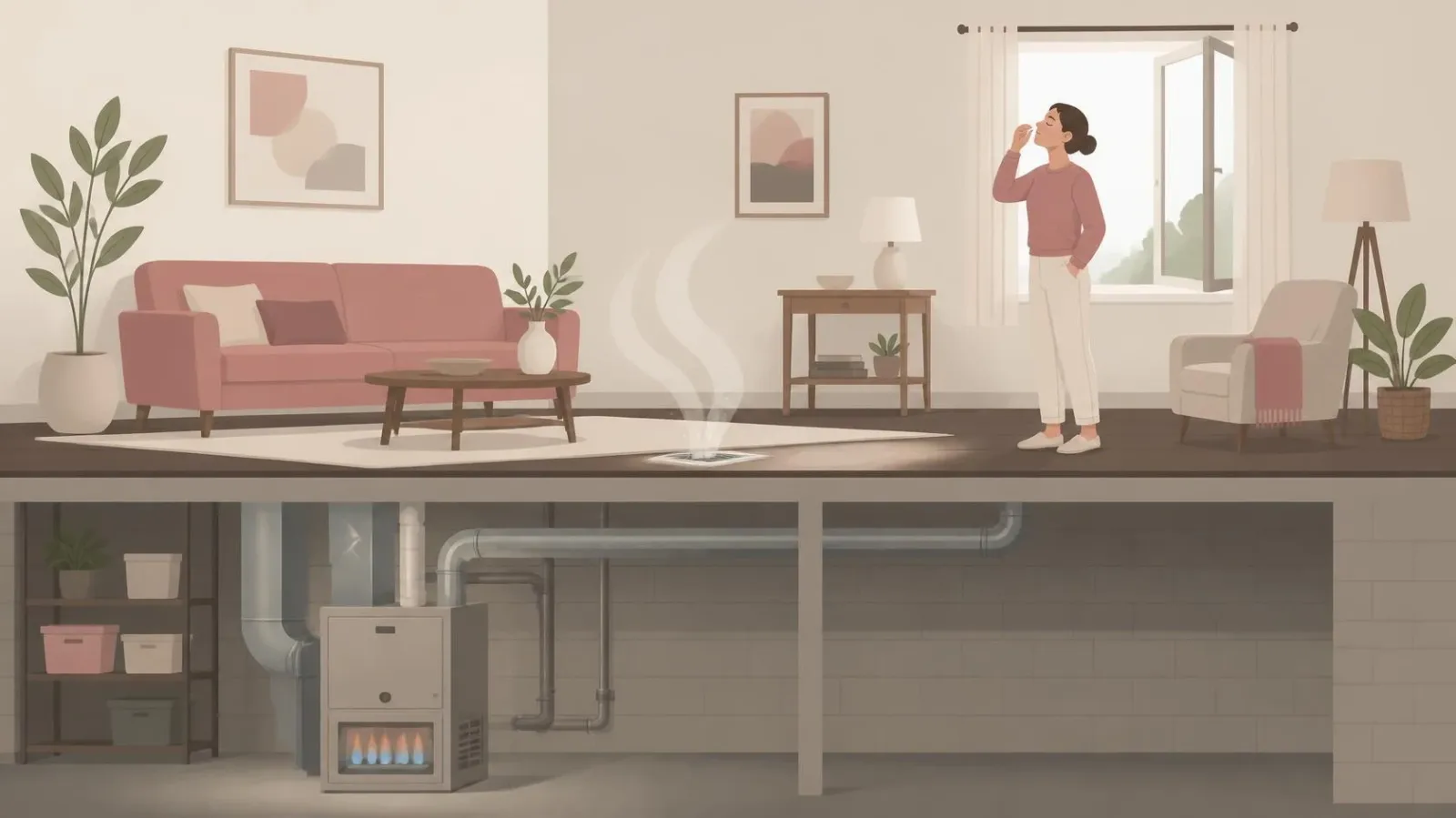
A burning smell the first time you turn on the heat each fall is usually normal. Dust settles on the furnace or heater parts over the summer. When the heat comes on, that dust burns off and makes a dusty, slightly burnt smell that should fade within a few minutes to a few hours.
But some smells are a warning. A smell like hot wires, melting plastic, or rotten eggs is not normal. Here is how to tell the difference and what to do.
Quick guide: what the smell means
| What it smells like | Likely cause | How serious | What to do |
|---|---|---|---|
| Dusty burning, first use of the season | Dust burning off | Normal | Open a window, wait a few hours |
| Burning dust that will not go away | Dirty filter or lots of dust inside | Low | Change the filter, call for a tune-up |
| Hot wires or melting plastic | Overheating motor or wiring | High | Turn the heat off and call a pro |
| Burning rubber | Worn belt or overheating motor | Medium to high | Turn the heat off and call a pro |
| Rotten eggs or sulfur | Natural gas leak | Emergency | Leave the house and call the gas company |
| Musty or moldy | Moisture in ducts or the filter | Low to medium | Change the filter, check for leaks |
| Smoky, like a fireplace | Blocked flue or chimney | High | Turn the heat off and call a pro |
Why heat smells like burning the first time
During the warm months, dust floats through your home and lands on the parts of your heating system that get hot:
- Gas furnaces: the burners and heat exchanger
- Electric furnaces and heat pumps: the electric heat strips
- Baseboard and space heaters: the heating elements
The first time these parts heat up, the dust burns. Carrier, a major furnace maker, says this smell is a normal part of starting up the heat and should go away once the dust is burned off.
You may notice it again after a long break in the heating season, or the first time you use backup heat on a heat pump.
How to get rid of the normal dust smell
- Open a window or two to let fresh air in.
- Let the heat run for an hour or two at a comfortable setting.
- Change the furnace filter if it looks gray or dusty.
- Vacuum the vents and registers to remove dust you can reach.
If the smell is gone by the end of the day, you have nothing to worry about.
When the burning smell is a problem
Call an HVAC technician if:
- The smell lasts more than a day
- The smell gets stronger instead of weaker
- It smells like hot metal, wires, or plastic
- You see smoke coming from the furnace or vents
- The furnace makes new noises, like squealing, buzzing, or grinding
- The furnace shuts off on its own over and over
An electrical smell often comes from a part that is overheating, like the blower motor. Running it can damage the furnace and, in rare cases, start a fire.
What to do if you smell something dangerous
If you smell hot wires, plastic, or see smoke
- Turn the heat off at the thermostat.
- Turn off power to the furnace. Most furnaces have a switch that looks like a light switch on or near the unit.
- If you see flames or heavy smoke, leave the house and call 911.
- Call an HVAC technician before using the heat again.
If you smell rotten eggs or gas
Natural gas has no smell on its own. Gas companies add a chemical that smells like rotten eggs so you can notice a leak.
- Leave the house right away. Take people and pets with you.
- Do not touch light switches, appliances, or phones inside. A spark can ignite gas.
- Do not light matches or lighters.
- Call your gas company or 911 from outside or from a neighbor's home.
- Do not go back inside until they say it is safe.
Protect your family from carbon monoxide
Gas, oil, and wood heat can make carbon monoxide (CO), a gas you cannot see or smell. A cracked heat exchanger or a blocked flue can let it into your home.
The U.S. Consumer Product Safety Commission recommends a CO alarm on every level of your home and outside sleeping areas. Test them when you turn on the heat for the season.
Signs of CO poisoning can feel like the flu: headache, dizziness, upset stomach, and feeling tired or confused. If your CO alarm goes off or several people feel sick at once, get everyone outside to fresh air and call 911.
If your alarms are chirping, our guide on why a smoke detector chirps explains what each sound means. Many combo smoke and CO alarms use the same signals.
Other heaters that smell like burning
Space heaters
New space heaters often smell for the first hour or two as coatings burn off. Dust on an older heater can smell too. But a space heater should never smell like melting plastic. If it does, unplug it.
Keep space heaters 3 feet away from anything that can burn, like curtains, bedding, and furniture. Plug them straight into the wall, not into an extension cord or power strip. Curious what one costs to run? Try our space heater cost calculator.
Heat pumps
A heat pump may smell dusty the first time its backup heat strips turn on. That should fade the same way a furnace smell does. A strong electrical smell is a reason to turn it off and call a pro.
Baseboard heaters
Dust, pet hair, and small items that fall behind baseboard heaters can burn. Vacuum along the fins before the cold season, and keep furniture and curtains away from them.
How to prevent burning smells
- Change your furnace filter every 1 to 3 months during heating season.
- Get a yearly tune-up in early fall, before the first cold snap. A technician cleans parts and checks for safety problems like a cracked heat exchanger.
- Vacuum vents and registers a few times a year.
- Keep the area around the furnace clear. Do not store boxes, paint, or cleaning products next to it.
- Turn the heat on for a test run on a mild fall day. That way the dust burns off before you really need heat.
Heat on, but the air is cold?
If the smell fades but your vents blow cool air, the problem may be the filter, the thermostat, or the pilot light. Our guide on a furnace that blows cool air instead of warm walks through the fixes.
Smells like burning plastic?
A burning plastic smell is different from dust. Common causes include:
- Something fell into a floor vent. Toys, wrappers, and bottle caps can sit on the duct and melt when warm air flows. Take off the vent cover and look with a flashlight.
- An overheating electrical part. The blower motor, wiring, or control board can get too hot as it ages.
- A new space heater or furnace part burning off its coating for the first time.
If you check the vents and find nothing, and the smell does not fade in an hour, turn the heat off and call a technician.
Signs of a cracked heat exchanger
On a gas furnace, the heat exchanger keeps burning gases away from the air you breathe. If it cracks, carbon monoxide can get into your home. Watch for:
- A burner flame that is yellow and flickering instead of steady blue
- Black soot inside the furnace or around vents
- A strong, sharp chemical smell when the furnace runs
- Headaches or nausea at home that ease when you go outside
- Your CO alarm going off
Any of these signs means you should stop using the furnace and call a pro right away.
What does a furnace tune-up cost?
A yearly tune-up usually costs about $100 to $250, depending on where you live. The technician cleans the burners, checks the flame and heat exchanger, tests safety switches, and replaces or checks the filter. Many companies offer cheaper prices in early fall, before the busy season.
The bottom line
A dusty burning smell when you first turn on the heat is normal. It is just dust burning off, and it should fade within a few hours. Open a window, change the filter, and let the heat run. But if the smell lasts more than a day, smells like hot wires or plastic, or comes with smoke, turn the heat off and call an HVAC technician. If you smell rotten eggs, leave the house and call the gas company from outside.
Sources
This guide was checked against these official and manufacturer sources.
Frequently asked questions
Is it normal to smell burning when you first turn on the heat?
Yes. Dust settles on the furnace burners, heat strips, and heat exchanger over the summer. When the heat comes on, that dust burns off and makes a dusty burning smell. It usually fades within a few minutes to a few hours.
How long should the burning smell last?
A normal dust smell usually goes away within an hour or so, and almost always within a day. If it lasts longer than a day, gets stronger, or smells like plastic or hot wires, turn off the heat and call an HVAC technician.
What does an electrical burning smell from the furnace mean?
A smell like hot wires or melting plastic can mean an overheating motor, a failing part, or damaged wiring. Turn the furnace off at the thermostat and the power switch, and call a technician. Do not keep running it.
What should I do if I smell gas or rotten eggs?
Leave the house right away, do not turn lights or appliances on or off, and call your gas company or 911 from outside. Natural gas has a rotten egg smell added to it so leaks can be noticed.
Can a dirty furnace filter cause a burning smell?
Yes. A very dirty filter can make the furnace overheat, which can cause a burning or hot smell. Change the filter and see if the smell goes away.

Written by
Agha Ali Abbas
Agha Ali Abbas is the founder and editor of TimeToNote. He has worked in SEO and content writing for 18 years, and he checks every guide against manufacturer documentation and official sources before it goes live.
Related guides
Home Problems
Why Is My Furnace Blowing Cold Air? 9 Causes and Easy Fixes
Furnace running but blowing cold air? Check these 9 common causes, from the thermostat fan setting to a dirty filter, and learn which fixes you can do yourself.
7 min read
Home Problems
Why Is My Smoke Detector Chirping? 8 Causes and How to Stop It
Smoke detector chirping every 30 or 60 seconds, even with a new battery? Learn what each chirp means, how to reset it, and when to replace the whole alarm.
7 min read
Home Problems
Why Does My House Smell Like Sewage? 9 Causes and Easy Fixes
A sewage smell in your house usually comes from a dry drain trap, a bad toilet seal, or a blocked vent. Find the cause fast and fix it with these simple steps.
11 min read
More guides you may need
Home Problems
Electric Stove Burner Won't Turn Off? Causes and Safe Fixes
Electric stove burner stuck on high or won't shut off? Turn off the power first, then learn if it's the burner switch, a relay or a hot-surface light.
5 min read
Home Problems
Garage Door Won't Close in Cold Weather? Causes and Fixes
Garage door won't close when it's cold? Frosty sensors, stiff grease, an iced bottom seal and weak remote batteries are the usual causes. Here are 8 fixes.
5 min read