Microwave Sparking Inside? Causes and What to Do
Microwave sparking or arcing inside? Stop it, unplug it, then check for metal, a burnt waveguide cover or chipped paint. Learn what is safe to fix and what is not.
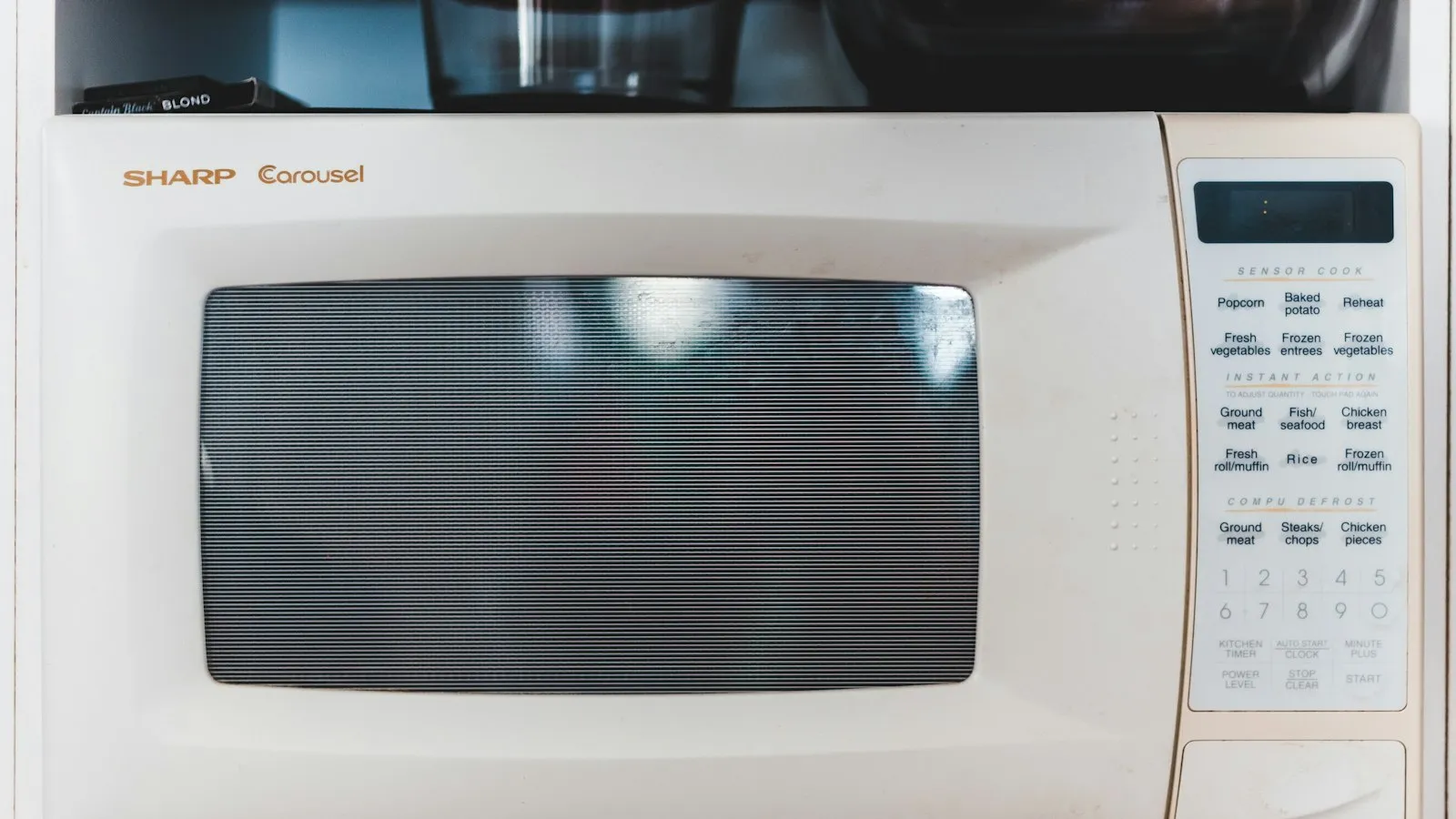
On this page
A microwave sparks when microwave energy concentrates on metal or a damaged spot. Stop it, unplug it and let it cool. Then remove any foil, gold-trimmed dishes, twist ties or metal utensils, and clean food residue from the walls. Check the small waveguide cover and the paint. If sparks continue with an empty, clean oven, call a technician.
Arcing looks alarming, and it can damage the oven. Most of the time the cause is something simple you can fix in a few minutes.
Why is my microwave sparking?
- Metal in the oven. Foil, forks, twist ties, takeout containers with metal handles and plates with gold or silver trim are the usual causes.
- A burnt or greasy waveguide cover. This is the small panel, often on the side wall, that protects the opening where the microwaves enter. Grease or burn marks on it can arc.
- Chipped paint or exposed metal. Paint on the cavity wall can wear away. Food splatter on bare metal then arcs.
- A worn turntable support or stirrer. If a plastic part has worn through, the metal underneath is exposed.
- Food that arcs by itself. Small watery pieces, such as grapes close together, can spark.
- A failing internal part. A weak magnetron or a bad high-voltage diode can cause sparks, and they need a technician.
What the pattern tells you
| What you see | Likely cause |
|---|---|
| Sparks the moment you start it with a plate | Metal trim, foil or a utensil |
| Sparks from one spot on the wall | Burnt waveguide cover or chipped paint |
| Sparks only with certain foods | Food that arcs, such as grapes |
| Sparks when it is empty | Cavity damage or an internal fault |
| Sparks with a burning smell or loud buzz | Internal fault. Stop using it |
| Blue flashes under the turntable | Worn turntable parts or exposed metal |
How to fix it
- Stop the microwave and unplug it. Leave the door shut if there is any smoke. Let it cool for several minutes.
- Take out everything inside. Look for foil, a twist tie, a fork or a plate with a metal rim.
- Clean the walls and ceiling. Wipe with a damp cloth and a little dish soap. Grease and burnt food are a main trigger.
- Check the waveguide cover. Look at the small panel on the inside wall. If it is warped, burnt or has a hole, replace it. It is a cheap part, and models vary, so look up yours by model number.
- Look at the paint. Small chips can be touched up with a microwave-safe appliance paint. Large patches of bare metal mean the oven is wearing out.
- Inspect the turntable and its support. Replace a cracked or worn one.
- Run it with a cup of water. Put a microwave-safe cup of water inside and run it for 30 seconds. If there are no sparks, the cause was metal or residue.
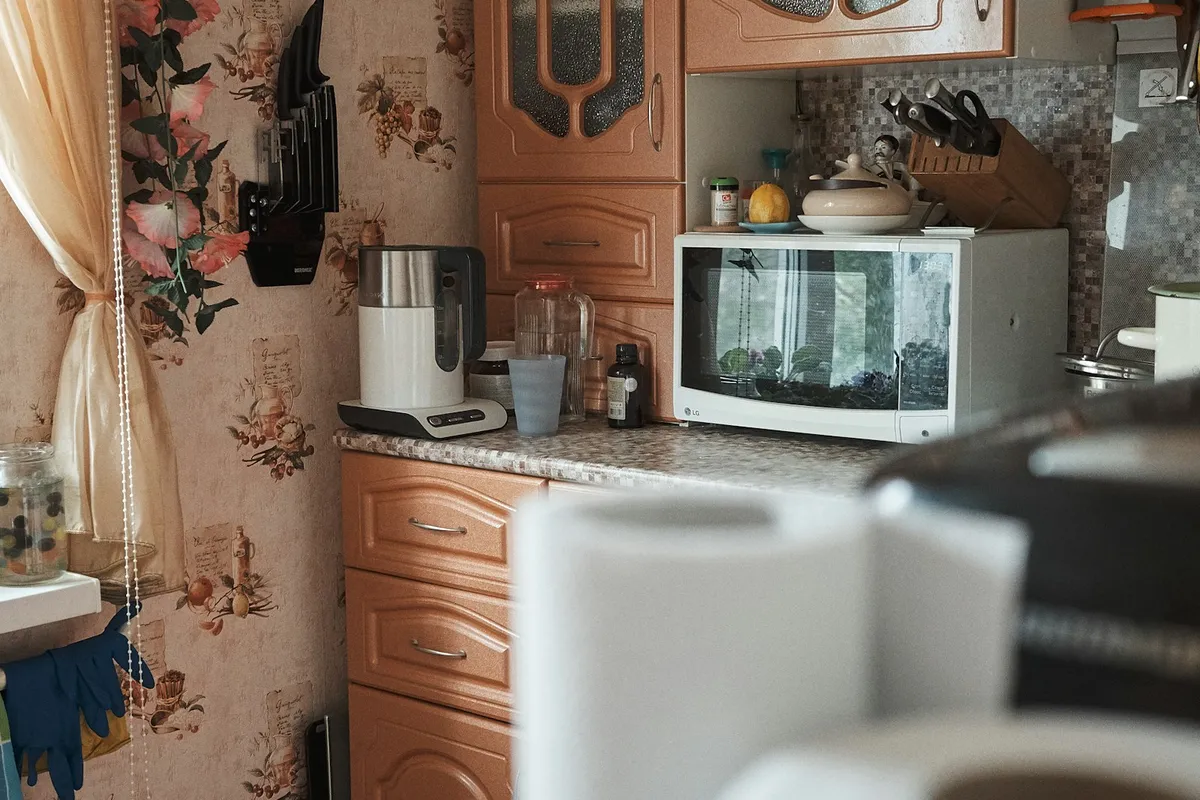
Should I keep using it?
If the sparks stopped after you removed metal and cleaned the cavity, yes. If you see damaged paint, a burnt waveguide cover or arcing that returns, stop until it is fixed. Continued arcing can burn a hole in the cover or damage the magnetron, which turns a cheap repair into an expensive one.
Is it worth repairing?
A waveguide cover or a turntable part costs little and is worth replacing. A magnetron or diode costs more, and a countertop microwave is inexpensive to replace. Get a quote, then compare it with a new unit, especially if yours is more than 8 to 10 years old. For a built-in or over-the-range model, repair is more often worth it because of the installation work.
When to call a professional
Call a technician if:
- It sparks with nothing inside and a clean cavity.
- You see burn marks, melted plastic or smell burning.
- It makes a loud buzz or hum while it sparks.
- The microwave trips the breaker, or has stopped heating, as in a microwave that is not heating.
- The door does not close properly, as covered in a microwave that keeps running with the door open.
What not to do
- Do not run the microwave empty.
- Do not use foil or metal-trimmed dishes.
- Do not use a microwave with a hole in the waveguide cover.
- Do not open the back panel.
Bottom line
Remove metal, clean the oven and check the waveguide cover. Those three steps solve most sparking. If it sparks when it is empty and clean, retire it or call a technician. If your microwave also shuts itself off, read why a microwave keeps shutting off. For smoke from the other kitchen appliance, see smoke from an oven.
Sources
This guide was checked against these official and manufacturer sources.
Frequently asked questions
Why is my microwave sparking with nothing metal inside?
A burnt or greasy waveguide cover, chipped paint on the inside wall or a worn turntable stirrer can all cause arcing. A failing magnetron or diode can too.
Is it safe to use a microwave that sparks?
Not until you find the cause. Repeated arcing can damage the oven and, in rare cases, start a fire.
Can grapes spark in a microwave?
Yes. Two grapes touching, or a grape cut almost in half, can arc. The same can happen with some other watery foods in small pieces.
Can I fix a sparking microwave myself?
You can clean the cavity and replace a waveguide cover. Do not open the high-voltage section, because the capacitor can hold a dangerous charge even after unplugging.

Written by
Agha Ali Abbas
Agha Ali Abbas is the founder and editor of TimeToNote. He has worked in SEO and content writing for 18 years, and he checks every guide against manufacturer documentation and official sources before it goes live.
Related guides
Home Problems
Why Is My Microwave Not Heating? Causes, Safe Fixes, and When to Replace It
Microwave running but food stays cold? Learn the common causes, the safe fixes you can try yourself, and when it is time to repair or replace it.
8 min read
Home Problems
Microwave Keeps Shutting Off? Causes, Safe Checks and When to Call a Pro
Microwave stops after a few seconds or minutes? Check the door, overheating, arcing and the humidity sensor, then know when the magnetron or board needs a technician.
6 min read
Home Problems
Microwave Keeps Running or Starts When the Door Is Open? What to Do
Microwave keeps running or starts with the door open? Stop using it. Learn what the door switches do, what is normal, and what to ask a technician.
6 min read
More guides you may need
Home Problems
Ring Doorbell Not Ringing Inside the House? 8 Fixes
Ring doorbell works on your phone but makes no sound inside? Check the chime type, the In-Home Chime setting, the wiring and your doorbell model.
9 min read
Home Problems
Signs Your Roof Needs Repair or Replacement (and How to Tell Which)
Missing shingles, leaks, or granules in the gutters? Learn 10 signs your roof needs repair or replacement, how long roofs last, and when a repair is enough.
7 min read