How to Bleed a Radiator: Easy Steps to Get Rid of Cold Spots
Radiator cold at the top or not heating well? Learn how to bleed a hot water radiator in 8 steps, what tools you need, and how to check boiler pressure after.
On this page
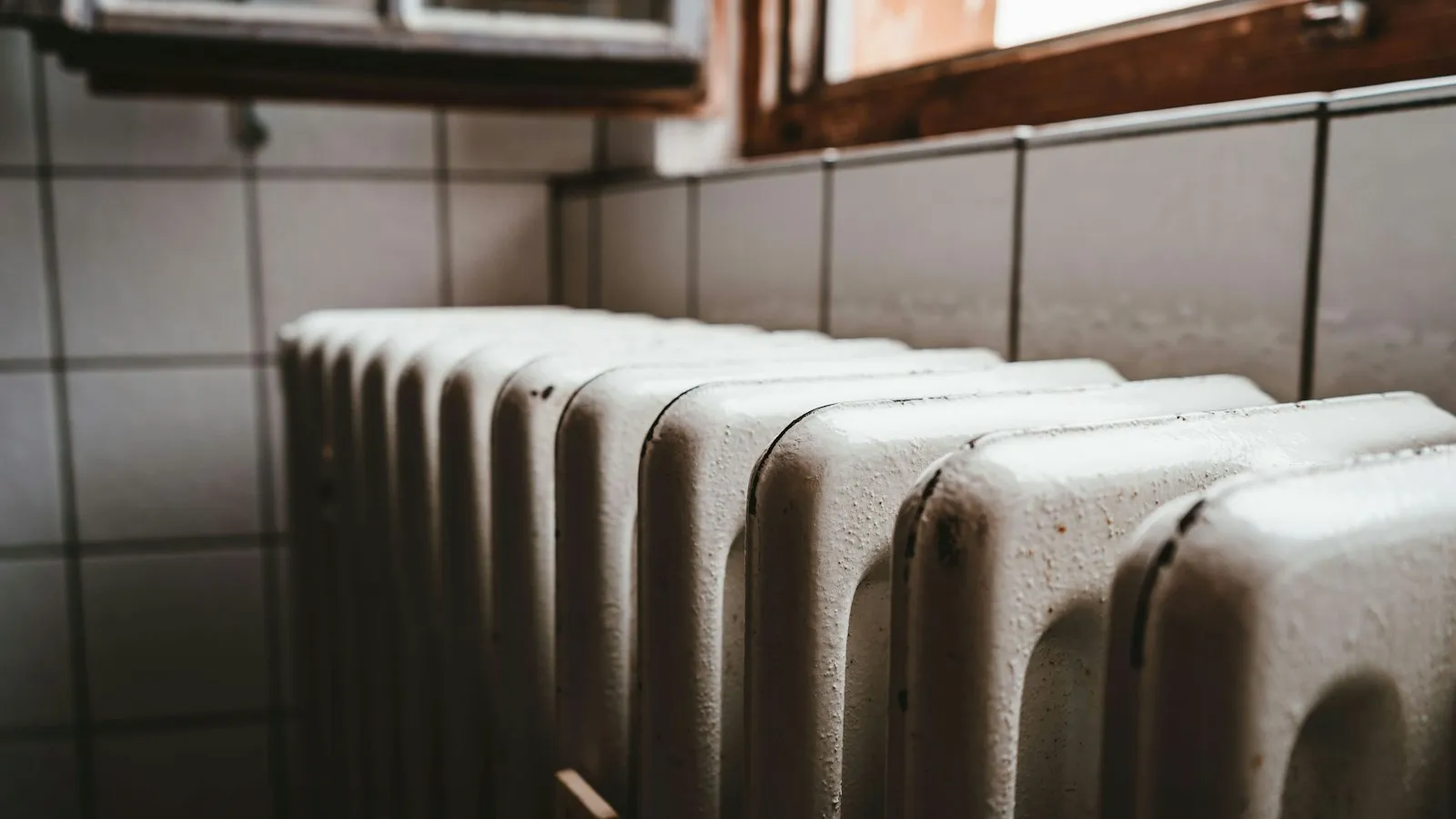
A radiator that is cold at the top and warm at the bottom has air trapped inside. To fix it, turn the heat off, let the radiator cool, then open the small bleed valve with a radiator key until air hisses out and water appears, and close it again. It takes about 5 minutes per radiator and costs almost nothing.
This guide is for hot water radiators, the kind found in many older homes and in homes with a boiler. If you have steam heat, skip to the section on steam radiators, because they work differently.
Why radiators get air in them
Hot water heating works by pushing hot water through pipes to each radiator. Air can sneak in and get trapped in a few ways:
- New heating season. Radiators sit unused all summer, and air can build up inside.
- Small leaks in the system let in air.
- Water that was added to the system can bring in air bubbles.
- Age. Metal parts rust over time, and rust makes a gas that can collect in the top of the radiator.
Because air is lighter than water, it rises and gets stuck at the top. That cold spot cannot heat your room, so the radiator works poorly even though the boiler is working hard.
Signs a radiator needs bleeding
- The top is cooler than the bottom after the heat has been on for a while
- The radiator takes a long time to warm up
- Gurgling, bubbling, or clicking sounds
- The room is colder than it should be even though other rooms are warm
- The radiator feels warm in some spots and cold in others
To check, turn the heating on for about 20 minutes. Then carefully touch the top and bottom of each radiator. Be careful, since they can get very hot.
What you need
- A radiator key. It costs a few dollars at hardware stores. A flat-head screwdriver also fits some valves.
- A small cup or bowl to catch drips
- Old towels or rags to protect the floor
- Gloves, in case the water is hot or dirty
Step by step: how to bleed a radiator
- Turn on the heat and find the cold ones. Check each radiator and make a list of the ones with cold spots.
- Turn the heat off. Switch off the boiler or turn the thermostat down so it will not fire. Wait until the radiators are fully cool. This can take about an hour. Do not skip this, because hot water can burn you.
- Start with the right radiator. If you have more than one to bleed, begin with the one on the ground floor that is farthest from the boiler. Then work your way closer, and then up to the next floor.
- Find the bleed valve. It is a small square or round plug, usually at the top corner of the radiator on one end.
- Put a towel under the valve and hold a cup below it.
- Open the valve slowly. Fit the key onto the valve and turn it counterclockwise about a quarter to a half turn. Do not unscrew it all the way.
- Listen. You should hear a hiss as air escapes. Keep the key in place.
- Close the valve when water comes out. When the hissing stops and a small stream of water starts, turn the key clockwise to close it. Do not overtighten.
Wipe up any drips. Repeat for the next radiator.
Check the boiler pressure afterward
Letting air out also lets out a little pressure. After you bleed your radiators, check the pressure gauge on your boiler. Bob Vila notes the rule of thumb is about 1 pound of pressure for every 2 feet of height in the system, which works out to roughly 12 to 15 psi for a typical two-story house when the system is cold. Your boiler's label or manual will tell you the right range.
If the pressure dropped too low:
- Find the fill valve on the water pipe near the boiler. Your manual will show it.
- Open it slowly to let water in while you watch the gauge.
- Close it when the pressure is back in the normal range.
If you are not sure which valve to use, or the pressure falls again right away, call a heating technician. A system that keeps losing pressure may have a leak.
Turn the heat back on and test
Turn the heating back on and wait about 20 minutes. Check each radiator again:
- Warm all the way to the top? Great, you are done.
- Still a cold spot? Wait for the radiator to cool, and bleed it once more.
- Gurgling is gone? That is a good sign the air is out.
What if the radiator is cold at the bottom?
If the top is hot but the bottom is cold, the cause is different. It is often sludge or rust that has settled at the bottom of the radiator and is blocking the flow. Bleeding will not help here. A heating pro can fix it with a power flush or by cleaning the system.
Here is a quick guide:
| What you feel | What it likely means | Fix |
|---|---|---|
| Cold at top, hot at bottom | Trapped air | Bleed the radiator |
| Hot at top, cold at bottom | Sludge or rust buildup | Flush the system (pro) |
| Cold all over | Closed valve, stuck valve, or no hot water reaching it | Check valves and boiler |
| Warm in the middle, cold at the ends | Sludge or a blocked flow | Flush the system (pro) |
| Hot everywhere | Working well | No fix needed |
Valve problems
If the whole radiator is cold, check the valves at the bottom:
- Thermostatic radiator valve (TRV). If your radiator has a dial with numbers on it, make sure it is not set to "0" or the snowflake. Turn it up and wait a bit.
- Lockshield valve. This is the cap on the other end. It helps balance heat between radiators. If it was closed all the way, a radiator will not heat.
- A stuck pin. After summer, the pin inside a valve can stick. Tapping the valve head gently with a wrench can free it.
Radiators that do not heat at all
If none of your radiators are working, the problem may not be air:
- The boiler may be off, out of fuel, or tripped. Check the power switch and thermostat. If your thermostat screen is dead, see what to do when a thermostat screen is blank.
- The system pressure may be too low.
- A pump may have failed.
For a gas boiler with a standing pilot that keeps going out, read our guide on why a pilot light keeps going out.
Steam radiators work differently
Steam heat is common in older city homes. Steam radiators have a vent on the side, near the top, which lets air out as steam enters. They do not have a bleed screw, and you should not try to open or bleed them.
If a steam radiator is not working, the cause is often one of these:
- A stuck or clogged vent, which can be replaced for a few dollars
- A radiator that is not tilted slightly toward the pipe, so water cannot drain back
- A valve that is partly closed
- A boiler problem
Steam radiators can also bang loudly if water gets trapped. If yours hammers or knocks, have a pro look at it.
Save energy and money
A radiator full of air makes your boiler run longer to heat the same room. Bleeding radiators once a year can help even out heat and may cut wasted energy. You can also:
- Do not block radiators with couches or long curtains.
- Seal drafts around windows and doors. See our guide to finding air leaks.
- Slide a reflector panel behind a radiator on an outside wall to push heat into the room.
- Lower the thermostat a few degrees when you are away.
- Keep pipes safe in cold weather. See how to keep pipes from freezing.
When to call a professional
Call a heating technician if:
- You bleed a radiator and water keeps spraying out without stopping
- The boiler pressure keeps dropping after you refill it
- Water comes out black and thick every time
- Several radiators have cold spots at the bottom
- You smell gas or see water leaking from the boiler
- You are not sure whether you have steam or hot water heat
The bottom line
To bleed a hot water radiator, turn the heat off, wait for it to cool, open the bleed valve a quarter turn with a radiator key, let the air hiss out, and close it as soon as water comes out. Start with the radiator farthest from the boiler, then check the boiler pressure and top it up to the range in your manual, often 12 to 15 psi. Do not bleed steam radiators. If the bottom stays cold, you likely have sludge and need a pro.
Sources
This guide was checked against these official and manufacturer sources.
Frequently asked questions
How do I know if my radiator needs bleeding?
Turn the heat on and let the radiator warm up. If the top feels cool while the bottom is hot, air is trapped inside and it needs bleeding. Gurgling sounds and a radiator that heats slowly are other signs.
How often should I bleed my radiators?
Once a year, at the start of the heating season, is enough for most homes. Bleed a radiator again whenever you notice cold spots, noise, or uneven heat.
Can I bleed a radiator while the heat is on?
No. Turn the heat off and let the radiator cool first. Hot water or steam can escape from the valve and burn you.
Do steam radiators need to be bled?
No. Steam radiators have an air vent on the side that lets air out by itself. They do not have a bleed screw like hot water radiators. If your steam radiator is cold or noisy, the vent may be stuck, which is a different fix.
Why is my radiator still cold at the bottom after bleeding?
A radiator that is cold at the bottom but hot at the top often has sludge or rust at the bottom. Bleeding will not fix this. The system may need a power flush by a heating pro. Low boiler pressure or a closed valve can also be the cause.

Written by
Agha Ali Abbas
Agha Ali Abbas is the founder and editor of TimeToNote. He has worked in SEO and content writing for 18 years, and he checks every guide against manufacturer documentation and official sources before it goes live.
Related guides
Home Problems
Why Is My Furnace Blowing Cold Air? 9 Causes and Easy Fixes
Furnace running but blowing cold air? Check these 9 common causes, from the thermostat fan setting to a dirty filter, and learn which fixes you can do yourself.
7 min read
Home Problems
Why Is My Thermostat Blank? 9 Easy Fixes You Can Try Today
Thermostat screen blank or dead? Try these simple fixes for batteries, breakers, wires, and smart models. Most take under 10 minutes.
11 min read
Home Problems
How to Find Air Leaks in Your House (and Seal Them Cheaply)
Drafty rooms and high energy bills? Learn 7 easy ways to find air leaks in your house, the most common leak spots, and cheap ways to seal them yourself.
7 min read
More guides you may need
Home Problems
Why Does My Laundry Room Smell? Musty, Sewer and Rotten Egg Causes
Laundry room smells like sewage, mildew or rotten eggs? Check the dry drain trap, the washer, the lint and the ventilation in this order to find the cause.
4 min read
Home Problems
Why Is My Dehumidifier Running but Not Collecting Water? 9 Fixes
Dehumidifier running but the bucket stays empty? Check the room humidity, temperature, frozen coils, filter and sensor, then test the compressor. Step by step.
9 min read