Why Does My Bathroom Smell Like Urine Even After Cleaning?
Bathroom still smells like urine after you clean? Find the hidden source in grout, caulk or the toilet base, and learn when a plumber is needed.
On this page
If your bathroom smells like urine even after you clean, the smell is almost always coming from something the cleaner never reached. Think of grout lines, the caulk around the toilet base, the wall and baseboard behind the toilet, and rugs or mats. A failing toilet seal or a dry drain can also cause it, but that is less common.
This guide shows you where to look first, how to clean each spot, and how to tell when the problem is plumbing and not cleaning.
Why does my bathroom smell like urine after I clean it?
Most cleaning removes what you can see. Urine does not always stay where you can see it. It splashes behind and under the toilet, runs along the floor, and soaks into porous things like grout, unsealed tile, cloth and caulk.
Once it is in there, ordinary mopping often just wets it again. Many makers of cleaning products say that urine can leave residue that does not rinse out easily, and that damp air or a wet mop can bring the smell back. That matches what many people notice: the bathroom smells fine for a day, then the smell returns on a humid morning.
So the job is not to clean harder. It is to find the spot first, and then treat that spot.
Is it urine or a sewer smell?
People often mix these up, and the fix is different. Use this table to tell them apart.
| What you notice | More likely |
|---|---|
| Sharp, sour, like old cleaning bucket or ammonia | Urine in grout, caulk, cloth or the floor |
| Strongest at the floor next to the toilet | Urine residue, or a toilet seal problem |
| Smells like rotten eggs or a sewer | Dry drain trap or a plumbing vent problem |
| Gets worse after you run a drain or after rain | Plumbing, not urine |
| Same smell in a bathroom nobody uses | Plumbing, such as a dry trap |
If your smell fits the sewer rows, read our guide on what a sewer smell in the house means. The rest of this page is about urine.
Where to look first: a 10 minute check
Start with the cheap, common places and work down the list. Turn on the light, kneel down and use your nose. The smell is usually strongest right at the source.
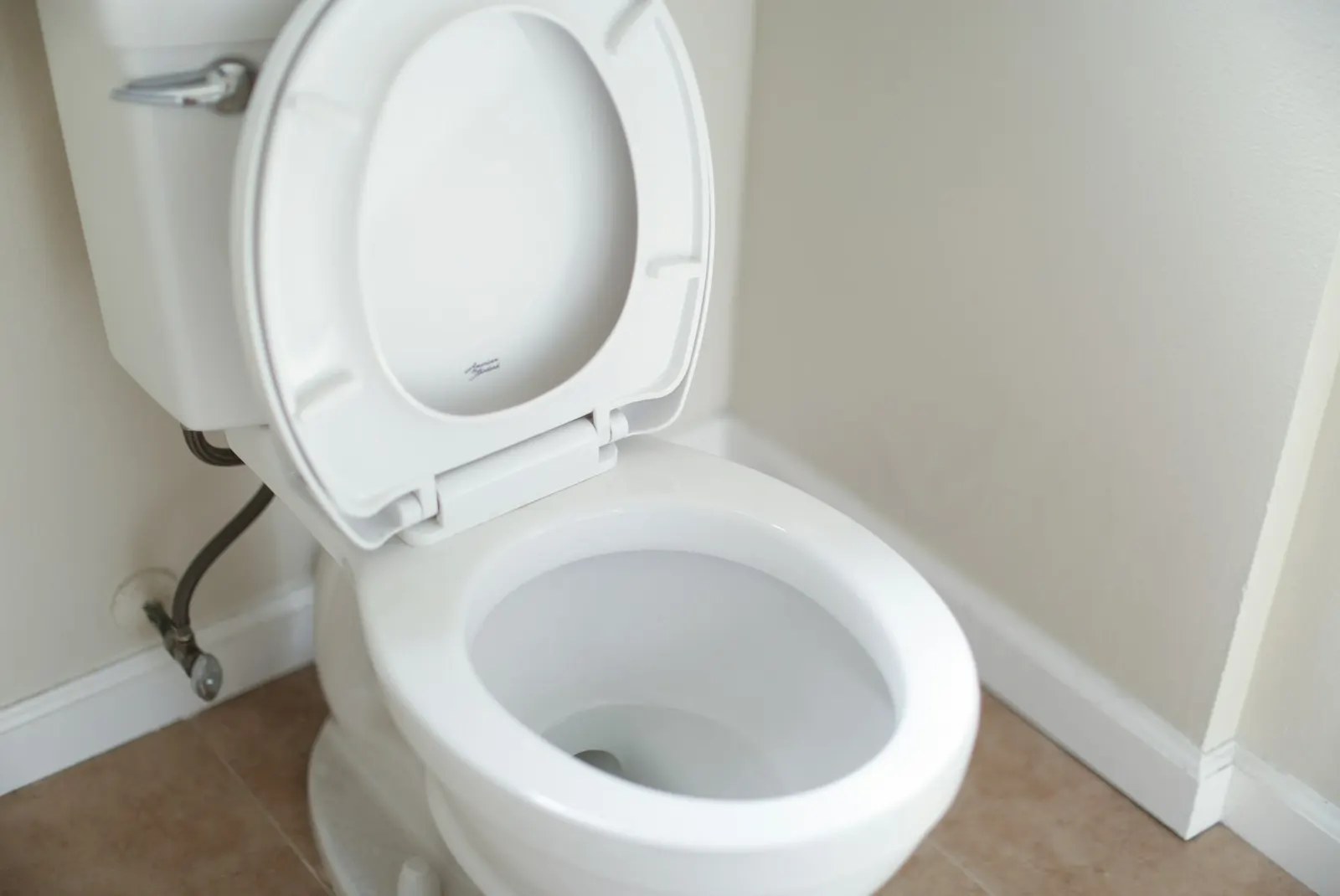
- Check the underside of the toilet seat and the hinges. Lift the seat and the lid. Smell the underside and the hinge area. Many people never clean these.
- Smell the floor beside and behind the toilet. Get low. The smell is often strongest within a foot or two of the base.
- Look at the caulk line around the toilet base. Yellow or brown staining, gaps or cracks mean something has been getting in.
- Check the wall and baseboard behind the toilet. Look for stains and bubbling paint, and smell the lower few inches of wall.
- Smell the rug, mat and trash can. Cloth holds smells for a long time.
- Pour a little water into every drain, including a shower or floor drain you rarely use, and smell the opening.
- Try a black light in a dark room. Some urine stains glow under ultraviolet light. Other things glow too, such as some detergents and cleaners, so treat it as a hint and confirm with your nose.
Write down where the smell was strongest. That tells you which of the causes below to deal with.
7 hidden causes and how to fix each one
1. Urine in the grout or porous tile
Grout is rough and full of tiny holes. It soaks up splashes, and the smell stays long after the tile looks clean.
Fix:
- Sweep or vacuum the area so you are not wetting dirt.
- Use a cleaner made for urine, not just a general bathroom spray. Read the label for the surfaces it is safe on.
- Work it into the grout lines with a stiff brush, and keep the area wet for as long as the label says.
- Rinse with water, then dry the floor with a towel.
- Check again the next morning. If the smell returns, repeat once more before you decide it is something else.
If the grout is cracked, crumbling or stained all the way through, cleaning may not be enough. Replacing or resealing the grout is the lasting fix.
2. Caulk and the base of the toilet
The caulk line where the toilet meets the floor is a common hiding place. Urine runs down the side of the bowl and gets under the caulk, where you cannot wipe.
Fix: Clean the outside of the bowl and the base with the same urine cleaner. If the caulk is stained, loose or full of gaps, it has probably soaked up the smell. Cutting it out and putting in fresh caulk after the floor is clean and fully dry often ends the problem.
3. The seat hinges, the underside of the seat and the outside of the bowl
These spots collect drips and splashes every day, and many people only wipe the top.
Fix: Take the seat off if it unclips or unscrews, which many do. Clean the hinge parts and the bolt caps, the underside of the seat, and the rim and outside of the bowl. Let everything dry before you put it back.
4. Rugs, mats, trash cans and the wall behind the toilet
A bath mat around the toilet can hold a smell that no floor cleaning will remove. So can a fabric toilet lid cover, a cloth hamper, or a trash can with a leaky liner. The wall and baseboard right behind the toilet also catch spray.
Fix: Wash the mat on the hottest setting the label allows, or replace it. Wash the trash can. Wipe the wall and baseboard with the urine cleaner and dry them. If the paint is bubbling or the baseboard is soft, check a leak behind the wall, because that can mean moisture and not only urine.
5. A dry drain trap or a dirty drain
A dry trap lets sewer gas come up the drain. It is often described as a sewage or rotten egg smell, but many people call any bad bathroom smell "urine." A floor drain or a shower nobody uses is the usual place.
Fix: Run water in the drain for a minute to refill the trap, then smell it again. If the sink gurgles or the smell returns each week, the drain may be slow or partly blocked. Our guide on a gurgling sink explains what that means.
6. A failing toilet seal or damaged floor under the toilet
A toilet sits on a seal (often called a wax ring) that keeps water and gas from escaping at the floor. If it fails, you may smell something near the base even after a deep clean. Other signs are:
- The toilet rocks or moves when you sit on it
- Water or stains around the base
- A soft, spongy or discolored spot in the floor near the toilet
- Baseboards or flooring that are swelling or lifting
A rocking toilet does not always mean the seal is bad. Loose bolts can do it too. If tightening the bolts does not help, or the floor feels soft, stop there.
Fix: Replacing a seal means taking the toilet off the floor, and any rotted subfloor must be repaired first. Many homeowners choose a plumber for this. It is not a job to put off if the floor is soft, because leaks can damage the structure.
7. Humidity and poor ventilation that keep the smell around
Even after you clean the source, a closed, damp bathroom lets odors linger. Stale air also makes a faint smell seem stronger in the morning.
Fix: Run the exhaust fan during showers and for a while after. Leave the door open when the room is not in use. If the fan is weak or noisy, see why a bathroom fan is not pulling air.
How to remove the smell step by step
Once you know where the smell is, use this order. It keeps you from cleaning the wrong thing.
- Open a window or run the fan. Good air flow makes the job safer and faster.
- Remove what can be washed. Take out mats, rugs, the trash bag and cloth covers.
- Clean the dry mess first. Wipe up splashes with paper towels so you are not spreading it.
- Apply a cleaner made for urine to the spot you found, and keep it wet for the time on the label. Test a small hidden area first on painted or stone surfaces.
- Rinse and dry. Wipe with clean water, then dry with a towel.
- Wait a day. Smell the spot again in the morning, when the room is closed and damp.
- Repeat once if needed. A deep spot may need a second round.
Skip air fresheners and cover-up sprays while you work. They hide the smell for a few hours and make it harder to tell whether you fixed anything.
What if the smell keeps coming back?
If you cleaned every spot twice and it still returns, ask a few questions.
- When does it show up? After a shower points to moisture. In the morning points to a closed room. After rain points to plumbing and vents.
- Who uses this bathroom? Young children, guests and pets all change where splashes land. A pet that uses the bathroom may be a source, and our guide on getting pet odor out of your house covers cleaners and what to avoid.
- Does the smell follow you? If it fills the whole house and not just the bathroom, the cause may be a musty room or a plumbing problem. Compare it with a musty smell in one room.
- Is the floor soft or stained? If yes, a seal or a leak is more likely than residue, and a plumber should look at it.
Keep a short note for a week: the time of day, whether anyone showered, and where the smell was strongest. A pattern usually shows up.
When to call a professional
Call a plumber if:
- The toilet rocks and tightening the bolts does not help
- The floor near the toilet is soft, discolored or swollen
- You see water around the base
- The smell is a sewer or rotten egg smell and running water in the drains does not fix it
- Several drains in the house smell or gurgle
If you ever smell gas near an appliance, leave the house and call your gas company from outside. That smell is not urine, and it is an emergency.
How to keep it from coming back
- Wipe the floor and the base of the toilet on a regular schedule, not just the top of the seat.
- Wash the bath mat often, or use one you can wash on a hot cycle.
- Reseal grout when it wears out, and replace caulk that is stained or cracked.
- Run the fan during and after showers.
- Run water in rarely used drains every few weeks.
- Fix a rocking toilet early.
The bottom line
A bathroom that smells like urine after cleaning almost always has a hidden source: grout, caulk, the toilet base, the wall behind it, or something made of cloth. Find the spot with your nose and a flashlight, treat that spot, and let it dry. If the toilet rocks, the floor is soft, or the smell is really a sewer smell, the next step is a plumber, not more scrubbing.
Sources
This guide was checked against these official and manufacturer sources.
Frequently asked questions
Why does my bathroom smell like urine after cleaning?
Usually because urine soaked into something the cleaner did not reach, like grout, the caulk line around the toilet, or the wall and baseboard behind it. Water on a damp day can bring the smell back. Less often, the cause is a failing toilet seal or a dry drain.
Why does my bathroom smell like urine in the morning?
Overnight the room is closed up and the air does not move, so a smell that was faint all day builds up. Humidity from a shower the night before can make it stronger. Leaving the fan on after use and the door open often helps.
Why does my bathroom smell like old urine?
Old urine in grout, caulk or a rug keeps giving off a sharp, ammonia-like smell, especially when it gets damp. The source is often a small spot you cannot see. A black light and a nose check along the floor near the toilet usually find it.
How do I get rid of the urine smell around my toilet?
Find the source first, then clean it with a cleaner made for urine and let it work as the label says. Do not mix cleaners. If the smell comes back, the toilet seal or the floor under it may need repair.

Written by
Agha Ali Abbas
Agha Ali Abbas is the founder and editor of TimeToNote. He has worked in SEO and content writing for 18 years, and he checks every guide against manufacturer documentation and official sources before it goes live.
Related guides
Home Problems
Why Does My House Smell Like Sewage? 9 Causes and Easy Fixes
A sewage smell in your house usually comes from a dry drain trap, a bad toilet seal, or a blocked vent. Find the cause fast and fix it with these simple steps.
12 min read
Home Problems
Bathroom Fan Not Pulling Air? Causes and Fixes
Bathroom exhaust fan weak, loud or not pulling air? Do the tissue test, clean the grille and check the duct and outside vent. Here is what to fix first.
6 min read
Home Problems
Why Is My Sink Gurgling? Causes, Fixes, and When It Is a Bigger Problem
Sink gurgling when water drains? Learn the 6 common causes, from a partial clog to a blocked vent, how to fix them, and when to call a plumber.
8 min read
More guides you may need
Home Problems
Dryer Keeps Running When the Door Is Open? Causes and Safe Fixes
Dryer drum keeps turning with the door open, or will not stop? Unplug it, then check the door switch and latch, the timer, wrinkle prevent and sensor bars. Safe steps.
6 min read
Home Problems
Electric Stove Burner Won't Turn Off? Causes and Safe Fixes
Electric stove burner stuck on high or won't shut off? Turn off the power first, then learn if it's the burner switch, a relay or a hot-surface light.
5 min read