How to Keep Pipes From Freezing (and What to Do If They Do)
Stop frozen pipes before they burst. Learn which pipes freeze first, when to drip faucets, how to winterize outdoor spigots, and how to thaw a frozen pipe safely.
On this page
To keep pipes from freezing, keep your home heated to the same temperature day and night, let cold water drip from faucets on outside walls during very cold nights, open cabinet doors under sinks, and insulate pipes in unheated areas. Before winter, shut off and drain outdoor faucets and bring in garden hoses.
A frozen pipe can burst and pour hundreds of gallons of water into your home. A few cheap steps now can save you a big repair bill later.
Why frozen pipes burst
Water expands when it freezes. When ice forms inside a pipe, it pushes water pressure up between the ice and the closed faucet. That pressure can split the pipe. Often you do not find out until the ice melts and water starts spraying.
Which pipes freeze first
The American Red Cross says the pipes most likely to freeze are:
- Pipes outside the home, like outdoor faucets, sprinkler lines, and pool lines
- Pipes on outside walls with little insulation
- Pipes in unheated spaces, like garages, crawl spaces, basements, and attics
- Pipes in kitchen and bathroom cabinets on outside walls
Walk around your home and find these pipes before the first hard freeze.
When pipes are at risk
Water freezes at 32°F. But pipes inside a heated home usually do not freeze until it gets much colder outside, often around 20°F or below, especially for several hours or overnight. Wind makes it worse, because it pulls heat out of walls faster.
Watch the forecast. When a cold snap is coming, use the steps below.
10 ways to keep pipes from freezing
Before winter
1. Shut off and drain outdoor faucets. Find the shutoff valve inside your home for each outdoor faucet. Close it, then open the outdoor faucet to let the water drain out. Leave the outdoor faucet open for the winter so any water left inside has room to expand.
2. Disconnect and store garden hoses. A hose left attached traps water in the faucet, which can freeze and crack the pipe inside the wall.
3. Drain sprinkler and pool lines. Follow the maker's directions, or have a pro blow out the lines with air.
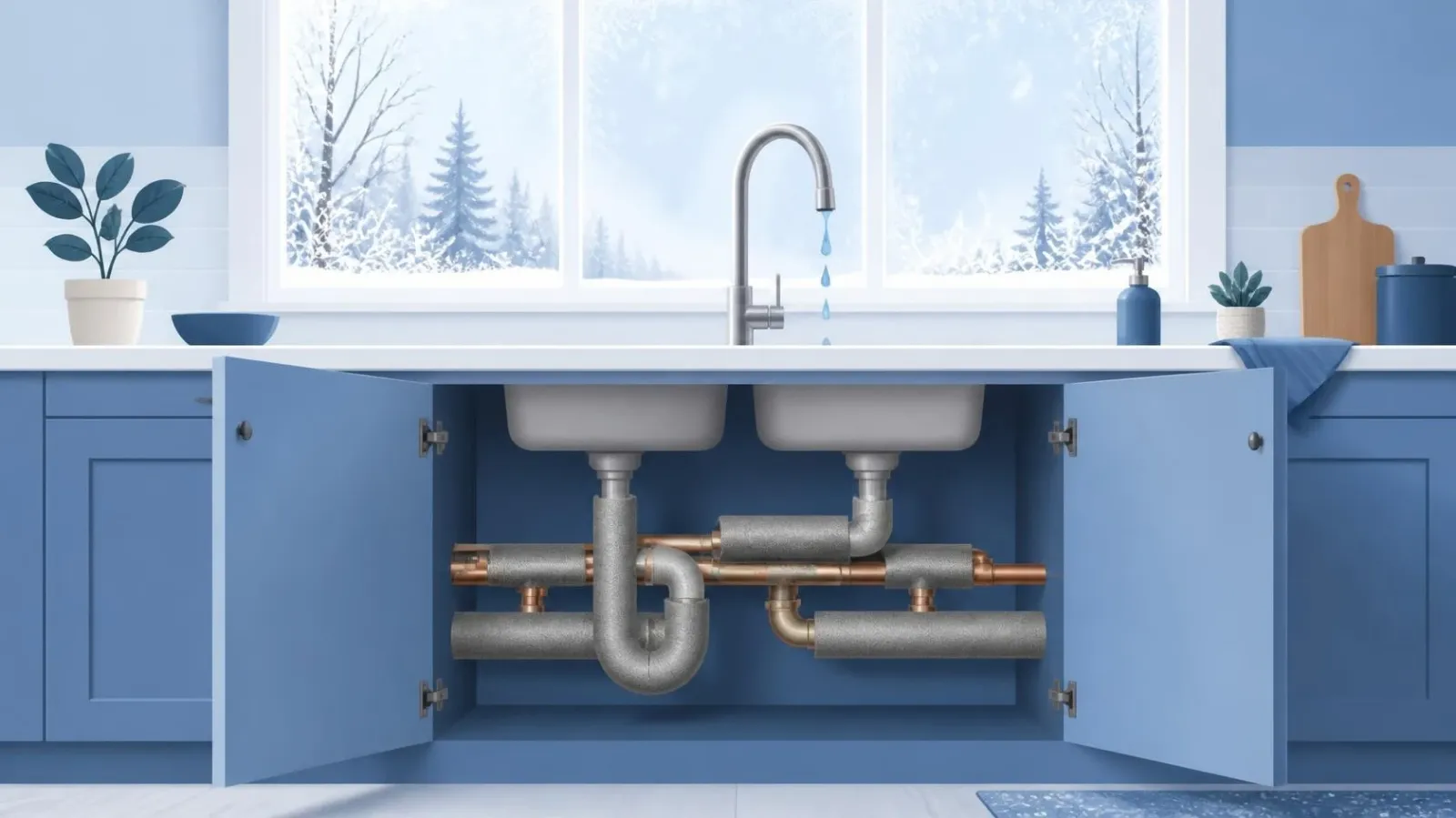
4. Insulate exposed pipes. Foam pipe sleeves from a hardware store cost just a few dollars and slide right over pipes. Use them in crawl spaces, attics, garages, and basements.
5. Seal cold air leaks. Cold drafts near pipes can freeze them fast. Seal gaps where pipes go through walls, and around dryer vents and basement rim joists. Our guide on finding air leaks in your house shows easy ways to spot them.
6. Consider heat tape for problem pipes. Heat cable or heat tape wraps around a pipe and keeps it warm. Use only products listed by a testing lab like UL, and follow the instructions closely.
During a cold snap
7. Let faucets drip. On very cold nights, let cold water drip from faucets served by exposed pipes. The Red Cross says moving water, even a trickle, helps stop freezing. If a faucet has both hot and cold, open both a little.
8. Open cabinet doors. Open the cabinets under kitchen and bathroom sinks so warm air from the room can reach the pipes. Move cleaners and chemicals up high if you have kids or pets.
9. Keep the heat steady. Keep your thermostat at the same temperature day and night during a cold spell. Skipping the usual nighttime setback may cost a little more, but it is much cheaper than a burst pipe.
10. Keep the garage door closed. If water lines run through your garage, keep the door shut to hold in warmth.
If you are going away for the winter or a trip
- Set the thermostat no lower than 55°F, as the Red Cross suggests.
- Ask someone to check your home every day or two.
- For long trips, consider shutting off the main water valve and draining the pipes by opening faucets.
- Put a smart water leak sensor under sinks and near the water heater. Many send an alert to your phone if they get wet.
- Some smart thermostats can also warn you if your home gets too cold.
How to tell if a pipe is frozen
- You turn on a faucet and get only a trickle or no water.
- You see frost on a pipe.
- A pipe has a small bulge.
- You hear odd sounds in the pipes, like gurgling, when you turn on water.
If only one faucet is slow, the frozen spot is likely near that faucet. If no faucets work, the freeze may be near where the water line enters your house, or the main line may be frozen.
How to thaw a frozen pipe safely
- Open the faucet the pipe feeds. As the ice melts, moving water helps melt the rest.
- Find the frozen spot. Check pipes on outside walls and in cold areas first.
- Apply gentle heat. Use a hair dryer, an electric heating pad, or towels soaked in hot water. Start near the faucet and work back toward the frozen spot.
- Keep going until full water pressure returns.
- Check all other faucets. If one pipe froze, others might too.
Never use a blowtorch, propane or kerosene heater, charcoal stove, or any open flame. These can start a fire or damage the pipe. Keep electric devices away from standing water.
Call a licensed plumber if you cannot find the frozen spot, cannot reach it, or the pipe will not thaw.
What to do if a pipe bursts
- Shut off the main water valve right away. Know where it is before winter. It is often in the basement, crawl space, or near the water heater.
- Turn off power to any area where water is near outlets or appliances, if it is safe to reach the breaker.
- Open faucets to drain the remaining water and take pressure off the pipes.
- Call a plumber.
- Dry everything fast. Use towels, fans, and a wet vacuum. Drying within 24 to 48 hours helps prevent mold.
- Take photos for your insurance company.
After the repair, watch for slow leaks you cannot see. Our guide on signs of a leak inside your walls shows what to look for.
Low water pressure after a freeze?
If water flows again but feels weak, ice may still be in a pipe, or a small crack may be leaking. If pressure does not come back after a few hours, see our tips on fixing low water pressure in your house or call a plumber.
Winter pipe checklist
- Outdoor faucets shut off and drained
- Garden hoses disconnected and stored
- Sprinkler lines drained
- Foam insulation on exposed pipes
- Air leaks near pipes sealed
- Main water shutoff valve found and tested
- Thermostat plan for cold snaps and trips
- Leak sensors under sinks and near the water heater
Does home insurance cover burst pipes?
Many homeowners policies cover sudden water damage from a pipe that freezes and bursts, like ruined floors, walls, and furniture. But there are limits:
- The policy often does not pay to fix the pipe itself.
- If the home was empty and you did not keep the heat on or drain the pipes, the insurer may deny the claim.
- Slow leaks over time are usually not covered.
Read your policy before winter, and call your agent if you are not sure. Keeping the heat at 55°F or higher and taking photos of the damage right away both help your claim.
How much does frozen pipe repair cost?
Costs depend on where the pipe is and how much water got out. ConsumerAffairs reports a wide range, from about $150 for a simple fix to $5,000 or more when walls, ceilings, and floors need repair too. Thawing a frozen pipe before it bursts is much cheaper than fixing water damage, so act fast when you notice a slow faucet.
Are some pipes less likely to burst?
Yes. PEX, the flexible plastic pipe used in many newer homes, can stretch as water inside freezes. The National Association of Home Builders says this makes PEX less likely to burst than rigid copper pipe. PEX can still freeze and block water, though, so it needs the same protection in cold spots.
The bottom line
Pipes freeze when cold air reaches them, most often outdoors, on outside walls, and in unheated spaces. Before winter, drain outdoor faucets, store hoses, and insulate exposed pipes. During a cold snap, let faucets drip, open cabinet doors, and keep the heat steady day and night. If a pipe freezes, open the faucet and warm the pipe with a hair dryer or heating pad, never an open flame. If it bursts, shut off the main water valve and call a plumber.
Sources
This guide was checked against these official and manufacturer sources.
Frequently asked questions
At what temperature do pipes freeze?
Water freezes at 32°F, but pipes inside a home usually do not freeze until it is much colder outside, often around 20°F or below, especially for several hours. Pipes in unheated spaces or on outside walls freeze first.
Should I let my faucets drip at night?
Yes, on very cold nights let the cold water drip from faucets that are on outside walls or have pipes in unheated spaces. The American Red Cross says moving water, even a trickle, helps stop pipes from freezing.
What temperature should I keep my house to prevent frozen pipes?
Keep the thermostat at the same temperature day and night during a cold snap. If you are going away, the Red Cross says to set it no lower than 55°F.
How do I know if a pipe is frozen?
The most common sign is that only a trickle of water, or none at all, comes out when you turn on a faucet. You may also see frost on the pipe or notice a bulge in it.
Can I use a hair dryer to thaw a frozen pipe?
Yes. A hair dryer, heating pad, or towels soaked in hot water are safe ways to thaw a pipe. Keep the faucet open while you work. Never use a blowtorch, propane heater, or any open flame.

Written by
Agha Ali Abbas
Agha Ali Abbas is the founder and editor of TimeToNote. He has worked in SEO and content writing for 18 years, and he checks every guide against manufacturer documentation and official sources before it goes live.
Related guides
Home Problems
Hidden Water Leaks: 9 Warning Signs and How to Find Them
A hidden water leak can quietly damage your home and raise your bill. Learn 9 warning signs, a simple water meter test, how to check toilets, and when to call a plumber.
7 min read
Home Problems
How to Find Air Leaks in Your House (and Seal Them Cheaply)
Drafty rooms and high energy bills? Learn 7 easy ways to find air leaks in your house, the most common leak spots, and cheap ways to seal them yourself.
7 min read
Home Problems
Low Water Pressure in Your House? How to Increase It (Easy Fixes)
Weak shower or slow faucets? Learn why your water pressure is low and how to increase it, from cleaning aerators to adjusting the pressure regulator.
8 min read
More guides you may need
Home Problems
Garage Door Won't Close in Cold Weather? Causes and Fixes
Garage door won't close when it's cold? Frosty sensors, stiff grease, an iced bottom seal and weak remote batteries are the usual causes. Here are 8 fixes.
5 min read
Home Problems
Garage Fridge or Freezer Not Working in Winter? Why and How to Fix It
Garage fridge or freezer warm or not cooling in winter? Cold air can switch the compressor off. Learn why it happens, how to protect your food and what fixes work.
6 min read