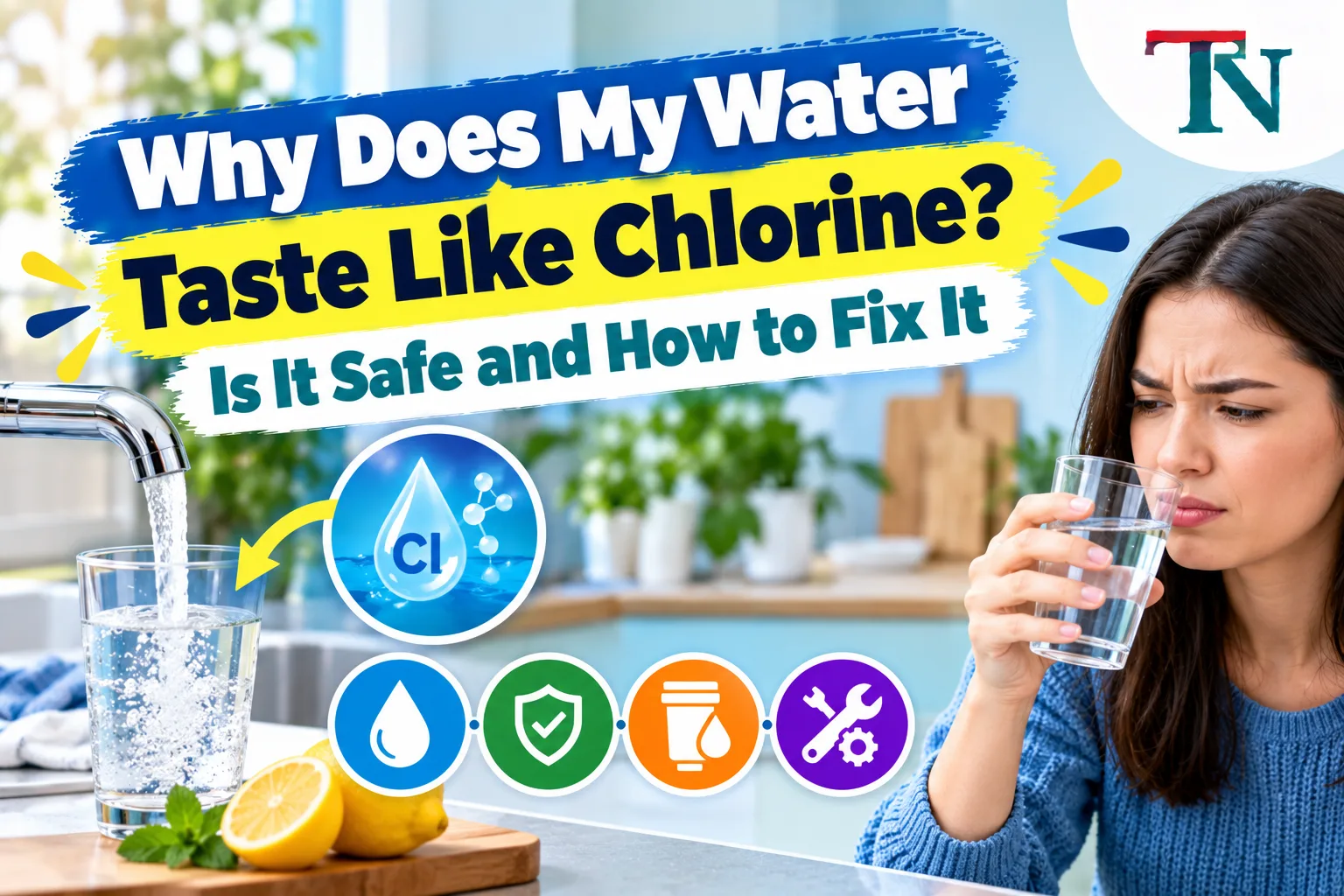
Why Does My Water Taste Like Chlorine? Is It Safe and How to Fix It
Tap water tasting or smelling like chlorine or bleach? Learn why it happens, whether it is safe, and simple ways to get rid of the taste at home.
On this page
Your water tastes like chlorine because your water company adds chlorine (or chloramine) to kill germs. It is a normal and important part of making tap water safe to drink. The taste is often stronger if you live close to the water treatment plant, after pipe repairs, or when your utility changes its treatment for a while.
The good news is that the water is usually safe, and the taste is easy to get rid of. Chilling your water, letting it sit in an open pitcher, or using a carbon filter can make a big difference.
This guide explains why your water tastes like chlorine, when to worry, and the easiest ways to make it taste better.
Why is chlorine in tap water?
Water travels a long way through pipes to reach your home. Along the way, germs could grow in it. To keep it safe, water utilities add a disinfectant. In the United States, the most common ones are:
- Chlorine, which has been used for more than 100 years
- Chloramine, which is chlorine mixed with a small amount of ammonia
Disinfecting drinking water has greatly reduced diseases like cholera and typhoid. The EPA sets a limit of 4 milligrams per liter for chlorine and for chloramine in drinking water. Most tap water has much less than that.
7 reasons your water tastes like chlorine
1. Your utility uses chlorine
Some people simply notice the taste more than others. If your city uses chlorine, a light pool-like taste or smell is normal.
2. You live close to the treatment plant
Water leaving the treatment plant has the most chlorine. As water travels farther through the pipes, some of the chlorine gets used up. Homes close to the plant often notice a stronger taste.
3. Your utility is doing a "chlorine burn"
Many cities that use chloramine switch to regular chlorine for a few weeks, often once a year. This helps clean the pipes. During this time, the water may taste or smell much stronger. Utilities usually post notices about this on their websites.
4. Pipe repairs or flushing
After a water main break, repair, or hydrant flushing, utilities may add extra chlorine to make sure the water is safe. The taste usually goes back to normal within a few days.
5. Hot weather
In warm months, utilities may add a little more disinfectant because germs grow faster in warm water.
6. Your water has been sitting in the pipes
Water that sits in your home's pipes overnight can taste stronger or different. Running the cold water for 30 seconds to a minute in the morning often helps.
7. It is actually something else
Sometimes what seems like a chlorine taste is really a reaction between chlorine and something in your plumbing, like new plastic pipes or a rubber hose. If only one faucet tastes strong, the fixture or the pipe to it may be the cause.
Is it safe to drink water that tastes like chlorine?
For most people, yes. The amount of chlorine in tap water is low and considered safe by the EPA. A chlorine taste actually shows that the water has been disinfected.
There are a few exceptions to keep in mind:
- Fish tanks: Chlorine and chloramine are harmful to fish. Use a water conditioner made for aquariums before you add tap water.
- Kidney dialysis: People on home dialysis need chloramine fully removed from their water. Talk to your doctor or dialysis center.
- Very strong bleach smell: If the smell is suddenly very strong, like undiluted bleach, stop drinking it and call your water utility right away.
If you are ever unsure, your water utility can answer questions and may test your water for free.
How to get rid of the chlorine taste
Here are the easiest ways, from free to low cost.
1. Chill your water
Cold water tastes much less like chlorine than warm or room-temperature water. Keep a pitcher of tap water in the fridge.
2. Let it sit in an open pitcher
Chlorine is a gas that slowly escapes from water. Fill a pitcher, leave it uncovered in the fridge for several hours or overnight, and much of the chlorine taste will fade.
Note: This works for chlorine, but not well for chloramine, which does not evaporate easily. See the next section to find out which one your city uses.
3. Add a slice of lemon or cucumber
Lemon, lime, cucumber, or a few mint leaves can cover the chlorine taste and make water more fun to drink. Lemon juice also contains vitamin C, which can help neutralize chlorine and chloramine.
4. Use a carbon water filter
Activated carbon filters are one of the best ways to remove chlorine taste and smell. Options include:
- Pitcher filters that you fill and keep in the fridge
- Faucet-mounted filters that attach to your kitchen faucet
- Under-sink filters for a separate drinking water tap
- Refrigerator filters for the water dispenser and ice maker
For chloramine, look for filters that say they reduce chloramine, often made with catalytic carbon. Check that the filter is certified for what you want it to remove. Look for NSF/ANSI certification on the box.
Replace filters on time. An old filter stops working and can even grow bacteria.
5. Boil the water (for chlorine only)
Boiling water for a few minutes drives off much of the chlorine. Let it cool, then chill it. This does not work well for chloramine, and it takes more time and energy than a filter.
6. Use a shower filter
If chlorine bothers your skin or hair, a shower filter can reduce chlorine in the shower. Vitamin C shower filters can also help with chloramine.
7. Consider a whole-house filter
A whole-house carbon filter removes chlorine from all the water in your home. It costs more and often needs a plumber, but it can help if the taste bothers you at every faucet. See our step-by-step water filter install guide to learn what the job involves.
Chlorine vs. chloramine: which one is in your water?
It matters which disinfectant your utility uses, because some fixes only work for chlorine.
| Chlorine | Chloramine | |
|---|---|---|
| Smell and taste | Stronger, like a swimming pool | Milder |
| Goes away if water sits out | Yes, over several hours | No, very slowly |
| Removed by boiling | Mostly | Not well |
| Removed by carbon filter | Yes | Yes, best with catalytic carbon |
| Harmful to fish | Yes | Yes |
How to find out: Look up your utility's Consumer Confidence Report, also called an annual water quality report. Every community water system in the U.S. must send one out each year. You can usually find it on the utility's website or on your water bill. It will say whether the water is disinfected with chlorine or chloramine.
Is bottled water better than tap water?
Not usually. In the United States, tap water from public systems is tested often and must meet EPA safety rules. Bottled water is regulated by the FDA and is not always cleaner. It also costs much more and creates plastic waste.
If you do not like the taste of your tap water, a good carbon filter is often a cheaper and easier choice than buying bottled water. A pitcher filter can pay for itself in a few weeks compared to buying cases of bottles.
If you have a private well, the rules are different. Well owners are responsible for testing their own water. Test it at least once a year, or right away if the taste, smell, or color changes.
Chlorine, your skin, your hair, and your pets
Some people notice dry skin or dry hair after showering, especially during a chlorine burn. A few simple tips can help:
- Take shorter, cooler showers.
- Use a gentle, fragrance-free moisturizer after bathing.
- Try a shower filter made to reduce chlorine or chloramine.
Pets: Tap water is generally fine for dogs and cats to drink. Fish are the exception. Chlorine and chloramine can harm them, so always treat tap water with an aquarium water conditioner before adding it to a fish tank or pond. Choose a conditioner that says it handles chloramine if your city uses it.
Other tap water tastes and smells
If your water tastes or smells like something other than chlorine, it may be a different problem.
| Taste or smell | Likely cause | What to do |
|---|---|---|
| Chlorine or bleach | Disinfectant from your utility | Chill, filter, or let it sit |
| Rotten eggs | Hydrogen sulfide, often from the water heater or a well | See why water smells like rotten eggs |
| Metallic | Iron, copper, or old pipes | Run the cold water; test the water |
| Earthy or musty | Algae in the water source, often in summer | Chill and filter; ask your utility |
| Salty | Minerals, or a water softener problem | Check the softener; test the water |
How to make your tap water taste better every day
- Run the cold water for 30 seconds in the morning before you drink it.
- Only drink cold water from the tap. Hot water can pick up more from pipes.
- Keep a filtered pitcher in the fridge.
- Clean your faucet aerator every few months. Our guide on fixing low water pressure shows how.
- Replace filters on time, including your fridge filter.
- Read your water quality report each year.
When to call your water utility
Call your water company if:
- The chlorine smell is suddenly very strong
- The water looks cloudy, colored, or has particles
- The taste changed and your neighbors notice it too
- You have questions about chloramine and a health condition or fish tank
Utilities want to know about taste and smell problems, and many will check your water at no cost.
Key takeaways
Water tastes like chlorine because utilities add disinfectants to keep it safe from germs. It is usually safe to drink. To improve the taste, chill your water, let it sit in an open pitcher if your city uses chlorine, or use a carbon filter that is certified to remove chlorine or chloramine. If the smell is suddenly very strong or the water looks unusual, call your water utility.
Sources
This guide was checked against these official and manufacturer sources.
Frequently asked questions
Is it safe to drink water that tastes like chlorine?
Yes, in most cases. Water utilities add small amounts of chlorine or chloramine to kill germs. The EPA limits these disinfectants in drinking water to a level that is considered safe. The taste may be strong, but the water is usually safe to drink.
Why does my water suddenly taste like chlorine?
A sudden change often happens when your water utility adjusts its treatment, flushes pipes, or does a temporary switch from chloramine to chlorine, sometimes called a chlorine burn. It can also happen after a water main repair. Check your utility's website or call them to ask.
Does boiling water remove chlorine?
Boiling for a few minutes can remove much of the chlorine taste, because chlorine turns into a gas and escapes. It does not work well for chloramine, which many cities use instead. A carbon filter works better for both.
What is the difference between chlorine and chloramine?
Both are used to disinfect water. Chloramine is chlorine combined with a small amount of ammonia. It lasts longer in the pipes and has less smell, but it does not evaporate easily. Your water utility's yearly water quality report tells you which one it uses.

Written by
Agha Ali Abbas
Agha Ali Abbas is the founder and editor of TimeToNote. He has worked in SEO and content writing for 18 years, and he checks every guide against manufacturer documentation and official sources before it goes live.
Related guides
Home Problems
How to Install a Water Filtration System at Home (Step by Step)
Learn how to install an under-sink, reverse osmosis, or whole-house water filtration system step by step, what tools you need, costs, and when to call a plumber.
10 min read
Home Problems
Why Does My Water Smell Like Rotten Eggs? Causes and Easy Fixes
Rotten egg smell in your tap water? Find out if it comes from your water heater, your drain, or your water supply, and how to get rid of it for good.
8 min read
Home Problems
Low Water Pressure in Your House? How to Increase It (Easy Fixes)
Weak shower or slow faucets? Learn why your water pressure is low and how to increase it, from cleaning aerators to adjusting the pressure regulator.
8 min read
More guides you may need
Home Problems
Ring Doorbell Not Ringing Inside the House? 8 Fixes
Ring doorbell works on your phone but makes no sound inside? Check the chime type, the In-Home Chime setting, the wiring and your doorbell model.
9 min read
Home Problems
Signs Your Roof Needs Repair or Replacement (and How to Tell Which)
Missing shingles, leaks, or granules in the gutters? Learn 10 signs your roof needs repair or replacement, how long roofs last, and when a repair is enough.
7 min read