Turkey Still Frozen on Thanksgiving Morning? What to Do Now
Turkey still frozen with dinner hours away? Use cold water, cook it from frozen, or switch plans. Here are the safe options, the timing and the mistakes to avoid.
On this page
A turkey that is still frozen is not ruined. You can thaw it in cold water at about 30 minutes per pound, changing the water every 30 minutes, or roast it straight from frozen. Frozen turkey takes at least 50% longer to cook. Never thaw it on the counter or in hot water.
It is the classic holiday mistake, and it happens to careful cooks. The bird was in the freezer, then it was suddenly the day before, or the morning of, and the middle is still a block of ice. Stay calm. You have good options, and one of them takes no extra work at all.
This guide walks through each safe option, how long it takes, and which one fits your clock. If you are planning ahead instead, see how long to thaw a turkey for the refrigerator schedule.
Why does a turkey stay frozen so long?
A turkey is dense, and ice in the center needs a lot of energy to melt. The refrigerator is the safest way to thaw, but it is slow. USDA guidance gives about 24 hours for every 4 to 5 pounds. A 16-pound bird needs roughly four days, so one day of slack is not enough.
A few things make it worse:
- A very cold fridge. Fridges set well below 40°F thaw slower.
- A packed fridge. Crowded shelves block airflow around the bird.
- A bird that is bigger than you think. Weigh it or read the label before you count days.
Use the thaw time calculator to see the real numbers for your weight.
Option 1: Thaw it in cold water (fastest safe thaw)
This is the best choice if dinner is at least four to ten hours away.
- Keep the turkey in its original wrapper. If the wrapper is torn, put it in a leak-proof bag so water does not get in and raw juices do not get out.
- Fill a clean sink or large cooler with cold tap water. Submerge the whole bird, breast side down.
- Change the water every 30 minutes. The water warms up as the turkey chills it, so fresh cold water keeps the surface safe.
- Allow about 30 minutes per pound. A 16-pound turkey takes about 8 hours.
- Cook it right away once it is thawed. Do not put it back in the freezer or the fridge for later.
| Turkey weight | Cold-water time (about) |
|---|---|
| 8 pounds | 4 hours |
| 12 pounds | 6 hours |
| 16 pounds | 8 hours |
| 20 pounds | 10 hours |
Clean the sink and everything the raw bird touched with hot soapy water afterward. Wash your hands after you handle it.
Option 2: Cook the turkey straight from frozen
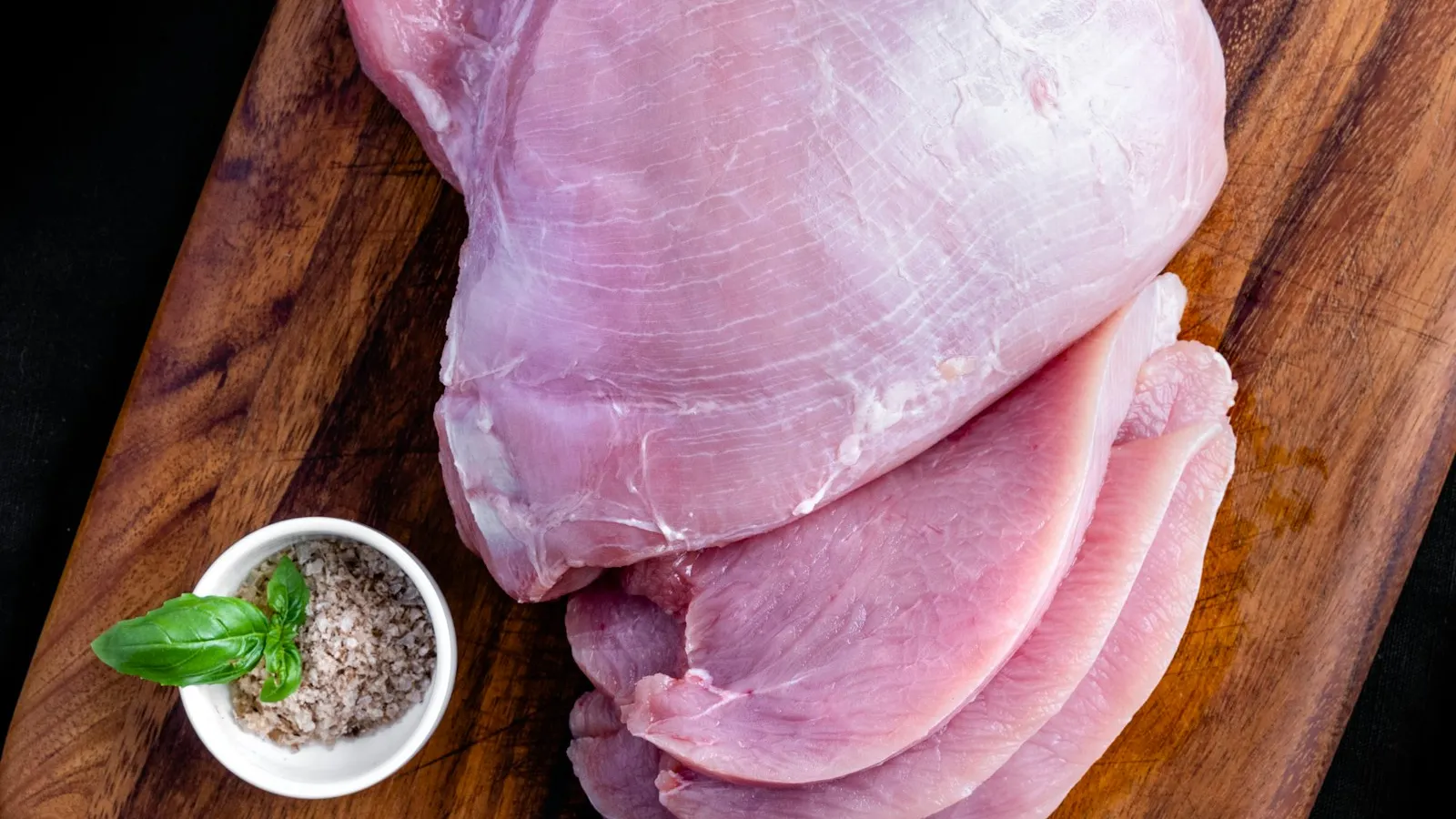
If you have less than four hours of thaw time, or you simply do not want to babysit a sink, roast it frozen. USDA guidance says this is safe. The one rule is time.
- Add at least 50% to the cook time. A bird that would take 3 hours thawed needs about 4.5 hours or more.
- Use a steady oven. The standard 325°F works. Do not crank the heat to rush it.
- Take the giblet packet out early. After about 90 minutes, the outer meat has thawed enough that you can reach in with tongs and pull out the neck and giblet packet. Do not skip this. Leaving it in is a hazard and wastes flavor.
- Skip stuffing it. Cook the stuffing separately. A stuffed frozen bird will not heat through safely.
- Check the temperature in three places. The turkey is done at 165°F in the thickest part of the breast, the innermost part of the thigh and the innermost part of the wing.
The meat is often juicier than you would expect, because it thaws slowly while it roasts. The skin may be a little less crisp. Rub it with oil or butter once the surface has thawed enough to hold it, usually after the first hour.
Option 3: Use a mix of both
If the bird is partly frozen, you do not need a full cold-water thaw. Give it two or three hours in cold water to loosen the outside and release the giblets, then start roasting. It will cook faster than a solid block, though still a little longer than a fully thawed turkey. Check the temperature in the same three spots.
Option 4: Change the plan
If time is truly short, these still work:
- Buy a fresh or already-thawed turkey. Many grocery stores sell fresh birds the week of Thanksgiving. Call ahead, since stock goes fast.
- Roast a turkey breast instead. A bone-in breast is smaller and thaws much faster in cold water.
- Cook it in parts. Once the outside has softened, a butcher can separate the legs and breasts. Smaller pieces cook quickly and evenly.
Do not try to saw through a solid frozen turkey with a kitchen knife. It is hard work and it is easy to slip.
What not to do
- Do not thaw on the counter, in the garage or on the porch. The surface warms up while the middle stays frozen. Bacteria grow in that warm outer layer.
- Do not use hot water. Same reason.
- Do not microwave it unless the manual allows it. Most turkeys do not fit, and microwave thawing is uneven. If your microwave manual gives a defrost chart for poultry, follow it and cook the bird right away.
- Do not wash the raw turkey. Rinsing spreads bacteria around your kitchen and does not make the meat safer. Cooking to 165°F does.
How do I know the turkey is safely cooked?
Color is not a reliable sign. A turkey can look done and still be undercooked, and a done bird can look a little pink near the bone. Use a food thermometer. Push it into the thickest part of the breast, the inner thigh and the inner wing. All three should read 165°F. If one spot is lower, keep roasting and check again in 15 minutes.
Let the turkey rest for 20 to 30 minutes before carving. It stays hot, finishes cooking and keeps more juice in the meat.
How to avoid this next year
- Count back from the date. Allow one day in the fridge for every 4 to 5 pounds, plus a spare day.
- Move it to the fridge early. The Thursday before Thanksgiving is too late for a big bird. Many people start thawing on the Sunday or Monday of the week before.
- Write the date on a sticky note. Put it on the freezer door.
- Shop early. Turkeys are often cheapest in the weeks before the holiday. See when is Black Friday if you are also hunting for deals on a new oven or roaster.
Power outages are another reason a thaw can go wrong. If the power cuts out while the turkey is thawing in the fridge, see the power outage guide for how long food stays safe.
Bottom line
A frozen turkey on the big day is fixable. Use cold water if you have the hours, cook from frozen if you do not, and never take shortcuts with the counter or hot water. Add at least half again to the cook time, and trust a thermometer reading of 165°F over the clock.
Sources
This guide was checked against these official and manufacturer sources.
Frequently asked questions
Can I cook a turkey that is still frozen?
Yes. USDA guidance says a frozen turkey is safe to cook, but it takes at least 50% longer than a thawed one. Check that the thickest parts reach 165°F.
How do I thaw a turkey fast?
Submerge it in its leak-proof wrapper in cold water, and change the water every 30 minutes. Plan on about 30 minutes per pound, then cook it right away.
Can I thaw a turkey on the counter?
No. The outside warms into the unsafe range while the middle is still frozen, which lets bacteria grow. Use cold water, the refrigerator, or cook it from frozen.
Can I use hot water to thaw a turkey faster?
No. Hot water warms the outer layer to unsafe temperatures long before the center thaws. Keep the water cold and keep changing it.

Written by
Agha Ali Abbas
Agha Ali Abbas is the founder and editor of TimeToNote. He has worked in SEO and content writing for 18 years, and he checks every guide against manufacturer documentation and official sources before it goes live.
Related guides
Everyday Solutions
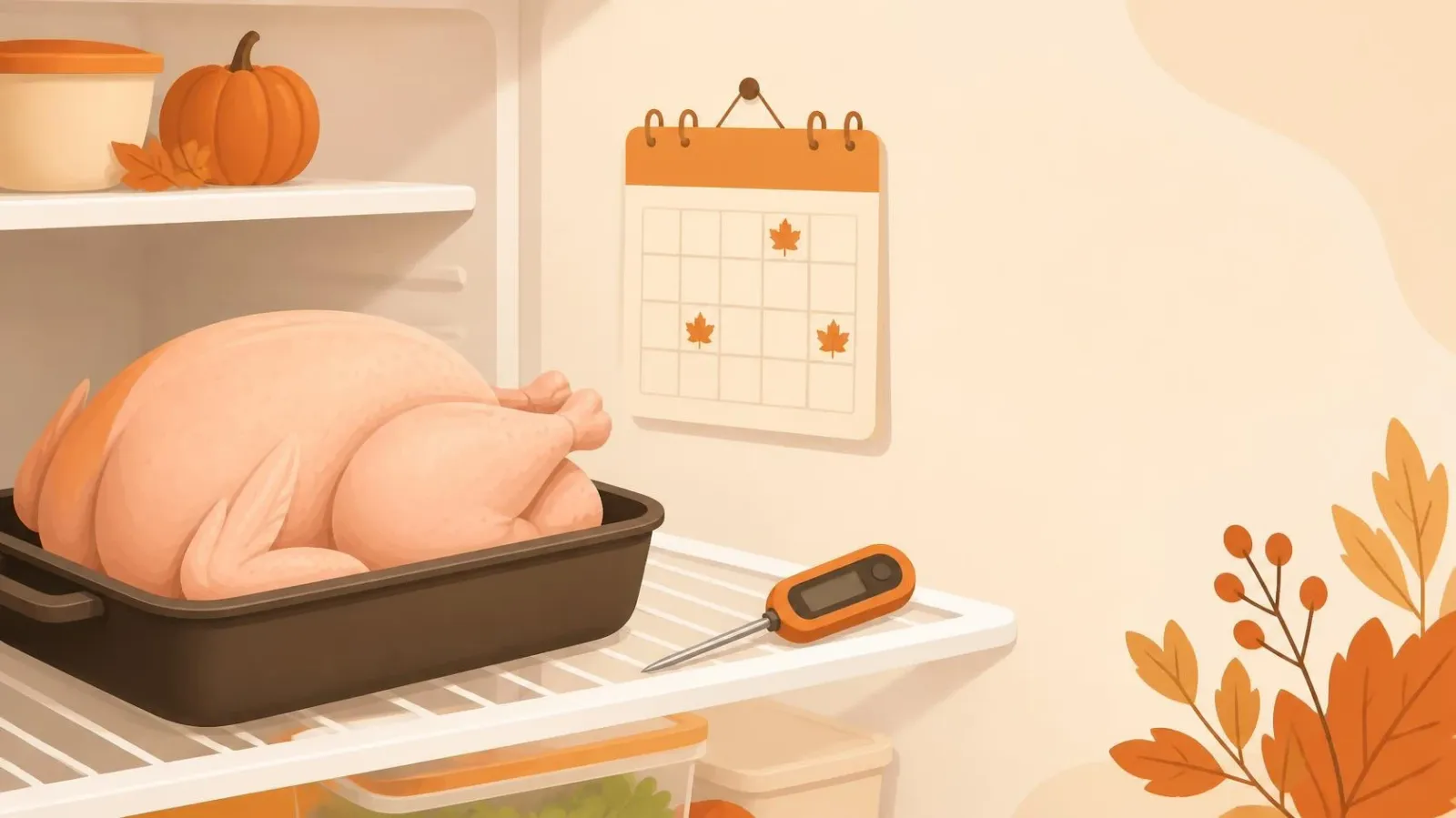
How Long to Thaw a Turkey (Fridge, Cold Water, and Cooking Times)
Thaw a turkey in the fridge for 1 day per 4 to 5 pounds, or in cold water for 30 minutes per pound. See the full chart by weight, cooking times, and safety tips.
7 min read

Everyday Solutions
When Is Black Friday 2026? Dates, Cyber Monday and Smart Shopping Tips
Black Friday 2026 is Friday, November 27, and Cyber Monday is November 30. See all the key shopping dates, when deals really start, and how to spot a real bargain.
6 min read

Home Problems
What to Do in a Power Outage: Before, During and After
Power out? Learn what to do right away, how long food stays safe in the fridge and freezer, how to use a generator safely, and how to prepare for the next outage.
7 min read
More guides you may need
Home Problems
Dishwasher Turns On by Itself? Why It Happens and How to Stop It
Dishwasher starts on its own? Check touchy controls, a stuck button, a delay setting, a leak error or a failing control board. Safe steps and when to call a tech.
6 min read
Home Problems
Dishwasher Won't Start? No Lights, No Sound: Causes and Fixes
Dishwasher won't start or the panel is dead? Check power, the door latch, the control lock and a hard reset before you call for service. Steps for most brands.
4 min read