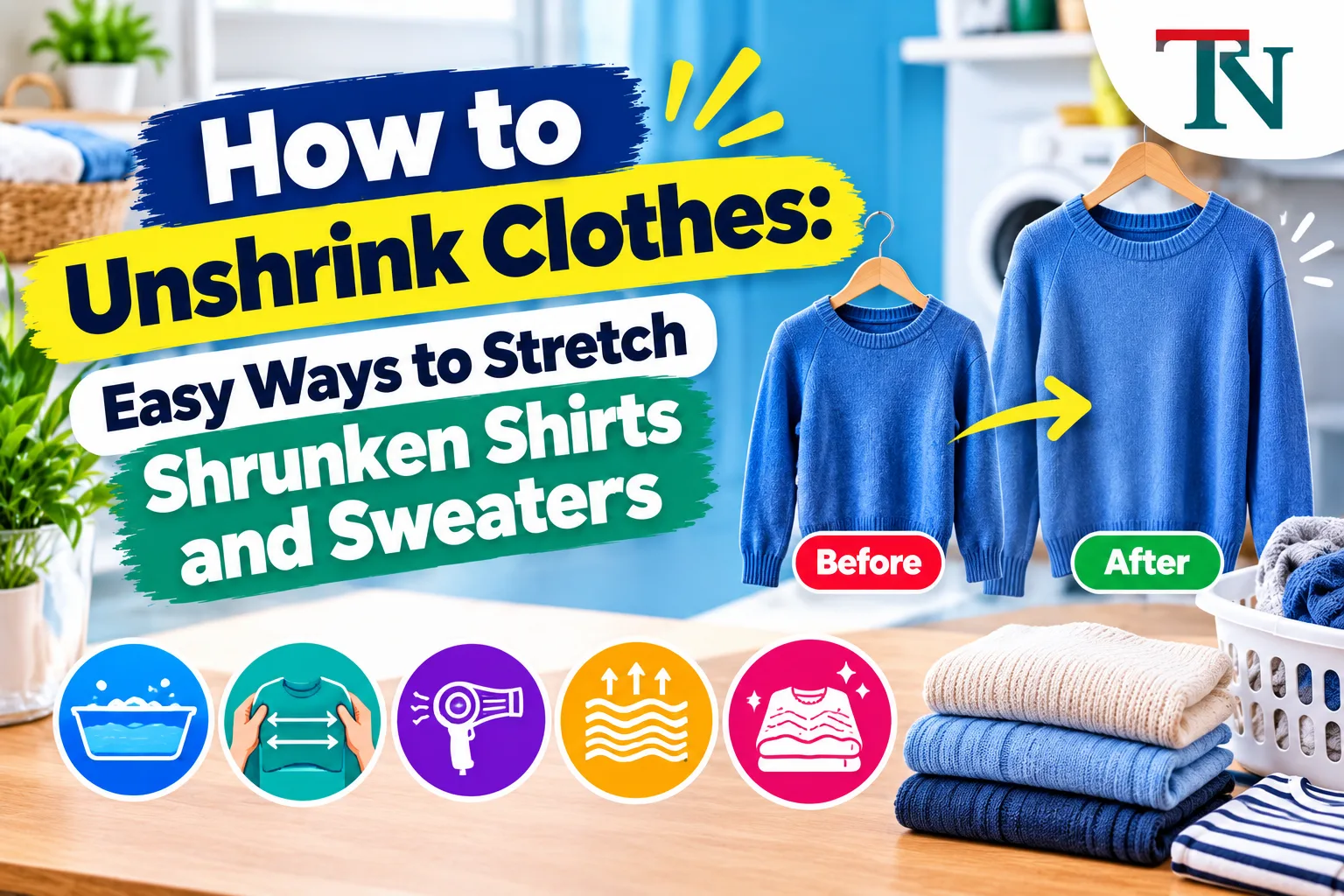
How to Unshrink Clothes: Easy Ways to Stretch Shrunken Shirts and Sweaters
Shrunk a shirt or sweater in the wash? Learn how to unshrink clothes with hair conditioner and warm water, which fabrics you can save, and how to stop shrinking.
On this page
You can often unshrink clothes made of natural fibers, like cotton, wool, and cashmere, by soaking them in lukewarm water with hair conditioner or baby shampoo, then gently stretching them back into shape and letting them dry flat. The conditioner relaxes the fibers so they can stretch without tearing.
This works best on clothes that shrank a little, like a T-shirt that got a bit short or a sweater that got a little tight. It will not always bring a badly shrunken item back to its full size, but it often makes it wearable again.
This guide shows you the step-by-step method, tips for different fabrics, and how to stop your clothes from shrinking in the first place.
Why do clothes shrink?
Most fabrics are made from fibers that were stretched and pulled tight when the fabric was made. Heat, water, and tumbling in the washer and dryer let those fibers relax and pull back to a shorter length. The clothes get smaller.
- Cotton shrinks when hot water and dryer heat let the stretched fibers relax.
- Wool has tiny scales on each fiber. Heat, water, and rubbing make the scales lock together, which is called felting. Felted wool gets thick and small, and it is hard to undo.
- Rayon (viscose) can shrink a lot in water.
- Synthetics like polyester and nylon shrink less, but high heat can change them for good.
Can your clothes be unshrunk?
Check the fabric label first.
| Fabric | Can it be unshrunk? | Notes |
|---|---|---|
| Cotton | Usually, partly | Responds well to soaking and stretching |
| Wool | Sometimes | Mild shrinking can be fixed; felted wool rarely can |
| Cashmere | Often | Treat gently, like wool |
| Linen | Sometimes | Stretch while damp |
| Rayon (viscose) | Sometimes | Very gentle handling; fabric is weak when wet |
| Cotton blends | Partly | Depends on how much cotton is in it |
| Polyester, nylon | Rarely | Heat changes are mostly permanent |
How to unshrink clothes: step by step
What you need
- A clean sink, tub, or large bowl
- Lukewarm water (not hot)
- Hair conditioner or baby shampoo
- 2 or 3 large, clean towels
- A flat surface
- Optional: heavy books, clean cans, or clothespins to hold the item in place while it dries
Step 1: Mix the soaking water
Fill the sink or bowl with lukewarm water. Add about 1 tablespoon of hair conditioner or baby shampoo per quart of water (about 4 cups). Swish it around until it mixes in.
Step 2: Soak the item
Put the shrunken item in the water and press it down so it is fully soaked. Let it soak for about 30 minutes. Do not leave it overnight, as long soaking can weaken some fabrics.
Step 3: Gently press out the water
Do not rinse it, and do not wring or twist it.
- Lift the item out and gently squeeze the water out with your hands.
- Lay it flat on a dry towel.
- Roll the towel up with the item inside, like a jelly roll.
- Press down on the roll to soak up more water.
The item should be damp, not dripping.
Step 4: Stretch it back into shape
- Unroll it and move it to a new, dry towel on a flat surface.
- Gently stretch the fabric a little at a time, in the direction it shrank. Hold one part with one hand and pull the other part gently with your other hand.
- Work around the whole item: length, width, sleeves, and neckline.
- If you have a similar item that fits well, lay it next to the shrunken one as a guide.
Stretch slowly. Pulling too hard can tear the fabric or leave it misshapen.
Step 5: Hold it in place while it dries
Once it is the size you want, hold it in place so it does not shrink back as it dries:
- Place heavy books or clean cans on the edges, or
- Pin it to the towel with clothespins, or
- For shirts, hang it on a hanger and gently pull down on the hem as it dries.
Step 6: Let it air dry
Let the item dry completely on the towel. Keep it away from direct sunlight and heaters. Every so often, gently stretch it again while it is still damp. Do not put it in the dryer.
Step 7: Repeat if needed
If it is still too small, repeat the whole process. Some items need 2 or 3 rounds.
Tips for different fabrics
Cotton T-shirts and jeans
Cotton responds well to this method. You can also stretch cotton while wearing it. Put on the damp shirt or jeans (after the soak and towel steps) and move around, squat, and stretch while it dries. For jeans, stretch the waist and legs by hand while they are damp.
A steam iron on the cotton setting can also help. Steam a small area, then gently pull the fabric while it is warm.
Wool and cashmere sweaters
Wool needs extra care.
- Use lukewarm water only, never hot.
- Use hair conditioner or a gentle wool wash.
- Do not rub or scrub. Rubbing can make felting worse.
- Stretch very gently, a little at a time, and lay the sweater flat to dry.
If your sweater has turned thick and stiff like felt, it may not stretch back. In that case, it might make a great gift for a smaller family member, or a craft project.
Rayon and delicate fabrics
Rayon is weak when wet and can tear easily. Use a short soak, handle it gently, and stretch very slowly. If the item is expensive or special, ask a professional cleaner for help.
Polyester and synthetic blends
Heat-shrunk synthetics rarely return to full size. You can try warming the fabric with a steam iron on a low setting, pressing through a thin cloth, and gently pulling it. Check the care label first, since some synthetics can melt.
What about vinegar or borax?
You may see other methods online:
- White vinegar: Some people soak cotton or wool in water with a splash of white vinegar to relax fibers. It can work, but hair conditioner is gentler and easier for most people.
- Borax: Some guides suggest borax for wool. If you try it, follow the package directions carefully and rinse well, and do not use it on delicate items.
Whatever you use, never mix cleaning products together, and always test on a hidden spot first.
How much can you expect to get back?
It helps to have realistic expectations:
- A little shrinkage (about half an inch to an inch, or one size): often fixed fully.
- Medium shrinkage (one to two sizes): usually improved enough to wear again.
- Heavy shrinkage or felted wool: hard to fix; you may get only a small amount back.
Items also tend to shrink back a little the next time they are washed, so wash them in cold water and air dry them from now on.
Common mistakes to avoid
- Using hot water. Hot water can shrink the item even more, especially wool.
- Wringing or twisting. This stretches the fabric unevenly and can damage fibers.
- Pulling too hard. Stretch in small, gentle steps to avoid tears and holes.
- Hanging heavy, wet sweaters. The weight can pull them out of shape. Dry sweaters flat.
- Putting the item in the dryer after stretching. The heat will shrink it right back.
- Soaking too long. More than an hour or so does not help and can weaken some fabrics.
Unshrinking a specific problem
- Shirt got too short: Focus on stretching the length. Hold the shoulders and gently pull down on the hem. Hanging it on a hanger while damp and tugging the hem every so often also helps.
- Shirt got too tight: Focus on the width. Stretch side to side across the chest and waist, and stretch the sleeves around their width.
- Sweater sleeves got short: Stretch each sleeve gently along its length while damp, then lay the sweater flat with the sleeves held straight by books or cans.
- Jeans got tight in the waist: Put on the damp jeans and do a few squats and lunges. Or stretch the waistband by hand and hold it open with a hanger or a stretcher while it dries.
How to keep clothes from shrinking
Preventing shrinking is much easier than fixing it.
- Read the care label before washing.
- Wash in cold water. Most clothes get just as clean.
- Use a gentle or delicate cycle for sweaters and delicate items.
- Air dry clothes that shrink easily, like cotton T-shirts, wool, and rayon.
- Use low heat if you use the dryer, and take clothes out while they are still a little damp.
- Do not overdry. Long, hot dryer cycles cause the most shrinking.
- Hand wash wool and cashmere, or use a wool cycle.
- Buy a little big if an item is 100% cotton and not labeled pre-shrunk.
A clean, well-cared-for washer also helps your clothes last. If your washer has a musty smell, see our guide on cleaning a smelly washing machine.
Does fabric softener work instead of conditioner?
Yes, it can. Liquid fabric softener also relaxes fibers. Use about a quarter cup in a sink of lukewarm water. Hair conditioner and baby shampoo are gentler, especially on wool, so try those first if you have them.
When to see a professional
Take the item to a professional cleaner or tailor if:
- It is expensive, vintage, or has special meaning
- It is marked Dry Clean Only
- It is made of silk, leather, or suede
- You have tried twice at home and it has not stretched back
A tailor may be able to add fabric panels or let out seams to make it fit again.
Summary
To unshrink clothes, soak them in lukewarm water with hair conditioner or baby shampoo for about 30 minutes, press out the water with a towel, and gently stretch the item back into shape. Hold it in place and let it air dry flat. This works best for cotton, wool, and cashmere that shrank a little. To avoid the problem next time, wash in cold water and air dry clothes that shrink easily.
Sources
This guide was checked against these official and manufacturer sources.
Frequently asked questions
Can you really unshrink clothes?
Often, yes, at least partly. Clothes made from natural fibers, like cotton, wool, and cashmere, can usually be stretched back some of the way after soaking in lukewarm water with hair conditioner or baby shampoo. Badly shrunk items, and wool that has turned thick and felted, may not return to their full size.
What is the best thing to unshrink clothes?
Hair conditioner or baby shampoo mixed into lukewarm water works best for most people. It relaxes the fibers so you can gently stretch the fabric back into shape. About 1 tablespoon per quart of water is a good starting point.
Can you unshrink polyester?
Usually not by much. Synthetic fabrics like polyester and nylon shrink when heat changes the fibers, and that change is mostly permanent. You may get a little stretch back by warming the fabric with a steam iron on a low setting and gently pulling it, but results are limited.
How do I keep clothes from shrinking?
Wash in cold water, use a gentle cycle, and air dry or tumble dry on low. Heat from hot water and the dryer is the biggest cause of shrinking. Always check the care label, especially for wool, cotton, and rayon.

Written by
Agha Ali Abbas
Agha Ali Abbas is the founder and editor of TimeToNote. He has worked in SEO and content writing for 18 years, and he checks every guide against manufacturer documentation and official sources before it goes live.
Related guides
Everyday Solutions
How to Get Gum Out of Clothes: 7 Easy Methods That Work
Gum stuck on your clothes? Freeze it, scrape it, and remove what is left with simple things you have at home. Works on jeans, shirts, and most fabrics.
8 min read
Home Problems
Why Does My Washing Machine Smell? How to Clean It and Stop the Odor
Musty or rotten egg smell from your washer? Learn what causes it and how to clean your washing machine step by step, so your laundry smells fresh again.
9 min read

Everyday Solutions
How Much Does a Dehumidifier Cost to Run? Per Hour, Day and Month
A typical dehumidifier costs 5 to 13 cents an hour to run. See the cost per day and month by size, how to work out your own bill, and how to cut it.
8 min read
More guides you may need
Everyday Solutions
How to Remove Sticker Residue From Any Surface (Easy Methods)
Get sticky label glue off glass, plastic, wood, metal, clothes, and cars with things you already have at home, like oil, rubbing alcohol, and warm soapy water.
8 min read
Everyday Solutions
Is a Costco Membership Worth It? Gold Star vs Executive (With Math)
Is a Costco membership worth the fee? See the simple math for Gold Star and Executive, how much you need to spend, who saves the most, and when to skip it.
7 min read