How to Clean a Dryer Vent: Signs It Is Clogged and Safe Steps
Learn how to clean a dryer vent step by step, the warning signs of a clogged duct, how often to do it and when to call a pro. Lower fire risk and dry faster.
On this page
To clean a dryer vent, unplug the dryer (and shut off the gas if it is a gas dryer), disconnect the duct, vacuum the lint from the back of the dryer and the duct, push a vent brush through from the outside and inside, then reconnect and test the airflow. Do this at least once a year.
A clogged dryer vent makes clothes take forever to dry, wastes energy, and is a real fire risk. NFPA figures cited by many contractors put clothes dryer fires in the thousands each year, with failure to clean named as a leading cause. This guide shows how to tell if your vent is clogged and how to clean it safely.
Signs your dryer vent is clogged
- Clothes take more than one cycle to dry. This is the most common sign.
- The top of the dryer or the clothes feel very hot.
- A burning smell while the dryer runs. See also why your dryer smells.
- Lint around the outside vent opening or the flap stuck or barely moving.
- Humid laundry room or condensation on nearby windows.
- The dryer shuts off early or trips a safety device. If the thermal fuse keeps blowing, see dryer keeps blowing the thermal fuse.
A simple test: run the dryer on air-only or heat for a few minutes, then go outside. The flap should be wide open and strong warm air should come out. Weak air means a restriction.
Why dryer vents clog
Lint is made of tiny fibers that escape the lint screen. In a vent with long runs, bends, or a flexible foil duct, those fibers catch and pile up. Bird nests, lint caps and crushed ducts behind the dryer make it worse.
Fire safety guidance says the duct should be as short and straight as possible. Ribbed foil ducts and plastic ducts catch lint easily. Smooth metal ducts are the usual recommendation.

What you need
- Dryer vent cleaning kit (flexible rods and a round brush), often about 10 to 12 feet and extendable
- Drill (optional, to spin the brush, only in the direction the kit says)
- Vacuum with a hose attachment
- Screwdriver or nut driver
- Foil duct tape (not cloth duct tape) for the joints
- Dust mask and gloves
- A flashlight
How to clean a dryer vent step by step
- Turn off power. Unplug the dryer. For a gas dryer, also close the gas valve, and do not pull the dryer so far that you kink the gas line.
- Move the dryer out far enough to reach the back. Move slowly so you do not crush the duct.
- Disconnect the duct from the back of the dryer. Loosen the clamp. Look inside the dryer outlet and the duct for lint.
- Vacuum the dryer outlet and the duct as far in as you can reach.
- Clean from the outside. Go to the exterior vent cap. Remove the cover if it comes off and pull out any lint you can see.
- Push the brush through. Feed the brush and rods from the outside toward the house in short sections, twisting. Pull it back and clean the lint off the brush as you go. Repeat until little lint comes out.
- Clean from the inside too. If the run is long, work from both ends and meet in the middle.
- Vacuum the lint screen housing. Remove the lint screen and vacuum the slot.
- Reconnect the duct with foil tape and a clamp. Do not use screws that poke into the duct, because lint catches on them.
- Push the dryer back, making sure the duct is not crushed or kinked.
- Test. Plug in, run the dryer for 10 to 15 minutes and check outside for strong airflow.
How often should you clean a dryer vent?
Most sources recommend at least once a year. Clean it more often if:
- You dry large or very frequent loads
- You have pets, or wash fleece, towels or other high-lint items
- The vent run is long or has several bends
- You notice longer drying times
Also empty the lint screen after every load and wash it with soap and water a few times a year, since fabric softener residue can clog the mesh.
When to call a professional
- The vent runs through the roof or a long run through walls
- Your cleaning brush will not pass through
- You find damaged or crushed duct inside a wall
- You smell burning and cannot find the cause
- You are not comfortable with a gas dryer connection
Look for a technician with a recognized duct-cleaning certification, and ask them to check airflow after cleaning.
Other ways to keep a vent clear
- Use a short, straight, smooth metal duct instead of foil
- Keep the exterior flap free of snow, leaves and bird nests, especially in winter
- Do not run the dryer if the vent outside is covered by snow
- Do not overload the dryer
- Do not dry items with flammable residue such as oil or gasoline
Winter is when clogs show up. Cold air, snow and condensation make lint stick. Clean the vent before the cold season if you can.
What if clothes still do not dry?
If the vent is clear and the dryer is still slow, the cause is probably elsewhere. See slow dryer causes. If the dryer trips the breaker, see dryer keeps tripping the breaker.
Bottom line
A clean vent dries faster and cuts fire risk. Check for the signs, clean the duct at least once a year, and call a pro for long or hard-to-reach runs.
Sources
This guide was checked against these official and manufacturer sources.
Frequently asked questions
How often should I clean my dryer vent?
Most sources advise at least once a year, and more often if you dry large loads, have long vent runs or notice longer drying times. Emptying the lint screen after every load still applies.
How do I know if my dryer vent is clogged?
Clothes take more than one cycle to dry, the dryer or laundry room feels hot, there is a burning smell, or little air comes out of the outside vent. Check that the outside flap opens while the dryer runs.
Is cleaning the lint trap enough?
No. The lint screen only catches part of the lint. The rest builds up in the duct, which is where the fire risk grows.
Can I clean a dryer vent myself?
Often yes, with a vent brush kit and a vacuum, if the run is short and easy to reach. Call a professional for long, bent or roof-exit vents.

Written by
Agha Ali Abbas
Agha Ali Abbas is the founder and editor of TimeToNote. He has worked in SEO and content writing for 18 years, and he checks every guide against manufacturer documentation and official sources before it goes live.
Related guides
Home Problems
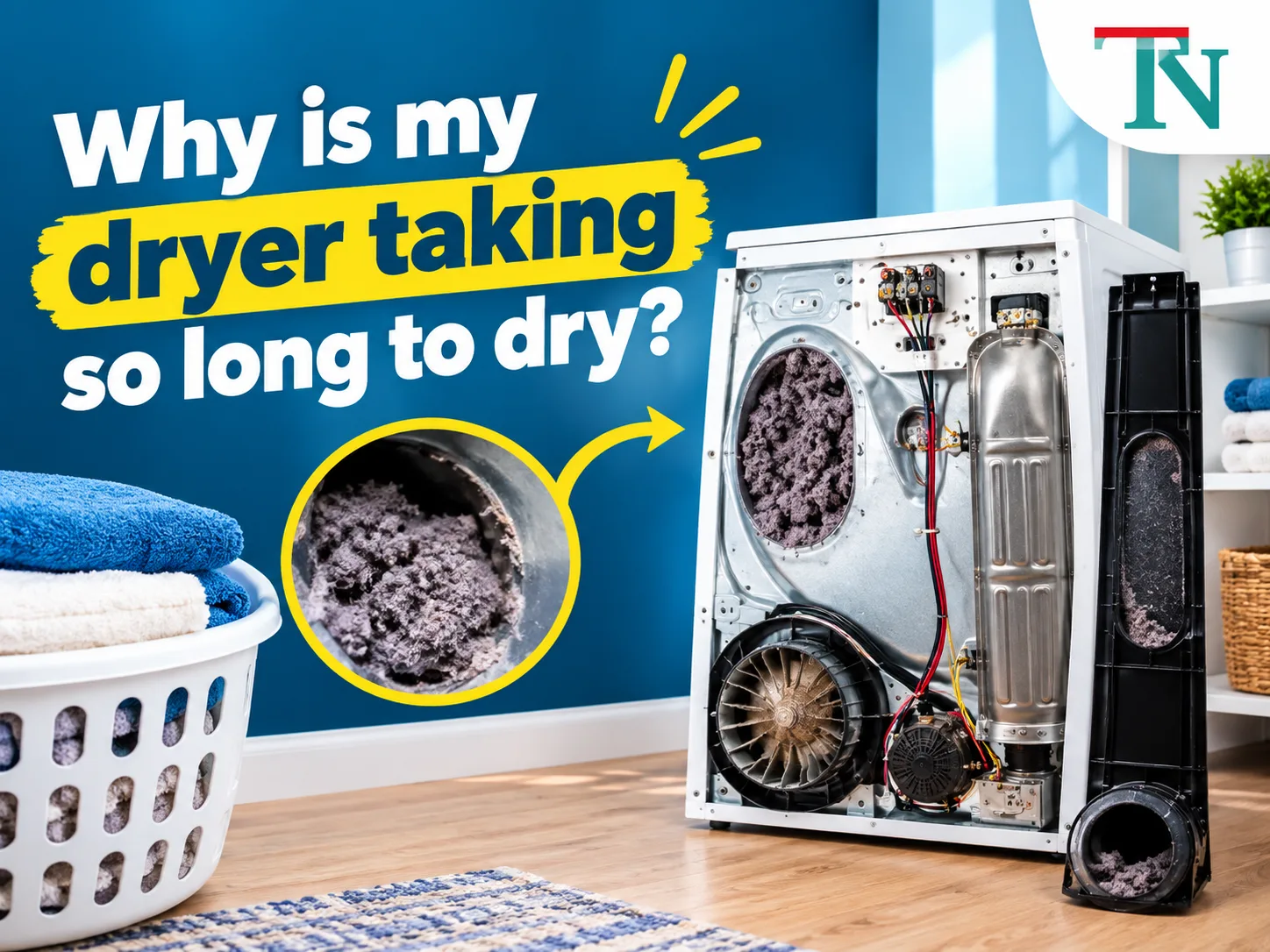
Why Is My Dryer Taking So Long to Dry Clothes? 9 Causes and Fixes
Clothes still damp after a full cycle? Learn why your dryer takes so long, from a clogged vent to a bad heating element, and how to fix it safely.
7 min read

Home Problems
Dryer Keeps Blowing the Thermal Fuse? Why It Happens and How to Fix It
Dryer thermal fuse blows again and again? The fuse is a symptom of overheating. Check the vent first, then the thermostats, element and control board.
7 min read
Home Problems
Why Does My Dryer Smell? Musty, Burning, or Like Mildew (and How to Fix It)
Dryer smells musty, like mildew, or burning? Learn what each smell means, which ones are a fire risk, and how to clean the lint trap, vent, and drum.
8 min read
More guides you may need
Home Problems
Carbon Monoxide Detector Beeping? What Each Sound Means
Carbon monoxide detector beeping or chirping? Learn what the alarm, low battery and end-of-life sounds mean, when to leave the house and how to stop the noise.
6 min read
Home Problems
Ceiling Fan Keeps Turning On by Itself? Remote, Interference and Power Causes
Ceiling fan or its light starts on its own? Check the remote, matching DIP switches, a neighbor's remote, a power cut reset and the wall switch.
5 min read