Dryer Keeps Blowing the Thermal Fuse? Why It Happens and How to Fix It
Dryer thermal fuse blows again and again? The fuse is a symptom of overheating. Check the vent first, then the thermostats, element and control board.
On this page
A thermal fuse blows because the dryer got too hot, so replacing the fuse alone never fixes the cause. Unplug the dryer, clean the lint screen, the hose behind the dryer and the whole vent duct to the outside, then check the high-limit thermostat, cycling thermostat and heating element. If it blows again, a stuck control board relay may be the cause. Never bypass the fuse.
You replaced the thermal fuse and the dryer worked for a few loads. Then it stopped heating again, or died completely. Now you are looking at another blown fuse and wondering whether the part is bad.
The part is almost certainly fine. A thermal fuse is a safety device that blows once when the dryer reaches a dangerous temperature. If it blows over and over, the dryer keeps overheating, and your job is to find out why. This guide covers the causes in the order that repair technicians and forum users report them. Parts and steps vary by brand and model, so use your model number when you buy anything.
What the thermal fuse does
Inside the dryer, a small fuse sits in the path of the heat. If the temperature passes a safe limit, the fuse opens and cuts power to the heat, or to the whole dryer on some models. It cannot be reset. Once it blows, it has to be replaced.
That is why a blown fuse is a warning, not a defect. An article in one repair guide says the thermal fuse is designed to blow at high heat, so the root cause is almost always heat, not electrical current.
Symptoms of a blown thermal fuse:
- The dryer powers on and tumbles but does not heat.
- The dryer will not start at all, with no lights.
- It heated for a while, then stopped mid-cycle.
Before anything else, a dryer that smells like burning deserves attention. If you smell something hot or see smoke, stop using it.
Safety first
Unplug the dryer before you touch anything inside. For a gas dryer, also shut the gas valve if you need to move the machine. Cutting power at the wall is not enough if you are unsure which circuit it is on.
Step 1: Clean the whole vent, not just the lint screen
Restricted airflow is the most common cause of repeated fuse failures. If hot, moist air cannot leave the dryer, the temperature climbs until the fuse blows.
- The lint screen. Pull it out and remove the lint. Wash it with warm soapy water if water beads on it, since fabric softener leaves a film.
- The lint housing. Vacuum the slot the screen sits in.
- The hose behind the dryer. Pull the dryer forward, disconnect the hose and look for crushed, kinked or lint-packed sections. Replace a foil or vinyl hose with a rigid or semi-rigid metal one.
- The duct inside the wall. One repair guide tells you to check the ductwork inside the house, not just the section you can reach. A long run with several bends collects lint.
- The outside vent flap. Make sure the flap opens fully when the dryer runs and is not packed with lint or blocked by a nest.
Run the dryer on air-only for a few minutes and feel the air at the outside vent. It should be strong.
One owner in a forum thread cleaned everything and still blew fuses, so do not stop here if the vent is clear. If your dryer also takes more than one cycle to dry clothes, our guide to a dryer that needs two cycles to dry clothes overlaps with this one.
Step 2: Check how the dryer is installed
Vent problems often come from the installation:
- The vent run is much longer than the maker allows. Check your manual.
- The hose is squashed behind the dryer.
- Several tight bends in the duct.
- The vent ends in an attic or a crawl space instead of outside.
If the dryer was moved recently, or you recently changed the vent, start here.
Step 3: Test the high-limit thermostat and the cycling thermostat
Repair sources recommend testing these when the fuse keeps blowing. A faulty thermostat can let the heat climb too high.
- The cycling thermostat turns the heat on and off to hold a steady temperature.
- The high-limit thermostat is a backup that cuts the heat if it gets too hot.
With the dryer unplugged, a multimeter set to continuity can show whether each one conducts as it should at room temperature. If a thermostat is open when cold, or you do not know the correct reading, check the part number against your model before you replace anything. One user found that fuses kept blowing even after replacing the cycling fuses and thermostats, so test the others as well.
Step 4: Look at the heating element
A heating element can short out or sag and touch its housing. A forum user had a technician replace the element for a suspected intermittent short, though the fuses kept blowing anyway, so it is not always the answer.
Visible signs include a broken or sagging coil, burn marks, or an element that shows no continuity. Testing needs a multimeter and care.
Step 5: Suspect a stuck relay on the control board
On some Whirlpool and Maytag models, a guide describes a relay on the control board that sticks in the ON position. It keeps sending power to the heating element and ignores the board. The fuse then blows when the temperature gets critical, often near the end of the cycle when the dryer goes into the cool-down phase.
If your fuse blows at the end of a cycle, with a clean vent and good thermostats, ask a technician to inspect the board. Replacing the board is not cheap, so compare the quote with the cost of a new dryer.
Step 6: Use the right fuse and install it correctly
If you replace the fuse, take the model number from the label inside the door or on the back. Use the exact part, with the same temperature rating. A fuse rated for a higher temperature lets the dryer run hotter than it was designed for. A lower rating will blow too early.
Fit the fuse securely, with the wires seated well. A loose connection creates heat of its own.
What not to do
- Never jump or bypass the thermal fuse with a wire. It is the last line of defense against a fire.
- Do not use a fuse with a higher rating than your model calls for.
- Do not run a dryer with a damaged or kinked vent just to finish a load.
- Do not leave the dryer running while you are out if it has been overheating.
- Do not ignore a burning smell. Stop the cycle, unplug the dryer and clean the vent.
When to call a technician
Call for help if:
- A new fuse blows again after you cleaned the full vent.
- You cannot reach or clean the duct, for example in a long run through a wall or a roof.
- You do not feel comfortable testing parts with a meter.
- You find a melted wire, burn marks or smoke damage.
- The dryer is old and several parts have failed.
Ask whether repair is worth it. If the dryer is more than about 10 to 12 years old and the board or element is the issue, a new dryer may cost about the same over time.
Which fix fits your situation?
- The vent is full of lint: clean the whole run, then replace the fuse.
- The hose is crushed or foil: replace it with metal duct.
- It blows near the end of a cycle: suspect the control board relay.
- It blows again after a new fuse and clean vent: test the thermostats and element, or call a technician.
- There is a burning smell: stop, unplug and clean first.
Bottom line
A thermal fuse that keeps blowing is telling you the dryer is overheating. Clean the entire vent path first, because restricted airflow is the most common cause. Then check the thermostats, the element and the control board. Use the exact replacement fuse, never bypass it, and call a technician when a clean vent and a new fuse still do not solve it.
Sources
This guide was checked against these official and manufacturer sources.
Frequently asked questions
Why does my dryer keep blowing the thermal fuse?
The thermal fuse is a one-time safety device that blows when the dryer gets too hot. If it keeps blowing, something is making the dryer overheat, most often a clogged or crushed vent, and sometimes a bad thermostat, a heating element fault or a stuck relay on the control board.
Can I just bypass the thermal fuse?
No. The fuse is there to stop a fire. Bypassing it, or using a wire or a wrong-rated fuse, removes the protection that is saving your house from overheating.
How do I know the thermal fuse is blown?
A dryer that has power and tumbles but does not heat, or one that turns off completely, can have a blown fuse. A multimeter set to continuity shows a good fuse as continuous and a blown one as open. Unplug the dryer first.
Is the vent really the most common cause?
Repair guides and forum technicians put restricted venting at the top. A clogged hose or duct blocks airflow, so heat builds up. Some owners clean everything and still blow fuses, so the vent is not always the whole story.
Should I call a technician?
Yes if a new fuse blows again after a clean vent and tested thermostats, or if you are not comfortable testing parts. Repeated failures can point to a control board or element fault.

Written by
Agha Ali Abbas
Agha Ali Abbas is the founder and editor of TimeToNote. He has worked in SEO and content writing for 18 years, and he checks every guide against manufacturer documentation and official sources before it goes live.
Related guides
Home Problems
Why Does My Dryer Smell? Musty, Burning, or Like Mildew (and How to Fix It)
Dryer smells musty, like mildew, or burning? Learn what each smell means, which ones are a fire risk, and how to clean the lint trap, vent, and drum.
8 min read
Home Problems
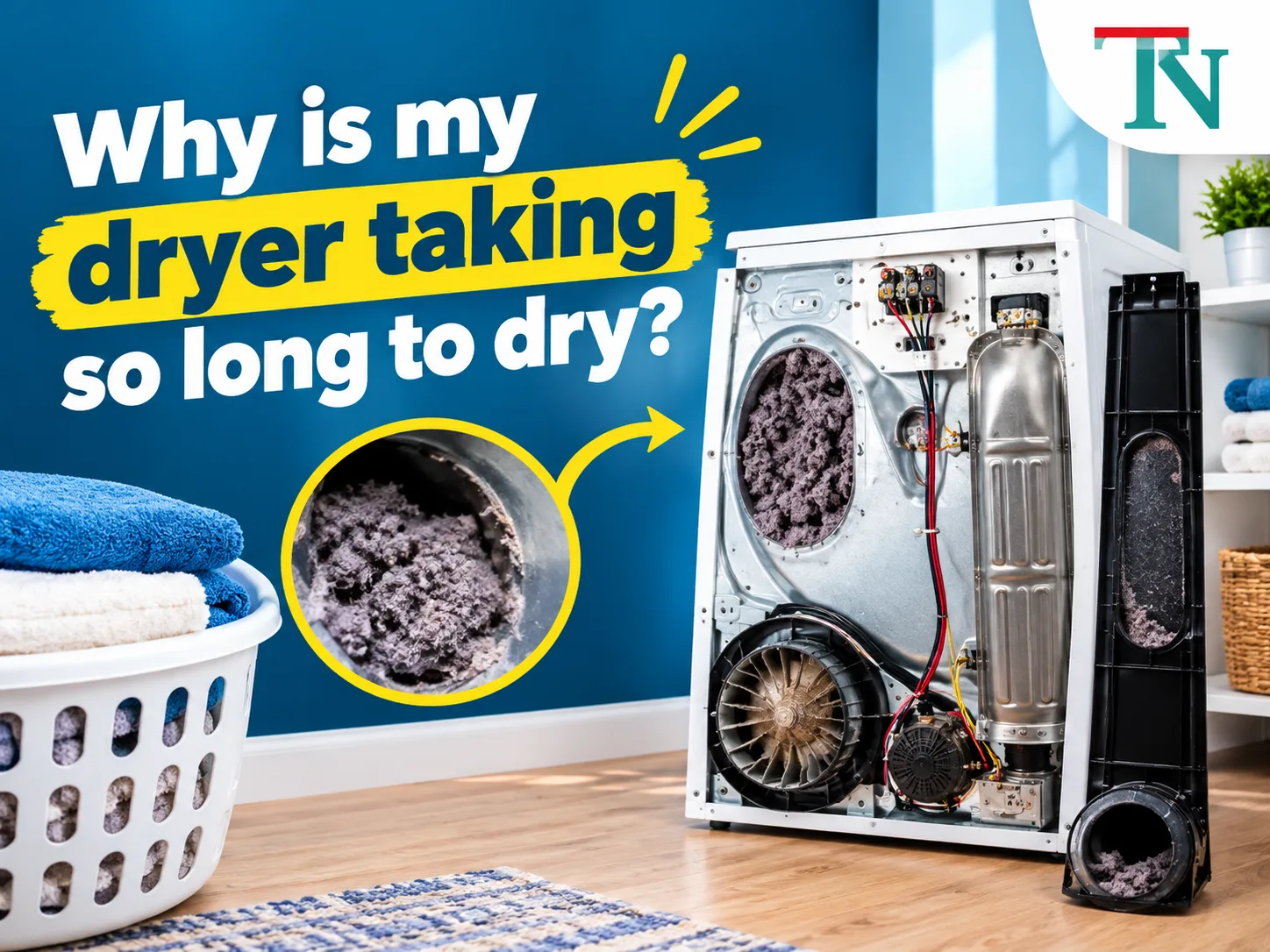
Why Is My Dryer Taking So Long to Dry Clothes? 9 Causes and Fixes
Clothes still damp after a full cycle? Learn why your dryer takes so long, from a clogged vent to a bad heating element, and how to fix it safely.
7 min read
Home Problems
Why Does My Circuit Breaker Keep Tripping? 7 Causes and Safe Fixes
Why does your breaker keep tripping? Learn the 7 common causes, simple safe checks, and when to call an electrician. Easy steps for any home.
11 min read
More guides you may need

Home Problems
How to Paint a Room Like a Pro (Step by Step for Beginners)
Paint a room like a pro, even as a beginner. Learn what supplies you need, how much paint to buy, how to prep walls, cut in, roll without streaks, and clean up.
7 min read

Home Problems
Are Hurricane Shutters Worth It? Costs, Types and Impact Windows Compared
Are hurricane shutters worth the money? Compare storm panels, accordion, and roll-down shutters with impact windows, plus 2026 costs and insurance tips.
7 min read