Electric Dryer Keeps Tripping the Breaker? Causes and Fixes
Electric dryer tripping the breaker? Common causes are a failed heating element, a loose terminal block or a worn cord. Here is how to narrow it down safely.
On this page
An electric dryer usually trips the breaker because of a fault: a cracked heating element, a loose or burned terminal block, a failing drive motor or a damaged cord and outlet. Run it on air only (no heat) to see if the heating element is to blame. If it trips either way, unplug the dryer and call a technician.
A dryer uses a lot of power and runs on its own 240 V circuit, so a trip is rarely just an overload. This guide helps you work out whether the problem is the dryer, the cord or the outlet, and what is safe to check at home.
Why does my dryer keep tripping the breaker?
- A failing heating element. A damaged element can short to the metal housing and trip the breaker once the heat comes on.
- A loose or burned terminal block. The power cord connects inside the back of the dryer. Loose wires arc, damage the block and can touch the frame.
- A worn cord or outlet. A loose plug, scorched prongs or a damaged cord add resistance and heat.
- A failing drive motor. A motor that binds or overheats draws too much current, especially when drum rollers, belts or idler pulleys are worn.
- A shared or undersized circuit. Dryers should have their own circuit. Another appliance on it, or a breaker that does not match the dryer, causes trouble.
- A weak breaker. Old breakers can trip below their rating, though this is less common than a dryer fault.
What the timing tells you
| When it trips | Likely cause |
|---|---|
| The moment you start it | Wiring short, cord, outlet or terminal block |
| When the heat comes on | Heating element |
| After running for a while | Overheating, restricted airflow or a failing motor |
| Only with heavy loads | Motor strain or worn drum parts |
| Intermittently, with a burning smell | Loose connection arcing |
How to fix it
- Unplug the dryer and reset the breaker. If it trips again with nothing plugged in, the breaker or wiring is the problem. Call an electrician.
- Check the plug and outlet. Look for scorching, melted plastic, discolored prongs or a plug that feels hot after use. Do not use a damaged cord or outlet.
- Clean the lint trap and vent. A clogged vent makes the dryer overheat and strain. If drying takes more than one cycle, see slow drying that needs two cycles.
- Run an air-only cycle. Choose the no-heat or air fluff setting. If the breaker holds, the heating element or its wiring is the likely culprit.
- Run an empty drum test. If it trips with an empty drum and no heat, the motor or its wiring is the more likely cause.
- Check what else is on the circuit. The dryer should be alone on its breaker.
Checks a technician will make
With the dryer unplugged, a technician checks a few parts with a multimeter. The heating element should show continuity across its terminals and no continuity to the metal housing. The terminal block is inspected for burn marks and loose lugs, and the motor and drive parts are checked for binding. Replacing a heating element or a terminal block is a common repair, and the parts are modest compared with the price of a new dryer.
If the dryer is more than 10 to 15 years old and needs more than one part, price a new one before you pay for repairs.

Breaker size and wiring
Most electric dryers use a 30 amp, 2-pole breaker with wire sized for that load. Never replace it with a larger breaker unless an electrician confirms the wire is rated for it. A bigger breaker on thin wire removes the protection that stops the wire from overheating.
Also check that the plug matches the outlet. Older homes may have a three-prong outlet and newer ones a four-prong, and an incorrect cord setup can cause problems. An electrician can confirm it matches your dryer's manual.
When to call a professional
Call a licensed electrician or appliance technician if:
- The breaker trips the moment you start the dryer.
- You smell burning, or see melted plastic or scorch marks at the plug, outlet or back of the dryer.
- The outlet or cord is hot.
- The breaker is warm, buzzes or will not reset.
- You are unsure about the breaker size or the wiring.
A related problem is a dryer that runs but stops heating. That is often a blown thermal fuse, covered in why a dryer keeps blowing its thermal fuse.
What not to do
- Do not keep resetting a breaker that trips at once.
- Do not use a plug adapter or extension cord on a dryer.
- Do not swap in a bigger breaker.
- Do not run the dryer with a burning smell.
Bottom line
Test with and without heat, then check the cord and outlet. A trip with heat points to the element, and a trip without it points to the motor, wiring or terminal block. Repeated trips are a fault, not an overload, so stop using the dryer until it is checked. Washers can trip a breaker too, as in a washer that trips the breaker. If your dryer smells odd, see a dryer that gives off a smell.
Sources
This guide was checked against these official and manufacturer sources.
Frequently asked questions
Why does my dryer trip the breaker when it starts heating?
A damaged heating element can short to the metal drum housing, and that only shows up when the heat comes on. Running the dryer on air-only (no heat) is a quick way to check.
What size breaker does an electric dryer need?
Most electric dryers use a 30 amp, 2-pole breaker. Your dryer's label and local code decide. Do not replace it with a larger one.
Can a full lint trap cause a tripped breaker?
Lint restricts airflow and overheats the dryer, which usually blows a thermal fuse or shuts off the heat. It rarely trips the breaker directly, but it makes other problems worse.
Is it safe to use the dryer if it trips the breaker?
No. Repeated trips mean a fault such as a short or a loose connection. Stop using it until it has been checked.

Written by
Agha Ali Abbas
Agha Ali Abbas is the founder and editor of TimeToNote. He has worked in SEO and content writing for 18 years, and he checks every guide against manufacturer documentation and official sources before it goes live.
Related guides

Home Problems
Dryer Keeps Blowing the Thermal Fuse? Why It Happens and How to Fix It
Dryer thermal fuse blows again and again? The fuse is a symptom of overheating. Check the vent first, then the thermostats, element and control board.
7 min read

Home Problems
Washing Machine Keeps Tripping the Breaker? Causes and Safe Fixes
Washing machine trips the breaker or GFCI mid-cycle? Check a shared circuit, the motor, heating element, connections and moisture. Safe steps.
5 min read
Home Problems
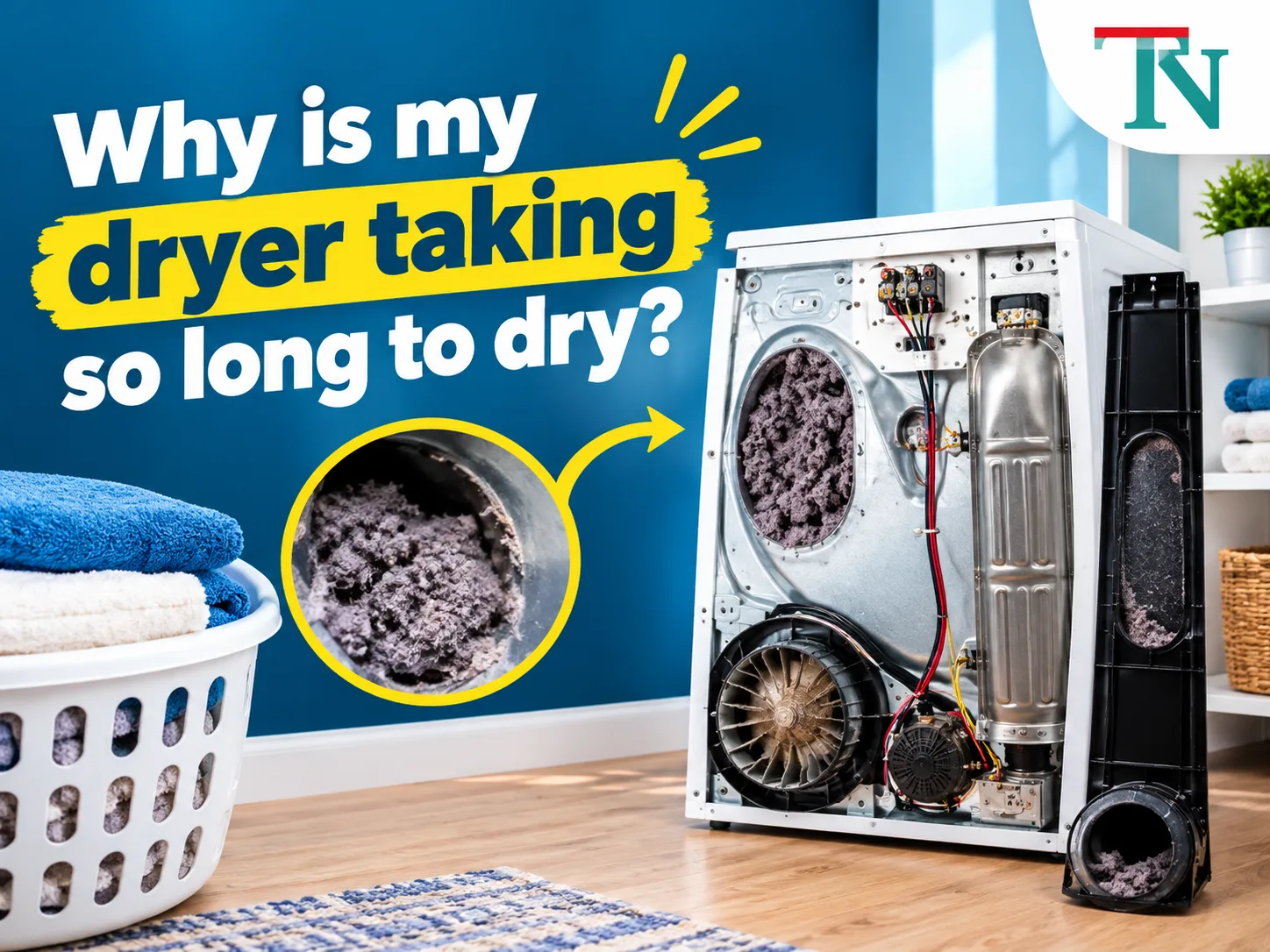
Why Is My Dryer Taking So Long to Dry Clothes? 9 Causes and Fixes
Clothes still damp after a full cycle? Learn why your dryer takes so long, from a clogged vent to a bad heating element, and how to fix it safely.
7 min read
More guides you may need
Home Problems
Dehumidifier Keeps Tripping the Breaker or GFCI? Causes and Fixes
Dehumidifier tripping the breaker or GFCI? Check for an overloaded circuit, a damaged cord or moisture in the unit, and learn when an electrician should look.
2 min read
Home Problems
Dishwasher Keeps Filling With Water? Causes and What to Do Right Away
Dishwasher will not stop filling or fills when off? Shut off the water first, then check the inlet valve, float and drain hose. Safe steps and when to call a pro.
6 min read