Dishwasher Keeps Filling With Water? Causes and What to Do Right Away
Dishwasher will not stop filling or fills when off? Shut off the water first, then check the inlet valve, float and drain hose. Safe steps and when to call a pro.
On this page
If your dishwasher keeps filling, turn off the water supply under the sink first, then switch off the dishwasher at the breaker or unplug it. The usual cause is a water inlet valve stuck open. Next most likely are a stuck float, a faulty float switch or timer, and sediment in the supply. Check the float, then replace the valve or call a technician. Do not run the machine again until it is fixed.
You come back to a dishwasher that is full of water long after the cycle ended. Or you open the door and hear water still running. Or you wake up to a wet kitchen floor. A dishwasher that fills and does not stop is a flooding risk, so the order of what you do matters.
This guide first tells you how to stop the water, then explains the likely causes in the order repair technicians check them. The explanations come from appliance repair forums and manufacturer help pages. Parts differ by brand, so use your model number when you buy anything.
Stop the water first
- Turn off the water supply. The shut-off valve is usually under the kitchen sink, on the hose that goes to the dishwasher. Turn it clockwise until it stops.
- Cut the power. Switch off the dishwasher's breaker, or unplug it if you can reach the plug.
- Drain the tub. Bail out standing water with a cup and towel, or run the drain cycle once the power is back on and the water is still off. Do not run a fill.
- Mop up any water on the floor, and check under the sink for leaks. If water got into the cabinet, see the signs of hidden leaks.
Leaving the water supply off until the part is fixed is what the forum technicians consistently recommend.
What the symptom tells you
| What happens | Likely cause |
|---|---|
| Water keeps running after you open the door or turn off the power | Water inlet valve stuck open |
| Fills and overflows during a cycle | Overfill float or float switch |
| Keeps filling after the cycle is done | Inlet valve, float switch or timer |
| Fills slowly and never reaches the level | Low water pressure or a clogged inlet screen (a different problem) |
| Water level high on a portable dishwasher | Drain hose loop or height |
Cause 1: The water inlet valve is stuck open
This is the part that lets water into the machine. It is opened by an electric signal and closed by a spring and water pressure. If it fails to close, water keeps coming in.
- Test: Turn the dishwasher's power off at the breaker. If water still flows in, the valve is the problem. One technician in a forum thread said that if water keeps flowing after the door is opened, the valve is likely bad.
- Fix: Replace the valve. It is a common repair and the part is usually inexpensive, but it involves water and wiring. If you are not confident, call a technician.
- Why it fails: A forum reply noted that a valve failing this way is not especially common, so debris or sediment in the water supply may be a factor if it happens more than once. The valve's small inlet screen can also clog.
Cause 2: The overfill float is stuck
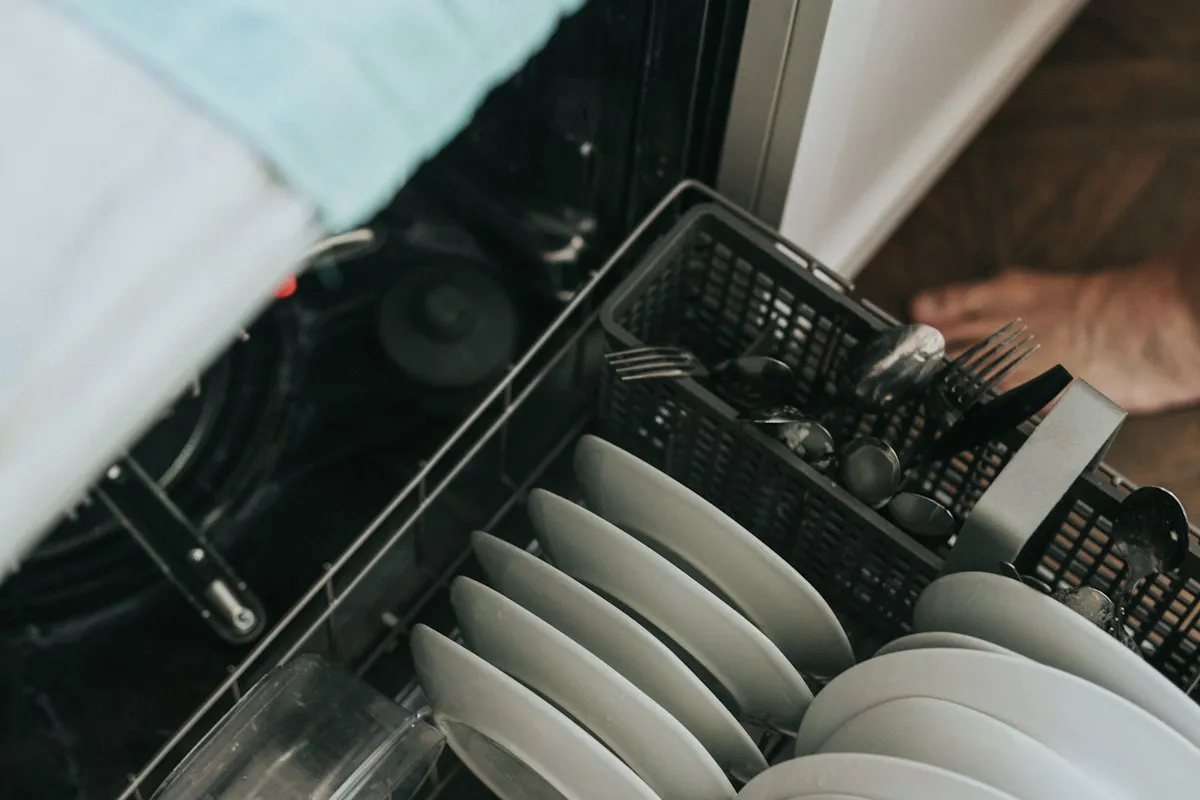
Inside the tub there is a small float. It rises with the water and tells the dishwasher to stop filling.
- Switch off the power and the water.
- Look in the bottom of the tub for the float. It is usually a small plastic dome or cup, often near the front or back.
- Lift it gently and let it drop. It should move up and down freely.
- Clean away any food, label or broken glass that is blocking it.
Whirlpool's guidance is to check that the overfill protection float moves up and down freely and to remove anything that blocks the float area. If it moves freely and the problem remains, the float switch may be faulty.
Cause 3: A bad float switch or timer
The float is connected to a switch. If the switch fails, it may not cut off the water. A forum technician suggested a test: measure the voltage across the fill valve. If the voltage drops and the dishwasher keeps filling, the valve is at fault. If the voltage continues past the normal fill time, the timer or control is the likely problem.
That test uses a multimeter on live wiring. Leave it to a technician unless you are trained.
Cause 4: Low water pressure or a dirty supply
Whirlpool lists inadequate pressure as a cause of fill problems. Debris in the water line, a partly closed shut-off valve or a clogged inlet screen can all upset the fill. If you have well water or old pipes, sediment can clog the valve. Turn off the water, disconnect the hose and check the small screen at the valve for debris.
If the water in your home has a lot of sediment or minerals, our guide to adding a whole-house water filter explains one way to protect your appliances.
For a portable dishwasher
Portable models have one more thing to check: the drain hose. Whirlpool says the loop at the end of the drain hose should be at least 20 inches above the floor. A hose that is too low can let water siphon or flow back, which can look like a dishwasher that will not stop filling. Check your own manual for the exact figure for your model.
When it fills but also will not drain
If the tub is full of water and stays full, you may have two problems or a drain problem. See a dishwasher that will not drain for the drain pump and clog checks.
When to call a technician
Call an appliance technician or plumber if:
- Water keeps flowing with the power off, and you are not comfortable replacing the valve.
- The float moves freely but the problem continues.
- You find water under the sink or in the cabinet.
- The machine is old, and several parts are failing.
- You are not comfortable working with water lines or wiring.
Give them the make and model, say that the water keeps running when the power is off (if it does), and tell them what you checked.
Repair or replace?
| Situation | Often better |
|---|---|
| Inlet valve or float switch on a dishwasher under about 10 years old | Repair |
| Control board or timer on an old dishwasher | Get a quote, then compare with a new one |
| Water damage to the floor or cabinet | Fix the leak first, then decide |
Ask for a written estimate before repair starts.
What not to do
- Do not run the dishwasher until the cause is fixed.
- Do not leave the water supply on while you wait for a part.
- Do not test the valve or timer with power on unless you are trained.
- Do not ignore a wet cabinet floor.
- Do not add more detergent hoping to solve it.
Which fix fits your situation?
- Water runs even with the power off: inlet valve.
- Overflows in the middle of a cycle: the float and float switch.
- Keeps filling after the cycle ends: valve, float switch or timer.
- Portable dishwasher: hose loop and height.
- Spots on the glass but no overfill: that is a different issue. See why a dishwasher leaves white residue.
Bottom line
A dishwasher that will not stop filling is a flooding risk. Shut off the water and power first. The stuck inlet valve is the most common culprit, and the float is the quickest thing to check. Replace the valve or call a technician, and keep the water off until it is done.
Sources
This guide was checked against these official and manufacturer sources.
Frequently asked questions
Why does my dishwasher keep filling with water?
The most common cause in repair threads is a water inlet valve stuck open, so water keeps flowing even when the machine is not asking for it. A stuck overfill float, a faulty float switch or timer, or sediment in the supply can also cause it.
How do I tell if the inlet valve is the problem?
If water keeps flowing after you open the door or turn the power off, a technician in one forum thread said the valve is likely bad. Shut off the water supply to the dishwasher first and replace the valve or call a technician.
Is it safe to leave the dishwasher plugged in?
Turn off the water supply under the sink and switch off the dishwasher at the breaker or unplug it. A dishwasher that keeps filling can overflow onto the floor and damage cabinets.
What is the float in a dishwasher?
A small float in the tub rises with the water and signals the machine to stop filling. If it sticks or something blocks it, the dishwasher may keep filling. Whirlpool's guidance is to check that it moves up and down freely.
Is the problem different on a portable dishwasher?
Portables add one more check. Whirlpool says the loop at the end of the drain hose should sit at least 20 inches above the floor. Check your manual for your model.

Written by
Agha Ali Abbas
Agha Ali Abbas is the founder and editor of TimeToNote. He has worked in SEO and content writing for 18 years, and he checks every guide against manufacturer documentation and official sources before it goes live.
Related guides
Home Problems
Why Is My Dishwasher Not Draining? 9 Causes and Easy Fixes
Water sitting in the bottom of your dishwasher? Learn why it will not drain and how to fix it yourself, from cleaning the filter to checking the drain hose.
8 min read
Home Problems
Hidden Water Leaks: 9 Warning Signs and How to Find Them
A hidden water leak can quietly damage your home and raise your bill. Learn 9 warning signs, a simple water meter test, how to check toilets, and when to call a plumber.
7 min read
Home Problems
Why Is My Dishwasher Leaving White Residue on Dishes? 8 Fixes
Dishwasher leaving a white film or residue on dishes? Learn if it is hard water or etching, how to test it with vinegar, and 8 fixes that work.
8 min read
More guides you may need
Home Problems
How to Paint a Room Like a Pro (Step by Step for Beginners)
Paint a room like a pro, even as a beginner. Learn what supplies you need, how much paint to buy, how to prep walls, cut in, roll without streaks, and clean up.
7 min read
Home Problems
Are Hurricane Shutters Worth It? Costs, Types and Impact Windows Compared
Are hurricane shutters worth the money? Compare storm panels, accordion, and roll-down shutters with impact windows, plus 2026 costs and insurance tips.
7 min read