Why Is My Dishwasher Leaving White Residue on Dishes? 8 Fixes
Dishwasher leaving a white film or residue on dishes? Learn if it is hard water or etching, how to test it with vinegar, and 8 fixes that work.
On this page
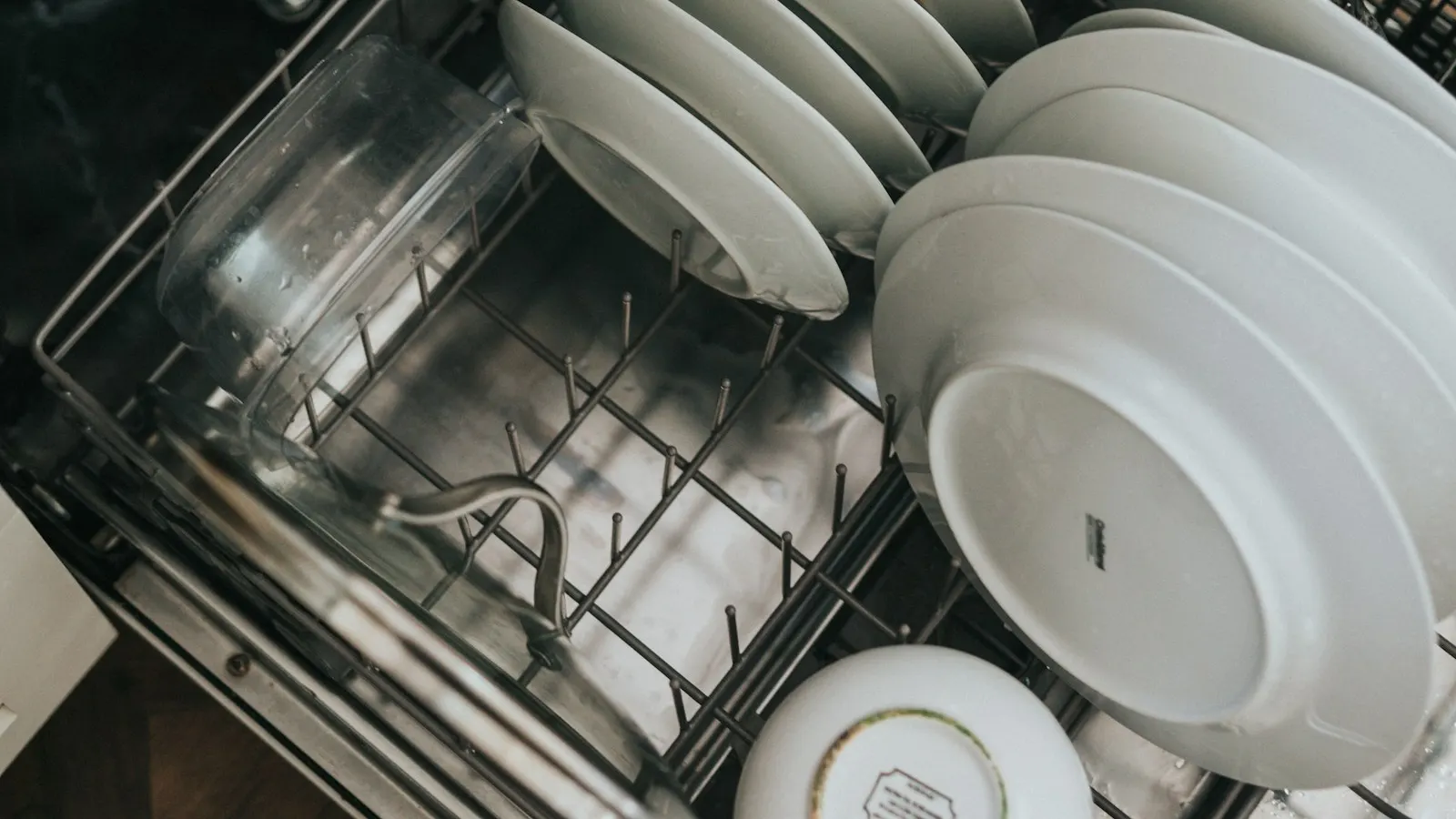
A dishwasher usually leaves white residue because of hard water. Minerals dry on dishes and glass as a cloudy film. To fix it, use a rinse aid, measure your detergent, run the hot tap before you start, clean the filter and spray arms, and run a cleaning cycle with citric acid or vinegar. A water softener solves it for good.
You open the dishwasher, and your glasses look worse than when they went in. They are cloudy, chalky, or covered in a white film that you can scrape off with a fingernail. It is a very common problem, and it is rarely a sign that the dishwasher is broken. This guide helps you find the cause and fix it.
Is it residue or is the glass etched?
Before you change anything, find out which problem you have. The two look alike, but only one can be fixed.
The vinegar test:
- Pick a cloudy glass.
- Soak it in white vinegar for about five minutes.
- Rinse and dry it.
If the cloudiness is gone, you have mineral residue or soap film. The fixes below will work. If the cloudiness is still there, the glass is etched. Etching is tiny pitting in the glass surface. It can happen when very soft water, too much detergent, or very hot water wears the glass over many washes. Etched glass cannot be cleaned or repaired, but you can stop it from getting worse.

Why does a dishwasher leave white residue?
Several things can cause it, and often two or three add up.
- Hard water. Water with a lot of calcium and magnesium leaves minerals behind as it dries. The USGS considers water above about 120 milligrams per liter of hardness to be hard, and above 180 to be very hard.
- Not enough rinse aid. Rinse aid helps water run off dishes, so less water dries on them.
- The wrong amount of detergent. Too much can leave soap film. Too little in hard water means the minerals are not controlled.
- Phosphate-free detergent. Many US detergents no longer contain phosphates, which used to bind hard water minerals. Some people see more film since the change.
- Water that is not hot enough. Cold water does not dissolve detergent well, especially powder.
- A clogged filter or spray arms. Food and mineral scale can block the holes, so dishes do not rinse well.
- Overloading. Crowded dishes block the spray and rinse.
- Scale inside the dishwasher. Mineral buildup on the walls and in the pump can flake onto your dishes.
Fix 1: Fill the rinse aid dispenser
Open the small round cap on the inside of the door. Look in the window next to it, which shows the level. If it is empty, refill it with rinse aid, up to the line, and wipe up any spill. Many dishwashers also have an adjustable dial with settings from 1 to 5 or 6. If you have hard water, turn it up one setting at a time until the film goes away. Do not put vinegar in the rinse aid dispenser. It can damage the parts in some models.
Fix 2: Use the right amount of detergent
More detergent does not mean cleaner dishes. Too much leaves a film that looks just like hard water spots. Follow the instructions on the box. Use one pod or tablet, or the amount of powder or gel that the label gives for your water. For very hard water, a little more can help, but a dishwasher additive for hard water usually works better than extra detergent.
Check that your detergent is fresh. Old pods and powders absorb moisture and clump, and they may not dissolve fully. Store the box in a dry spot, not under the sink.
Fix 3: Run the hot tap before you start
Many dishwashers heat their own water, but they fill first with whatever comes in. If the water arriving is cold, the first part of the cycle is weak. Turn on the hot tap at the kitchen sink until the water is hot, then start the dishwasher. A water heater set to about 120°F is a common recommendation for dishwashers. Do not set it higher than you need, because hotter water raises the risk of scalding and can contribute to glass etching.
Fix 4: Clean the filter and the spray arms
A dirty filter is one of the top reasons for poor results. Here is how to clean it:
- Take out the bottom rack.
- Twist and lift out the cylindrical filter at the bottom of the tub. Some models also have a flat mesh screen.
- Rinse the filter under warm water and scrub it gently with an old toothbrush and a little dish soap.
- Look at the spray arms. Pull them off if you can, and clear any clogged holes with a toothpick. Rinse out the inside.
- Put everything back in the same order.
Clean the filter about once a month. If your dishwasher does not drain well, see what to do when a dishwasher is not draining, because standing water leaves residue too.
Fix 5: Run a cleaning cycle with citric acid or vinegar
Mineral scale builds up inside the machine where you cannot see it. A cleaning cycle removes it.
With citric acid: Put about a half cup of citric acid powder in the detergent cup, or use a dishwasher cleaner made for hard water. Run a hot cycle with nothing else inside.
With white vinegar: Put one cup of white vinegar in a bowl on the top rack, or pour it in the bottom, and run a hot cycle with nothing else inside.
Fix 6: Load the dishwasher the right way
Water and detergent have to reach every dish. Leave space between items, and do not nest bowls or lean plates on each other. Face the dirty side toward the spray. Put glasses upside down and angle them so water does not pool in the base. Keep tall items away from the spray arms so that they can spin. If you have a third rack, do not overload it.
Fix 7: Switch your detergent or add a booster
If you have hard water, try a different detergent. Some brands are better at controlling minerals than others. Look for detergents that say they handle hard water, or that include a built-in rinse aid and a salt substitute. You can also add a dishwasher booster or citric acid additive to the detergent cup with each load. Try one change at a time so you know what worked.
Fix 8: Treat the water
If you have done all of the above and the residue returns, your water is the problem. You have two lasting options.
- A water softener. A whole-house softener removes the calcium and magnesium before the water reaches your dishwasher. It also protects your water heater, pipes, and washing machine.
- A water filter or conditioner at the dishwasher or on the kitchen line. This can help with minerals or chlorine, although it may not fix very hard water on its own. For more on this, read how to install a water filtration system or why water can taste like chlorine.
You can test your water with a cheap hardness test strip from a hardware store. Your local water utility also posts a yearly water quality report, which often lists hardness.
How to prevent white residue in the future
- Keep the rinse aid dispenser filled.
- Clean the filter every month and run a cleaning cycle every month or two.
- Use the right amount of detergent, and do not overload the machine.
- Run the hot tap before you start the dishwasher.
- Open the door after the cycle ends to let steam out so water does not sit on dishes.
- Hand dry glassware that you really care about, with a clean microfiber towel.
When to call a repair person
Most white residue is not a dishwasher defect. Call for service if:
- The dishwasher does not fill with water, heat, or drain properly.
- The dishes come out dirty as well as cloudy, even after you clean the filter and arms.
- You see rust or flakes of metal inside the tub.
- The detergent door does not open during the cycle.
If a repair person checks the dishwasher and finds no fault, the cause is almost certainly your water, and the best fix is to soften it.
Quick troubleshooting chart
| What you see | Most likely cause | First thing to try |
|---|---|---|
| White film that wipes off with vinegar | Hard water minerals | Rinse aid and a cleaning cycle |
| Foggy glass that vinegar does not clear | Etching | Lower the water temperature and use less detergent |
| White powder on dishes | Detergent not dissolving | Run the hot tap first, use fresh pods |
| Spots on glasses only | Water drying in drops | Fill rinse aid, open door after cycle |
| Gritty film on the bottom of the tub | Mineral scale | Citric acid cleaning cycle |
Bottom line
If your dishwasher leaves white residue, test one glass in vinegar. If the film comes off, it is hard water or soap, and a rinse aid, the right detergent amount, a clean filter, and a monthly cleaning cycle usually fix it. If it stays, you are looking at etching, and the best you can do is keep it from spreading. For stubborn cases, treat the water with a softener.
Sources
This guide was checked against these official and manufacturer sources.
Frequently asked questions
Why is my dishwasher leaving a white film on glasses?
The most common cause is hard water. Calcium and magnesium in the water dry on the glass and leave a cloudy white film. Too much or too little detergent, an empty rinse aid dispenser, and a dirty filter can add to it.
Is the white residue on my dishes harmful?
Hard water minerals and detergent residue are not considered harmful in the small amounts left on dishes. It can look bad and make glasses feel gritty, but it is not a sign that the dishes are unsafe.
How do I know if it is residue or etching?
Soak a cloudy glass in white vinegar for five minutes. If the cloudiness wipes away, it is mineral residue. If it stays, the glass surface is etched, which is permanent damage.
Does rinse aid really help with white residue?
Yes. Rinse aid makes water sheet off dishes instead of drying in drops, so fewer minerals are left behind. Keep the dispenser filled and set to a higher level if you have hard water.
Can I run vinegar through my dishwasher?
Many guides suggest a cup of white vinegar in the bottom of an empty dishwasher on a hot cycle. Some manufacturers warn that vinegar can wear rubber seals over time, so check your manual and do it only now and then.

Written by
Agha Ali Abbas
Agha Ali Abbas is the founder and editor of TimeToNote. He has worked in SEO and content writing for 18 years, and he checks every guide against manufacturer documentation and official sources before it goes live.
Related guides

Home Problems
Why Is My Dishwasher Not Draining? 9 Causes and Easy Fixes
Water sitting in the bottom of your dishwasher? Learn why it will not drain and how to fix it yourself, from cleaning the filter to checking the drain hose.
8 min read
Home Problems
How to Install a Water Filtration System at Home (Step by Step)
Learn how to install an under-sink, reverse osmosis, or whole-house water filtration system step by step, what tools you need, costs, and when to call a plumber.
11 min read

Home Problems
Why Does My Water Taste Like Chlorine? Is It Safe and How to Fix It
Tap water tasting or smelling like chlorine or bleach? Learn why it happens, whether it is safe, and simple ways to get rid of the taste at home.
8 min read
More guides you may need

Home Problems
Turkey Still Frozen on Thanksgiving Morning? What to Do Now
Turkey still frozen with dinner hours away? Use cold water, cook it from frozen, or switch plans. Here are the safe options, the timing and the mistakes to avoid.
6 min read
Home Problems
Veken Pet Fountain Instructions: Setup, Cleaning and Fixing a Noisy Pump
How to set up, fill, clean and fix a Veken pet water fountain: wash the parts, fill to the max line, replace filters and stop a noisy or silent pump.
4 min read