How to Clean a Dusty House: An Easy Step-by-Step Method
Clean a dusty house the right way: top to bottom, dry to wet, with tools that trap dust. Includes a room-by-room checklist and a simple weekly routine.
On this page
The best way to clean a dusty house is to work from top to bottom and use tools that trap dust instead of moving it around. Start with ceilings and high shelves, move down to furniture, and finish by vacuuming and mopping the floors. Use a damp microfiber cloth instead of a feather duster, and a vacuum with a HEPA filter.
Doing things in the right order saves time. It also stops dust from falling onto places you already cleaned.
Below is the full method, step by step, plus a room-by-room checklist and a simple routine to keep dust from building up again. If dust comes back very fast, also read about the most common reasons a house gets so dusty. Cleaning alone will not fix a dirty air filter or a drafty window.
What you need
You do not need fancy products. Here is a simple kit:
- Microfiber cloths. Get several. When slightly damp, they grab fine dust and hold on to it.
- A vacuum with a HEPA filter, plus its brush tool and crevice tool (the long, skinny one).
- An extendable duster with a washable microfiber head for ceilings, fans, and high shelves.
- A spray bottle with warm water and a few drops of dish soap for greasy dust in the kitchen.
- An old pillowcase for ceiling fan blades.
- A mop that works for your type of floor.
- A small soft brush or old toothbrush for corners and small spaces.
- A trash bag for clutter and trash.
Skip feather dusters and dry rags. They make a room look clean for an hour. Then the dust floats back down.
Before you start
A few quick steps make the whole job easier:
- Open a window if the weather is nice. Fresh air helps carry floating dust out.
- Turn on an air purifier if you have one.
- Turn off ceiling fans so they do not blow dust around.
- Clear the clutter. Put things away so you can wipe each surface in one pass.
- Strip washable fabrics. Put pillow covers, throw blankets, and small rugs in the laundry.
The method: top to bottom, dry to wet
Step 1: Start with the ceiling
Use the extendable duster on ceiling corners, cobwebs, light fixtures, and the tops of door frames. Dust falls down, so always start at the highest point.
For ceiling fans, slide an old pillowcase over one blade at a time. Gently pull it back toward you. The dust stays inside the pillowcase instead of raining down on the room. Shake the pillowcase outside, then wash it.
Step 2: Dust high surfaces
Next, wipe the tops of tall furniture, bookcases, door frames, curtain rods, picture frames, and wall vents. These spots are easy to forget, and they hold a lot of dust.
Fold your microfiber cloth into four squares. When one side gets dirty, flip to a clean side. One cloth gives you 8 clean sides.
Step 3: Clean blinds, curtains, and windowsills
- Blinds: Close the slats. Wipe them with a damp cloth. Then turn them the other way and wipe again.
- Curtains: Vacuum them from top to bottom with the brush tool. If the label says they are washable, wash them every few months.
- Windowsills and tracks: Vacuum loose dirt with the crevice tool. Then wipe with a damp cloth.
Step 4: Wipe furniture and decorations
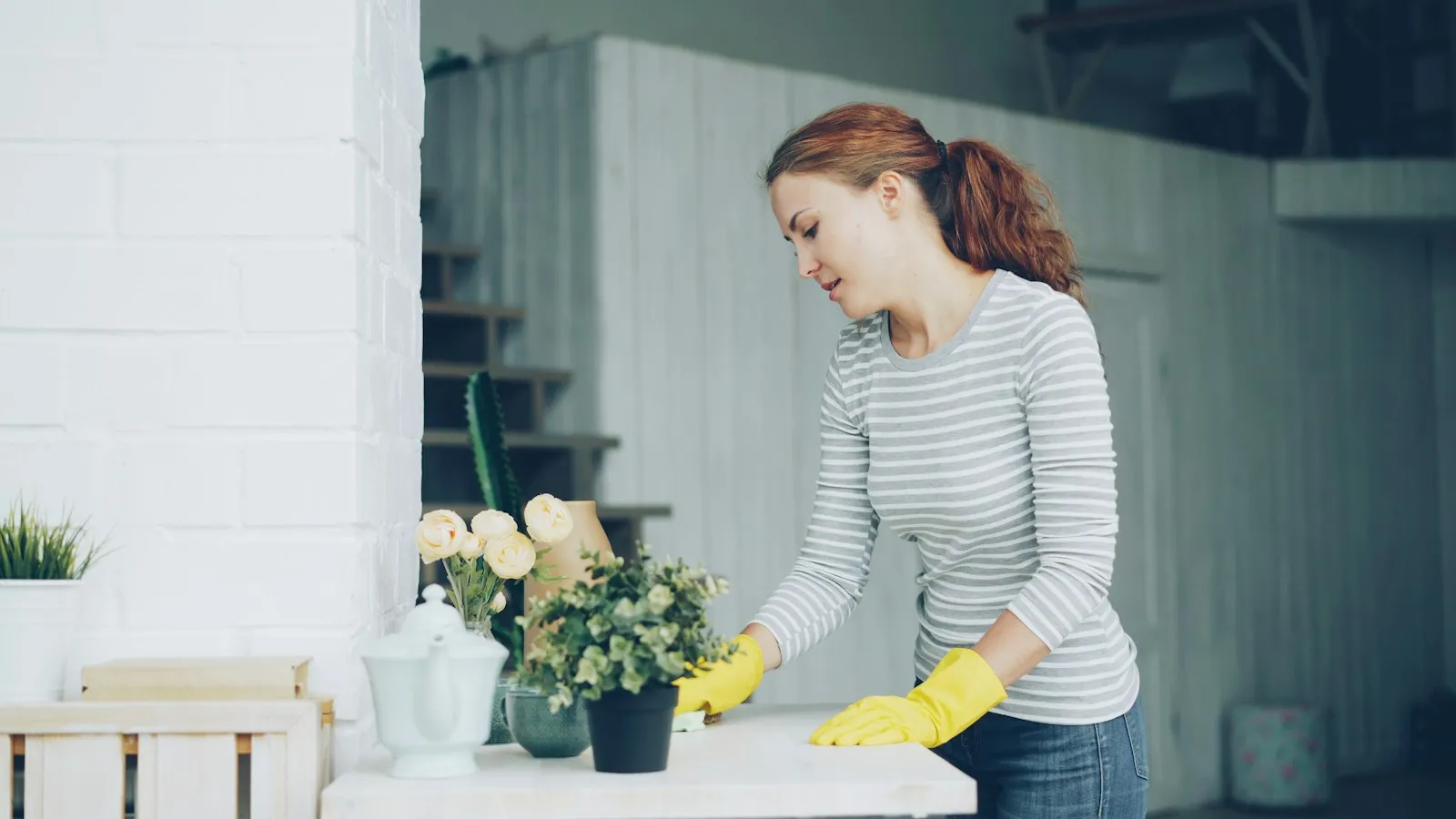
Wipe tables, shelves, dressers, lamps, and decorations with a slightly damp cloth. Lift small items to wipe under them, instead of just around them.
For upholstered furniture, use the vacuum's brush tool on the cushions, arms, and back. Take off the cushions and vacuum underneath. Crumbs and dust love to hide there.
Step 5: Dust electronics safely
Turn off TVs, computers, and game consoles first. Use a dry, clean microfiber cloth on screens. Never spray liquid right onto a screen. For keyboards and vents, use the soft brush or a small vacuum tool to pull out dust.
Step 6: Clean baseboards, doors, and vents
Wipe the baseboards along the bottom of your walls. Wipe door panels, doorknobs, and light switches too. Vacuum or wipe the covers on your heating and air vents. Dusty vents blow dust right back into the room.
Step 7: Vacuum everything
Now vacuum. You will pick up everything that fell during the earlier steps.
- Go slowly. One slow pass picks up much more dust from carpet than several fast ones.
- Start at the far side of the room and work toward the door.
- Vacuum under beds and furniture, where dust piles up.
- Use the crevice tool along the edges of the room.
Step 8: Mop hard floors
Finish with a damp mop on hard floors. This picks up the fine layer of dust the vacuum leaves behind. Use a cleaner that is safe for your floor type. For wood floors, the mop should be damp, not wet.
How to clean a very dusty house after remodeling or moving in
Construction dust and dust in a home that sat empty are much finer and heavier than normal dust. They need a little extra work.
- Protect yourself. Wear an N95 mask and old clothes. Open windows on both sides of the home to let air flow through.
- Change the air filter first. Construction dust clogs filters fast. Put in a new filter before you start, and change it again a week later.
- Vacuum before you wipe. Very heavy dust turns into mud if you wipe it with a wet cloth. Vacuum surfaces with the brush tool first, then wipe with a damp cloth.
- Work top to bottom, one room at a time. Close the door to the room you are cleaning so dust does not spread.
- Wipe walls. Fine dust sticks to walls. Use a damp microfiber mop or cloth, working from the top down.
- Clean inside cabinets and closets. Dust gets into every open space.
- Vacuum floors twice. Do one pass, wait an hour for floating dust to settle, then do a second pass.
- Mop last. Rinse the mop head often so you are not spreading dust around.
Plan to do a quick dust again 2 or 3 days later. Fine dust keeps settling for a while after a big job.
Room-by-room checklist
Each room has its own dust hot spots. Use this table to make sure you do not miss them.
| Room | Focus on | Why |
|---|---|---|
| Bedroom | Bedding, under the bed, tops of dressers and closets | Beds shed fibers and skin, and hidden spots get skipped for weeks |
| Living room | Couch, rugs, TV stand, blinds, ceiling fan | Lots of fabric and people walking through |
| Kitchen | Tops of cabinets, range hood, top of the fridge | Dust mixes with cooking grease and sticks |
| Bathroom | Exhaust fan cover, light fixtures, shelves | Moisture makes dust clump and stick |
| Home office | Keyboard, monitor, computer vents, bookshelves | Electronics attract dust with static |
| Entryway | Doormats, baseboards, shoe rack | This is where outside dirt comes in |
Kitchen tip: greasy dust
In the kitchen, dust often mixes with grease from cooking. It turns into a sticky layer on top of cabinets and the fridge. Plain water will not remove it.
- Spray warm water with a few drops of dish soap onto a cloth.
- Wipe the greasy area.
- For thick grease, let the soapy water sit for a minute first.
- Dry the surface with a clean cloth.
Clean kitchens also attract fewer pests. If you have tiny flies around fruit or plants, our guide on getting rid of gnats in the house can help.
Bedroom tip: the bed
Your bed is one of the dustiest places in your home. Wash sheets and pillowcases every week in hot water. Vacuum the mattress every month or two with the brush tool. Zippered covers on mattresses and pillows help keep dust mites out.
A simple routine to keep dust down
A little bit often works better than a big clean once in a while. Here is an easy schedule.
Every day (about 5 minutes):
- Shake out or vacuum the doormats.
- Wipe the surfaces you use most, like the kitchen counter and coffee table.
Twice a week:
- Vacuum carpets and rugs in busy rooms.
Every week:
- Dust all rooms with a damp microfiber cloth.
- Vacuum all floors and mop hard floors.
- Wash bedding in hot water.
- Wash pet beds.
Every month:
- Check your heating and cooling air filter.
- Dust ceiling fans and light fixtures.
- Vacuum curtains and furniture.
- Wipe baseboards and vent covers.
Every few months:
- Move furniture and clean under it.
- Wash curtains, pillow covers, and throw blankets.
- Clean the tops of cabinets and the fridge.
Common mistakes that make dust worse
Avoid these habits. They can make your home dustier, even if you clean a lot.
- Using a feather duster. It spreads dust into the air.
- Vacuuming before dusting. Dust falls on the clean floor.
- Letting the vacuum get too full. It loses suction and can leak dust.
- Forgetting the air filter. A dirty filter blows dust back into every room.
- Using too much furniture polish. Sticky polish can attract more dust over time. Sticky spots from old labels do the same; here is how to get sticker glue off almost anything.
- Skipping hidden spots. Under the bed and on top of cabinets are dust storage areas.
If you do all of this and dust still piles up quickly, the dust is probably coming in faster than you can clean it. Go back to our guide on why a house gets dusty so fast to find the source.
Cleaning when you have allergies
If dust makes you sneeze, cough, or itch, these tips help:
- Wear a mask, such as an N95, while you clean.
- Open a window and run an air purifier while you work.
- Leave the room for 20 to 30 minutes after cleaning so floating dust can settle or be filtered.
- Use a vacuum with a sealed HEPA system.
- Wash cloths and mop heads in hot water after each use.
If your symptoms do not get better, talk to a doctor or pharmacist.
Key takeaways
To clean a dusty house, always work from top to bottom and finish with the floors. Use a damp microfiber cloth instead of a feather duster, and a vacuum with a HEPA filter. Clean the hidden spots, like the tops of cabinets and under the bed. Then keep up with a simple weekly routine, and change your air filter on time. Your home will stay cleaner for longer.
Sources
This guide was checked against these official and manufacturer sources.
Frequently asked questions
Should I dust or vacuum first?
Dust first, then vacuum. Dusting knocks dust down onto the floor. Vacuuming last picks it all up. If you vacuum first, you will have to do it again.
How often should I dust my house?
Once a week is enough for most rooms. If you have pets, allergies, or live near a busy road, wipe the most-used surfaces two or three times a week.
What is the best thing to dust with?
A clean microfiber cloth that is slightly damp works best. It grabs dust and holds on to it. Feather dusters and dry cloths mostly push dust into the air, where it lands again later.
How long does it take to clean a dusty house?
A deep dust of a small home or apartment usually takes 2 to 4 hours. After that, a weekly clean of 1 to 2 hours and a few 5-minute daily habits will keep dust under control.

Written by
Agha Ali Abbas
Agha Ali Abbas is the founder and editor of TimeToNote. He has worked in SEO and content writing for 18 years, and he checks every guide against manufacturer documentation and official sources before it goes live.
Related guides

Home Problems
Why Is My House So Dusty? 12 Common Causes and How to Fix Them
Dust coming back days after you clean? Learn the 12 most common reasons your house is so dusty and the simple changes that really cut dust down.
9 min read

Everyday Solutions
How to Remove Sticker Residue From Any Surface (Easy Methods)
Get sticky label glue off glass, plastic, wood, metal, clothes, and cars with things you already have at home, like oil, rubbing alcohol, and warm soapy water.
8 min read
Home Problems
How to Clean a Humidifier: Step-by-Step Guide With Vinegar
Learn how to clean a humidifier with vinegar in 7 steps, how often to do it, what water to use, and how to remove pink slime, white dust, and bad smells.
7 min read
More guides you may need
Home Problems
Dishwasher Keeps Filling With Water? Causes and What to Do Right Away
Dishwasher will not stop filling or fills when off? Shut off the water first, then check the inlet valve, float and drain hose. Safe steps and when to call a pro.
6 min read
Home Problems
Dishwasher Keeps Tripping the Breaker? Causes and Fixes
Dishwasher tripping the breaker? Find out whether it's a shared circuit, a leak or a failed heating element, and which checks are safe to do yourself.
5 min read